English

 Home
Home Hotels
  Car Rental
 Rewards
 Travel Guide
A Day of Sightseeing Around Gatlinburg

Gatlinburg is one of those destinations where a sightseeing day can change character every couple of hours. Morning may begin beside a rushing mountain stream, lunchtime can arrive among the busy sidewalks of downtown Gatlinburg, and evening can end high above the Parkway with layers of the Smokies fading into the distance. That combination makes the town especially useful for travelers who have only one full day but still want to understand what makes the area distinctive. The best approach is not to race through every attraction on the map. A better Gatlinburg day trip combines a few carefully chosen stops with enough time to actually look around. Great Smoky Mountains National Park begins immediately beside town, while many major Gatlinburg attractions sit within a compact section of the Parkway. This itinerary moves from quieter natural scenery in the morning to downtown sightseeing in the afternoon and mountain views near sunset, reducing unnecessary driving and giving each part of the day its own atmosphere.
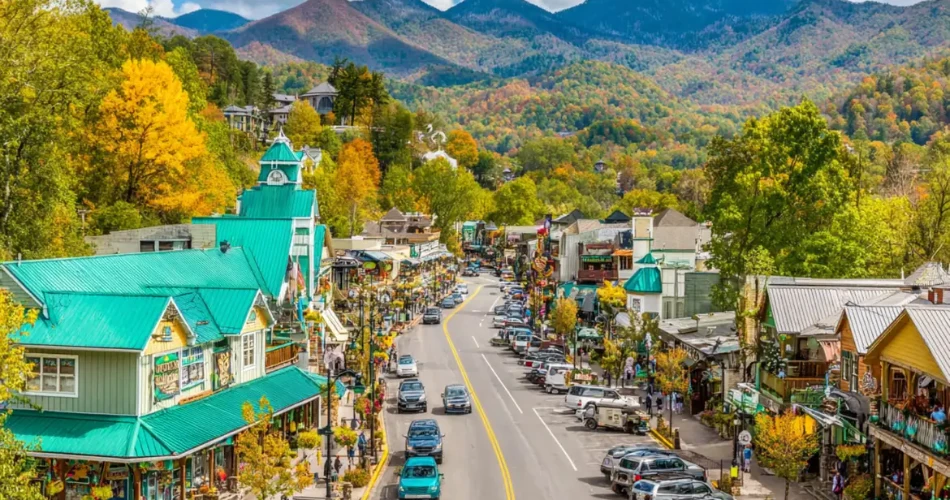
The strongest start to a day of Gatlinburg sightseeing is toward the southern end of town, where urban streets quickly give way to Great Smoky Mountains National Park. The transition is surprisingly fast. Shops, restaurants and attractions disappear, wooded slopes close in around the road, and the Little Pigeon River becomes part of the scenery.
Great Smoky Mountains National Park covers more than 522,000 acres across Tennessee and North Carolina, yet one of its principal northern gateways sits only a short distance from downtown Gatlinburg. The park does not charge a general entrance fee, making it easy to include in a sightseeing itinerary. Drivers who leave a vehicle inside the park for more than 15 minutes, however, generally need a valid parking tag. In 2026, the standard prices are $5 for a daily tag, $15 for a weekly tag and $40 for an annual tag.
An early start is worthwhile, particularly during summer, October foliage season and busy holiday periods. Roads and popular parking areas become noticeably busier later in the day. Visitors should also check park road conditions before leaving town because mountain weather can temporarily affect access even on roads that normally operate year-round.

Stop at Sugarlands Visitor Center Before Heading Higher
Sugarlands Visitor Center makes a useful first proper stop because it provides context for everything seen later in the morning. Located about two miles south of Gatlinburg on Newfound Gap Road, it serves the park's North District and contains natural-history exhibits, maps, park information, a bookstore, restrooms and access to park staff. Its regular hours are currently listed as 9 a.m. to 5 p.m., with shorter winter hours, although visitors should confirm hours before their trip.
Rather than treating Sugarlands as a quick restroom stop, travelers can spend 30 to 45 minutes here. The exhibits introduce the plants and animals of the Smokies, which makes later forest scenery far more meaningful. It is also a sensible place to ask about temporary road closures, trail conditions or weather at higher elevations.
Travelers who have not already arranged a parking tag can find a parking-tag machine at Sugarlands. The center itself also has accessible parking and accessible public facilities.
A short visit works particularly well in a one-day schedule: it adds useful park knowledge without turning the morning into a museum session. From here, the road climbs steadily toward some of the best-known mountain scenery accessible from Gatlinburg.

Follow Newfound Gap Road for Classic Smoky Mountain Scenery
From Sugarlands, Newfound Gap Road—US 441—provides one of the most rewarding driving sections of the day. The road crosses the central Smokies between Gatlinburg and Cherokee, North Carolina, climbing from lower-elevation hardwood forest toward considerably cooler mountain environments. For a one-day Gatlinburg itinerary, there is no need to drive all the way to Cherokee. The journey itself, with carefully chosen overlooks along the way, is the attraction.
Newfound Gap is an especially practical turnaround point. The high mountain pass sits on the Tennessee–North Carolina state line and connects with the Appalachian Trail. On a clear day, the surrounding viewpoints reveal successive mountain ridges that become paler and bluer with distance—the visual effect responsible for much of the Smokies' famous appearance.
The drive should not be hurried. Travelers can use designated overlooks when parking is available, but stopping along road shoulders or in prohibited areas should be avoided. The National Park Service specifically warns that parking at popular high-elevation destinations can fill quickly.
Newfound Gap Road is normally open year-round, weather permitting. Conditions can change rapidly at elevation, however, especially during winter storms, heavy rain or periods of ice.
A few useful morning priorities are:
- Allow extra time for overlooks rather than planning the drive by mileage alone.
- Carry water even when the weather in downtown Gatlinburg feels cool.
- Expect temperatures at higher elevations to be noticeably lower than in town.
- Check current National Park Service road alerts before setting out.

Return to Downtown Gatlinburg for a Walk Along the Parkway
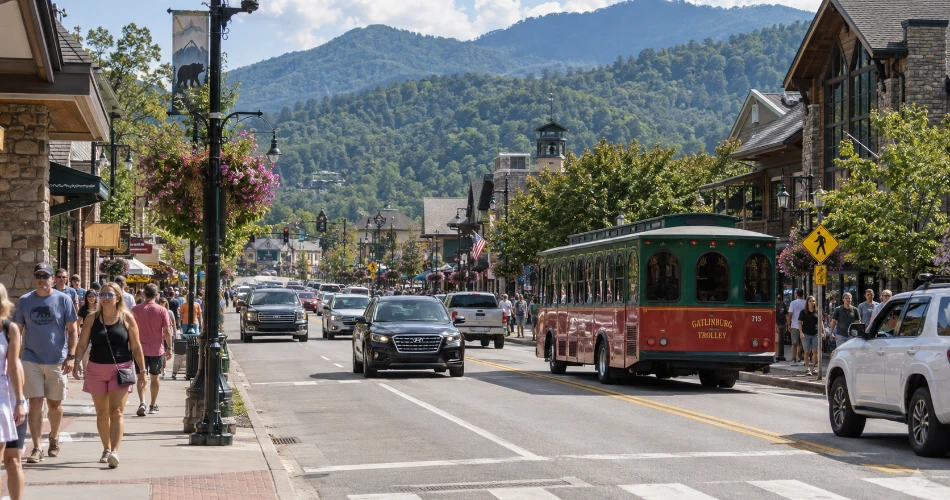
After a quiet mountain morning, downtown Gatlinburg feels almost like a second destination. The Parkway forms the main sightseeing corridor, with observation attractions, restaurants, candy shops, entertainment venues and small shopping areas packed into a relatively walkable stretch. Cars can move slowly during busy periods, so once visitors have returned from the national park, parking and continuing on foot often makes more sense than driving between nearby attractions.
One appealing part of downtown sightseeing is that visitors do not have to enter every attraction to enjoy the area. Walking the Parkway provides views toward the surrounding ridges, glimpses of chairlifts climbing nearby slopes and plenty of opportunities for short stops. The streetscape is particularly lively from late morning through evening, when visitors move between restaurants and attractions.
Travelers who prefer to reduce driving can also use Gatlinburg's trolley system. The city's trolley network serves destinations around Gatlinburg, and the system is free to ride. Gatlinburg also operates service associated with the Arts and Crafts Community during specified periods.
Lunch fits naturally into this part of the itinerary. Rather than choosing a lengthy sit-down meal during a packed sightseeing day, many travelers will get more from the afternoon by allowing roughly an hour for lunch and then continuing on foot.
Spend Part of the Afternoon at Ripley's Aquarium of the Smokies
A day in Gatlinburg does not have to remain outdoors from sunrise to sunset. Ripley's Aquarium of the Smokies is a useful afternoon stop, particularly when temperatures rise, rain begins or a group includes children who need a change of pace. Its downtown location also means travelers do not have to commit to another lengthy drive.
The aquarium is known for large marine-life exhibits and its underwater viewing experience, where visitors can watch sharks and other sea life from beneath the water. The contrast with the morning's forests is part of what makes the stop work well in this itinerary: within a few hours, a sightseeing day moves from Appalachian ecology to an indoor marine environment.
Around 90 minutes to two hours is a reasonable amount of time for visitors who want to see the major exhibits without making the aquarium the entire focus of the afternoon. Those especially interested in marine life can easily stay longer, so tickets, operating hours and scheduled experiences are worth checking in advance.
Families can also use this portion of the day as a reset between the morning drive and later mountain-view attractions. It provides air-conditioned indoor time, restrooms and a slower walking pace before the sightseeing route returns outside. Travelers with no interest in aquariums can instead give these hours to the Parkway, local galleries or the Arts and Crafts Community.

Make Time for Gatlinburg's Arts and Crafts Side
Travelers who only see the central Parkway can leave Gatlinburg knowing its attractions but missing an important part of its local identity. The Great Smoky Arts & Crafts Community sits away from the busiest downtown blocks and follows an approximately eight-mile loop containing workshops, galleries and independent craft businesses. The area is associated with working artisans producing items such as pottery, baskets, paintings, candles, leather goods and traditional crafts.
A full exploration can easily take half a day, so this itinerary treats it as a selective afternoon detour rather than an attempt to visit every studio. Choosing two or three stops is enough to experience a different side of Gatlinburg. Watching shelves filled with handmade pottery or stepping into a working craft shop feels very different from browsing mass-produced souvenirs on a busy tourist strip.
This is also a good place to slow the schedule down. Conversations with makers, variations between handmade objects and the surrounding wooded setting make it less suitable for rushed sightseeing.
Visitors who would rather stay entirely downtown can skip the loop and use the extra time for another major attraction. For returning travelers, however, the Arts and Crafts Community is especially worthwhile because it adds cultural depth to a destination often associated first with mountain rides and entertainment.

See Gatlinburg From Above in the Late Afternoon
Late afternoon is a good time to change perspective. Gatlinburg's compact valley setting is much easier to understand from above, where the Parkway appears as a narrow line of development enclosed by steep, forested slopes. Several attractions provide elevated views, so travelers can choose one rather than spending the entire afternoon moving from observation deck to observation deck.
Gatlinburg SkyPark is reached from downtown and operates its mountaintop attraction above the city. Current spring, summer and fall hours are listed as 9 a.m. to 9 p.m., weather permitting, although schedules can change. Travelers planning specifically around sunset should confirm the day's hours and weather before buying tickets.
Another downtown option is the Gatlinburg Space Needle. The observation tower rises 407 feet and uses glass elevators to reach a deck with 360-degree views over Gatlinburg and the surrounding Smokies.
Whichever viewpoint is chosen, late afternoon usually provides more visual variety than midday. Mountains retain definition while town lights gradually begin appearing below. On partly cloudy days, shafts of light across the ridges can make the scene particularly dramatic without needing the unreal colors often seen in heavily edited travel photographs.

Let Sunset and the Evening Lights Finish the Sightseeing Day
Gatlinburg changes again around sunset. Mountain detail slowly disappears into silhouettes while signs, storefronts and attractions brighten along the Parkway. Ending the day during this transition means visitors see both versions of the town without having to plan a separate nighttime outing.
Those already at an elevated attraction can remain long enough to watch the changing light before descending into downtown. Travelers staying at street level can take an unhurried walk along the Parkway instead. The Gatlinburg Space Needle's elevated viewpoint, for example, looks directly across downtown toward the mountains, making it possible to see the contrast between the illuminated town and darker ridgelines.
This is also the point when the day's schedule should become less structured. There is little advantage in squeezing in one final ticketed attraction simply because an hour remains. A better ending may involve dessert, browsing a few shops, listening to live entertainment where available or simply walking until the day's crowds and lights begin to feel familiar.
For photographers, the period shortly after sunset can be more useful than complete darkness. The sky often retains enough blue light to show the shape of the surrounding mountains while downtown illumination becomes increasingly visible. After a morning beside rivers and forests, that final city-and-mountain view neatly completes the day's route.
A Few Practical Choices Can Make the Day Much Easier
A successful Gatlinburg sightseeing day depends less on fitting in ten attractions than on getting the timing right. The biggest variable is traffic. Weekends, summer vacations and fall foliage periods can make short distances take longer than expected, particularly on the Parkway and roads approaching popular park areas. Starting the mountain portion early and leaving downtown activities for later generally creates a smoother route.
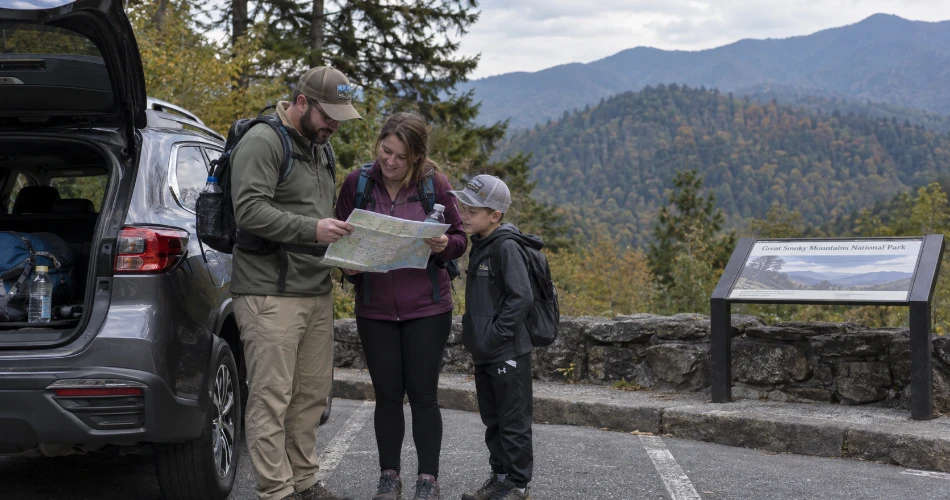
Parking rules inside Great Smoky Mountains National Park also need to be understood before arrival. A physical parking tag is required when a vehicle is parked for more than 15 minutes, and simply purchasing a tag does not reserve or guarantee a parking space. Visitors staying only in town should distinguish those federal park requirements from municipal or private parking in Gatlinburg.
Weather deserves equal attention. Conditions around Newfound Gap can differ noticeably from those in town, so a light outer layer can be useful even when the Parkway feels comfortable. Rain should not automatically ruin the day; the order can simply change, putting indoor attractions earlier and saving viewpoints for clearer periods.
Most importantly, one day is enough to get a strong sense of Gatlinburg, but not enough to exhaust it. Leaving one or two attractions for another visit is usually more enjoyable than turning sightseeing into a checklist.

Why This Gatlinburg Day Is Worth Taking Slowly
A day of Gatlinburg sightseeing works best because the scenery and the town are so closely connected. Visitors do not have to choose between a mountain day and an attraction day. Sugarlands Visitor Center and Newfound Gap Road provide direct access to Great Smoky Mountains National Park in the morning, while downtown Gatlinburg places major attractions, shops and elevated viewpoints within a comparatively small area later in the day.
That variety also makes the itinerary easy to adjust. Families may spend longer at the aquarium. Photographers may give Newfound Gap another hour. Returning visitors may skip familiar Parkway attractions and spend more time with local artisans. Travelers visiting during poor weather can reverse the order and wait for the mountains to clear.
The important part is allowing Gatlinburg to change throughout the day. Morning belongs to forest roads, mountain air and distant ridges. Afternoon brings the busier character of the Parkway and its Gatlinburg attractions. Evening turns the same valley into a line of lights beneath darkening peaks. Seen at that pace, a Gatlinburg day trip feels less like moving through a collection of stops and more like experiencing several sides of the Smokies in one compact journey.
Next post Beautiful Places to Explore in and Around Gatlinburg
Previous Post The Places That Give You the Best Feel for Gatlinburg
About Author