English

 Home
Home Hotels
  Car Rental
 Rewards
 Travel Guide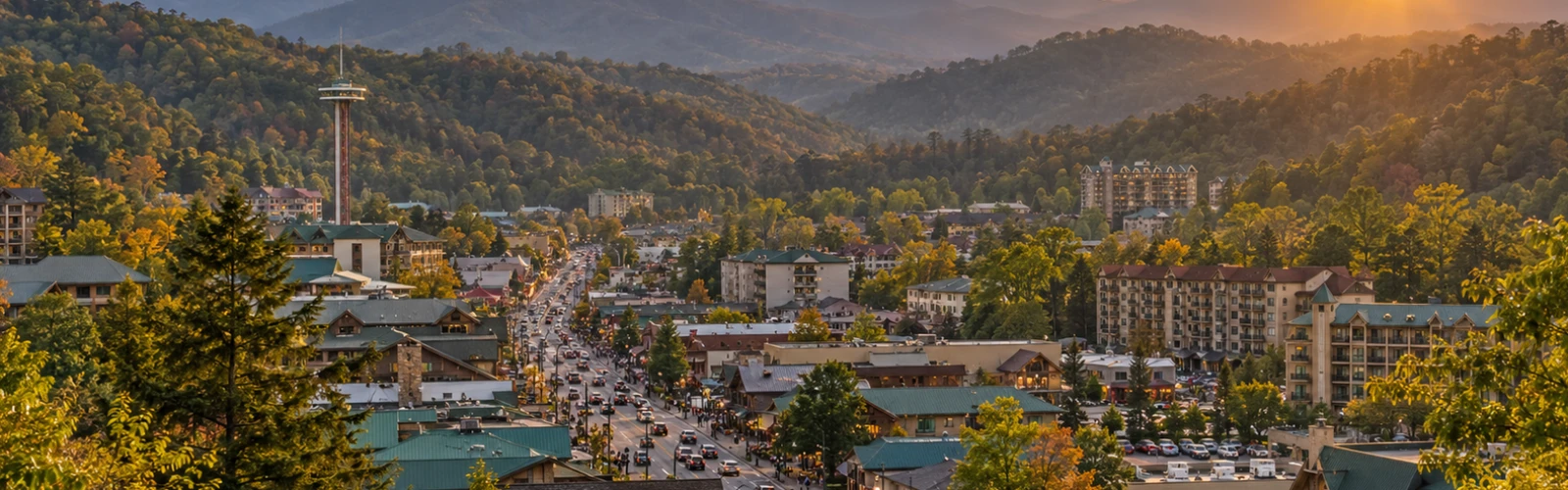
The Gatlinburg Places That Feel Different Once the Crowds Thin Out

There is a point in a Gatlinburg day when the town seems to loosen its shoulders. Families start heading back from attractions, day-trippers begin the drive out, and even some of the busiest corners gain enough breathing room to notice things that were easy to miss earlier. This does not mean downtown suddenly becomes empty—Gatlinburg can remain active well into the evening, particularly on weekends, during fall color season, and around major events. What changes is the pace. The Little Pigeon River becomes easier to hear beside River Road. A walk near the national park boundary feels less like a way to reach the next attraction and more like an actual walk. On Roaring Fork, the forest, streams, and old buildings start commanding more attention than the cars ahead.
That quieter side of town is especially worthwhile for returning visitors. Many of the best places are not secret at all. They are simply familiar places seen at a better moment.
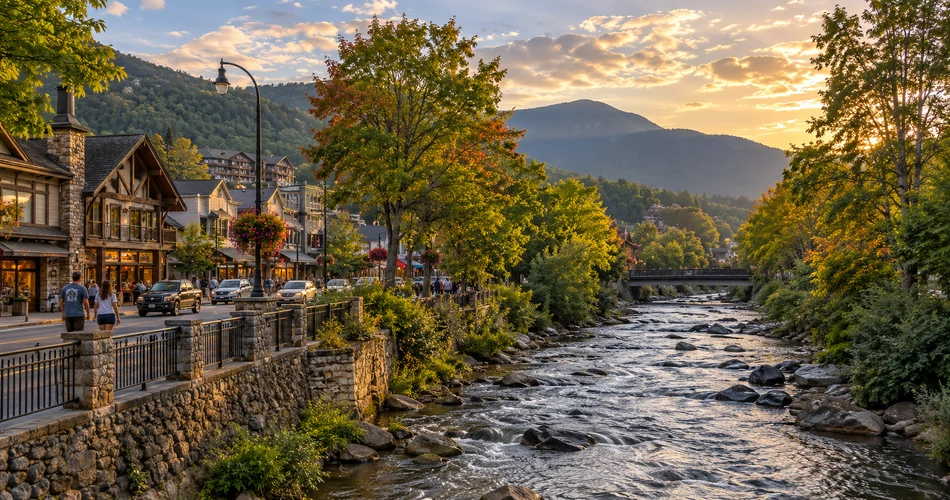
Downtown Gatlinburg Becomes Easier to Read Once the Rush Eases
The Parkway receives so much attention that it can become little more than a corridor during the busiest hours. Visitors move between attractions, restaurant lines form, and pedestrian crossings keep everyone focused on the next block. Later, the same street starts revealing more of Gatlinburg's actual geography. The wooded slopes immediately behind the buildings become clearer, lights appear gradually along the valley, and glimpses toward the surrounding ridges remind walkers how closely the town sits against Great Smoky Mountains National Park.
A Gatlinburg evening is particularly good for visitors who have already checked off the large attractions and no longer feel pressure to keep moving. Walking rather than driving makes sense through the central portion of downtown, where attractions, shops, side streets, and river access are packed relatively close together. The city's tourism office itself promotes downtown as a walking area and identifies the nearby River Walk as a quieter alternative to the Parkway.
The experience is most convincing when there is no schedule. A bench, a side street, or a view toward the mountains can become the stop instead of something passed on the way elsewhere.
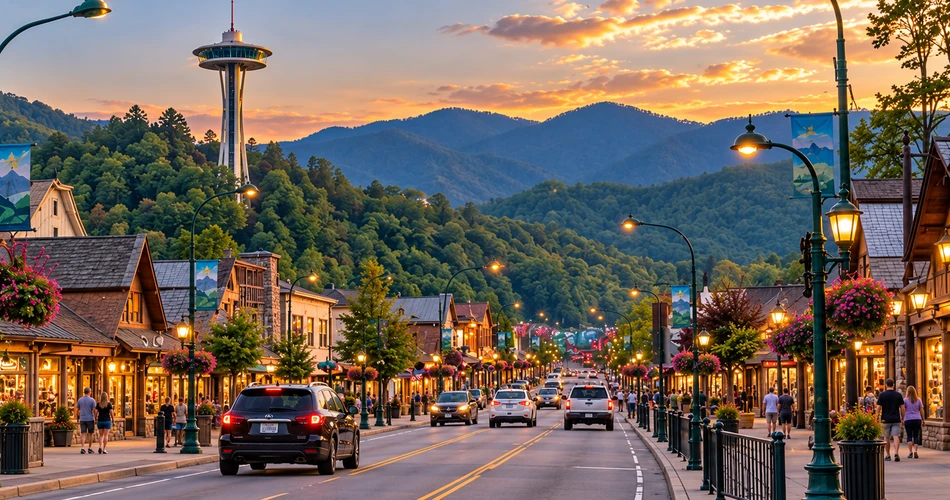
River Road Lets the Little Pigeon River Take Over the Soundtrack
River Road is one of the simplest ways to understand why quiet Gatlinburg can feel like a different destination. It runs close enough to central downtown that visitors are never far from restaurants or attractions, yet portions beside the Little Pigeon River feel noticeably removed from the most concentrated pedestrian traffic. The city's visitor information specifically points travelers toward its river walk, with benches and gazebos along the water.
The appeal here is not a major sight. It is the contrast. Cars and voices may still be nearby, but the river becomes much more noticeable once the busiest sidewalk traffic settles. Rocks break the current into white water, trees lean over sections of the channel, and bridges frame surprisingly green views in the middle of town.
Late afternoon works well because enough daylight remains to see the river clearly. On darker evenings, travelers should stay on established, well-lit public routes rather than treating the riverbank as an informal trail.
A good slow walk here needs very little planning:
- Leave the Parkway for the river rather than trying to cover every downtown block.
- Stop where public benches or viewpoints make the water easy to see.
- Return toward downtown once daylight or weather begins changing.
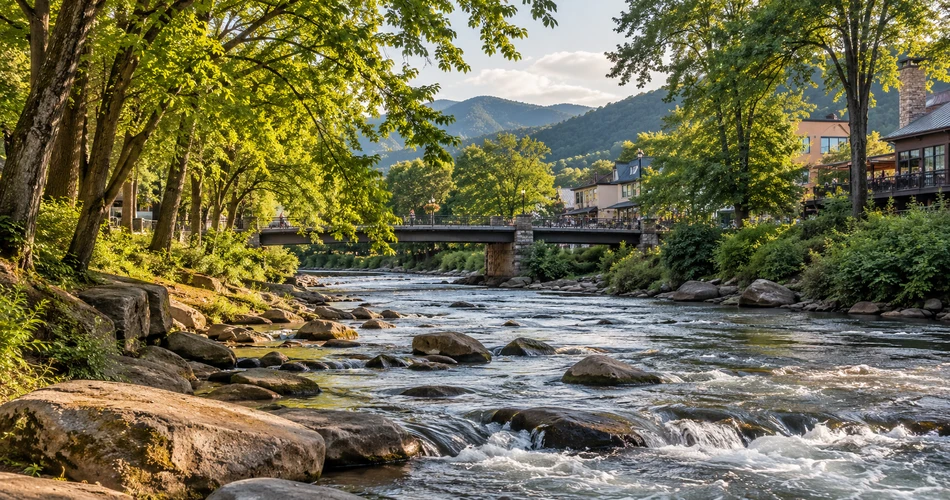
The Gatlinburg Trail Feels Surprisingly Removed From Town
Few transitions around town are as quick as the one onto the Gatlinburg Trail. It begins near the edge of town and follows the West Prong of the Little Pigeon River toward the Sugarlands area, passing through cove hardwood forest and crossing the river on a substantial footbridge. The National Park Service lists the route at about two miles one way, making a roughly four-mile round trip for those walking its full length. It is also unusual within Great Smoky Mountains National Park because bicycles are permitted, and leashed pets are allowed here under park rules.
There is no need to walk the entire Gatlinburg Trail for it to work as a late-day stop. Even a shorter out-and-back can trade traffic noise for moving water, tree cover, and patches of forest floor surprisingly quickly.
Travelers should still treat it as a park trail rather than an urban promenade. Roots, uneven ground, changing light, wet leaves, and wildlife remain possible. Starting late enough to miss some daytime foot traffic but early enough to return before darkness is a better plan than beginning near sunset.
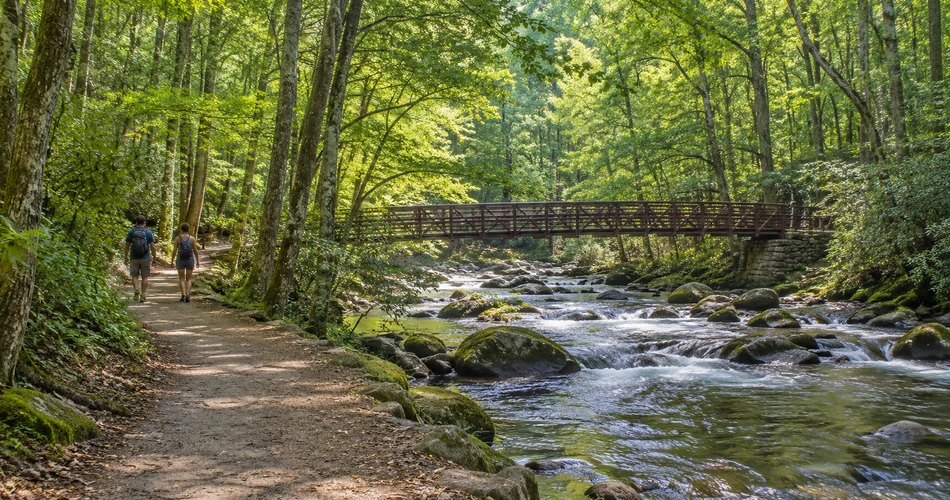
Sugarlands Is Better When It Stops Feeling Like a Starting Line
Sugarlands Visitor Center is only about two miles south of Gatlinburg and is one of the busiest gateways into the national park. Many visitors treat it as a functional stop: obtain information, use the facilities, look at a map, then continue toward Newfound Gap Road or another trailhead. The National Park Service describes Sugarlands as one of the park's highly trafficked areas, but also notes that trails leave the roadway for quieter streams, waterfalls, and historic sites.
That distinction matters later in the day. Instead of arriving with a list of places that still need to be reached, visitors can spend time around the immediate area.
Cataract Falls is the obvious short outing. The NPS describes the waterfall as about 40 feet high and reached by a roughly 0.7-mile round-trip walk beginning near the visitor center. The path follows Fighting Creek through forest, and the falls generally look stronger after rainfall. Climbing around the waterfall is unsafe; the park specifically advises viewing and photographing it from below.
The result is a useful change of pace: no major drive, no summit objective, and no reason to hurry through the trees.
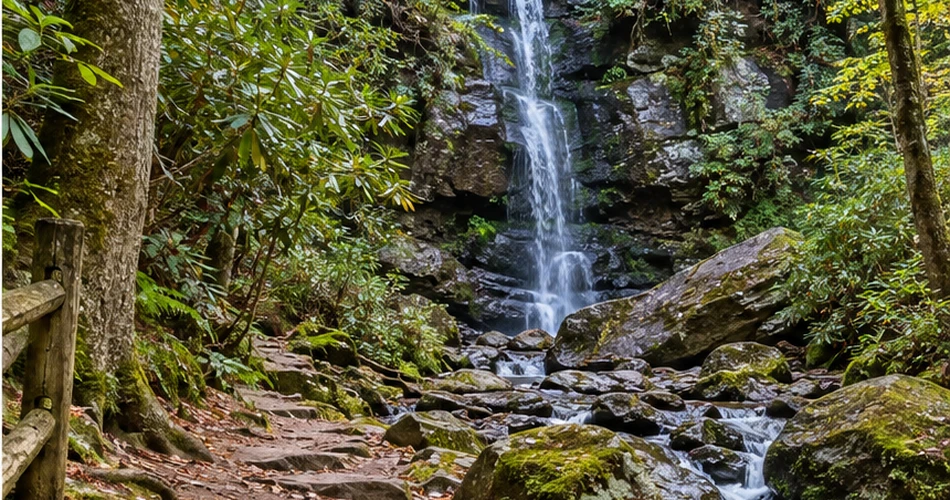
Roaring Fork Becomes a Drive Rather Than Just a Route Between Stops
Roaring Fork Motor Nature Trail is one of the places where slowing down is not merely good advice; the road itself almost demands it. The narrow 5.5-mile route is one-way, winding through dense forest past rushing water, historic structures, trail access points, and roadside scenery. The National Park Service notes that motor homes, buses, trailers, and certain longer vehicles are prohibited, and parking at popular trailheads can be very limited.
In 2026, the scheduled season for the motor nature trail runs from April 17 through November 29, subject to conditions and temporary closures. Visitors should check current road status before heading up because weather, maintenance, or other park operations can change access.
What feels different later is the attention given to small details. Roaring Fork itself becomes louder after rain. Moss darkens on rocks. Log buildings look more at home in the forest when the roadside is not surrounded by people. Near the end of the loop, Place of a Thousand Drips runs across a rock face immediately beside the road and is especially noticeable after wet weather.
The goal here should be an unhurried drive, not a race to fit in another waterfall hike.
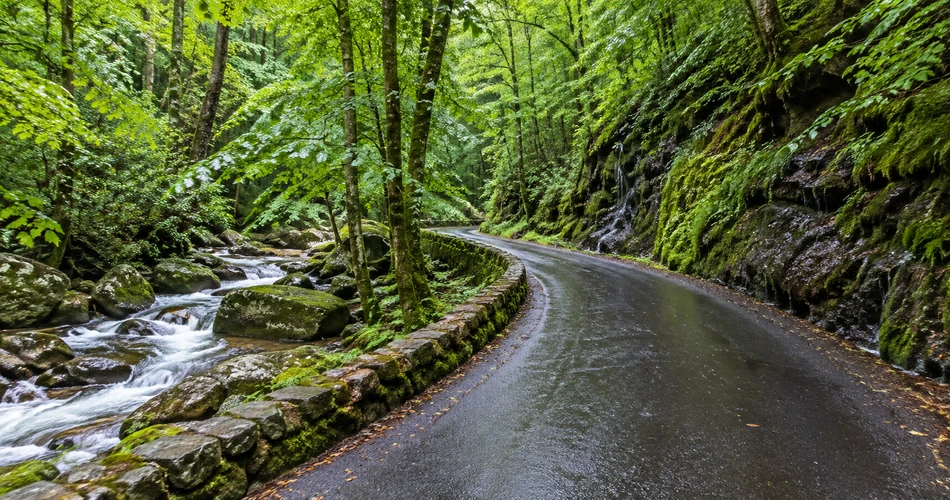
The Arts and Crafts Community Rewards Visitors Who Stop Treating It Like Shopping
The Great Smoky Arts & Crafts Community makes more sense when visitors stop approaching it as a place to buy something quickly. The district follows an eight-mile loop around the Glades and Buckhorn Road area, with more than 100 artists, craftspeople, studios, galleries, and related stops represented in current tourism information. Its roots date to 1937, when craftspeople began establishing studios outside the crowded commercial center of Gatlinburg.
Because individual studios maintain their own hours, “later” here should not mean arriving after businesses have closed. The better strategy is to come during the quieter part of the operating day and spend longer inside fewer places.
Pottery, basketry, painting, jewelry, woodworking, glass, leatherwork, and other media appear throughout the Arts and Crafts Community. Watching a potter work at a wheel or looking closely at wood grain and tool marks makes the visit far more memorable than rushing through several shops in succession.
This is also one of Gatlinburg's better returning-visitor areas because the experience changes according to which studios are open and which makers happen to be working.

A Mountaintop View Changes Once Downtown Starts Lighting Up
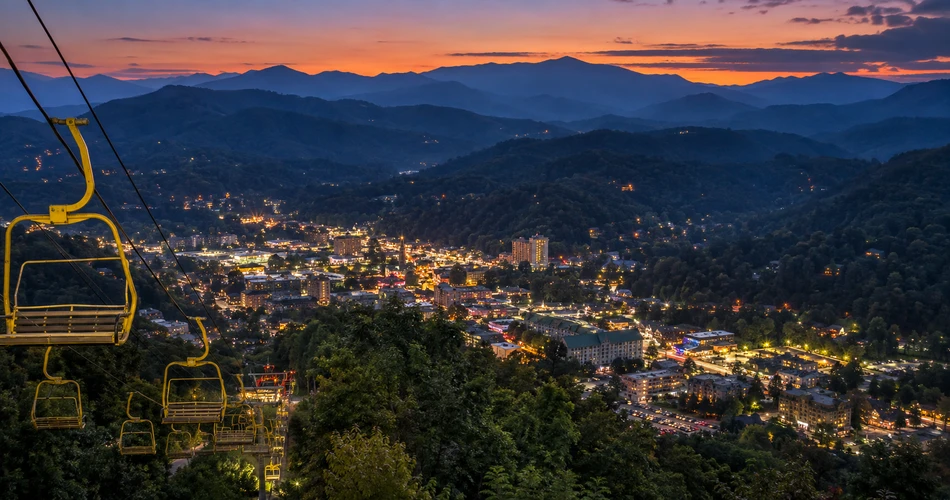
Gatlinburg's elevated attractions are busiest for obvious reasons: the town sits in a narrow mountain setting, and height immediately changes the view. But the most interesting transition often happens between full daylight and night, when the buildings below begin to illuminate while enough ambient light remains to see the surrounding Great Smoky Mountains.
SkyPark, for example, sits above downtown and currently includes its open-air SkyLift, the 680-foot SkyBridge with glass-floor panels, and a mountain trail system. Current 2026 information also describes approximately 1.5 miles of trails on the mountaintop.
The trick is not to assume sunset automatically means fewer people. Sunset itself can be one of the day's most desirable viewing periods, especially during clear weather and fall. The quieter feeling may arrive before or after that concentrated viewing window depending on season, operating hours, and events.
Still, the change in atmosphere is worth noticing. In daylight, visitors tend to look outward toward the ridges. As evening develops, the eye moves between the mountains and town below. That visual balance—mountain silhouette above, illuminated valley beneath—is distinctly Gatlinburg.
The Best Late-Day Plan Is to Leave Space Between Stops
Trying to schedule quietness defeats the purpose. Gatlinburg's visitor volume varies with weekday, season, weather, fall foliage, school calendars, festivals, and national park conditions. A Tuesday evening outside peak season can feel entirely different from a Saturday in October. The useful strategy is therefore not to promise empty places but to choose locations that remain rewarding even when they are not empty.
The national park requires a parking tag for vehicles parked for more than 15 minutes, although there is no general entrance fee. Tags can be purchased at locations including Sugarlands Visitor Center, and the park advises checking current conditions because roads and trails can close temporarily.
A practical late-day combination might be the Gatlinburg Trail followed by River Road, or Sugarlands followed by an easy return downtown. Roaring Fork deserves more time and should not be squeezed in just before darkness.
The important habits are simple: check park conditions, know sunset time, carry water even on short walks, avoid depending on scarce trailhead parking, and resist adding one more stop simply because it fits geographically.
This is where Gatlinburg after the crowds makes the strongest impression. The town has not changed locations. The traveler has simply gained enough space to notice it.
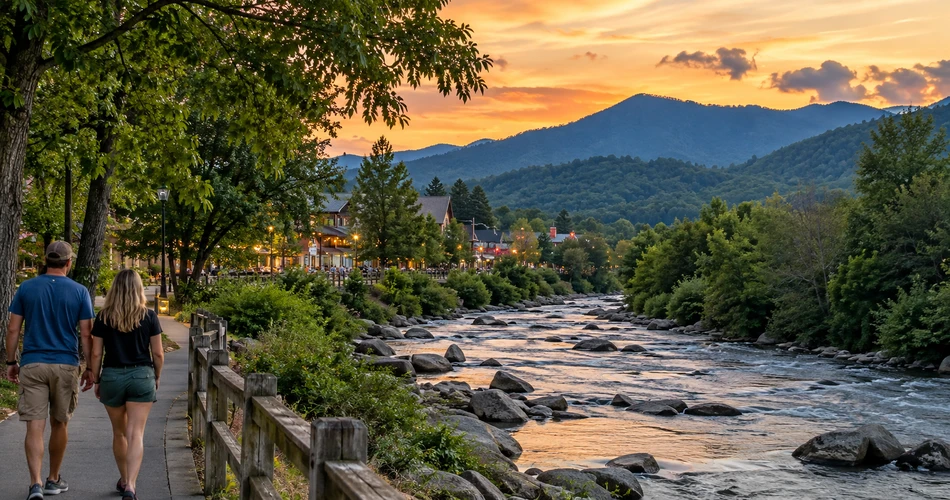
Gatlinburg Is Worth Staying Out for the Second Half of the Day
Gatlinburg is often approached as a list: the Parkway, the national park, a mountain attraction, a waterfall, dinner, then back for the night. That works, but it misses one of the destination's better qualities. The same places can become more interesting once visitors stop treating the day as something to complete.
The river can replace traffic noise for a while. The Gatlinburg Trail can turn a downtown afternoon into a forest walk without a long drive. Sugarlands can be more than the place where a park map is collected. Roaring Fork Motor Nature Trail can become a study in wet rock, old-growth textures, rushing streams, and historic buildings. The Arts and Crafts Community becomes more personal when time is spent with a few makers instead of trying to cover the entire loop.
None of these places requires Gatlinburg to become empty. They only benefit from a little less urgency.
For first-time visitors, that means leaving part of the itinerary intentionally open. For returning travelers, it may mean revisiting somewhere already familiar at a different hour. Gatlinburg's busiest sights are easy to find. Its more memorable side often appears after there is finally time to stand still and look around.
Next post The Gatlinburg Stops You’ll Be Glad You Didn’t Drive Past
Previous Post Where to Go Around Gatlinburg When You Just Want a Good Drive
About Author