English

 Home
Home Hotels
  Car Rental
 Rewards
 Travel Guide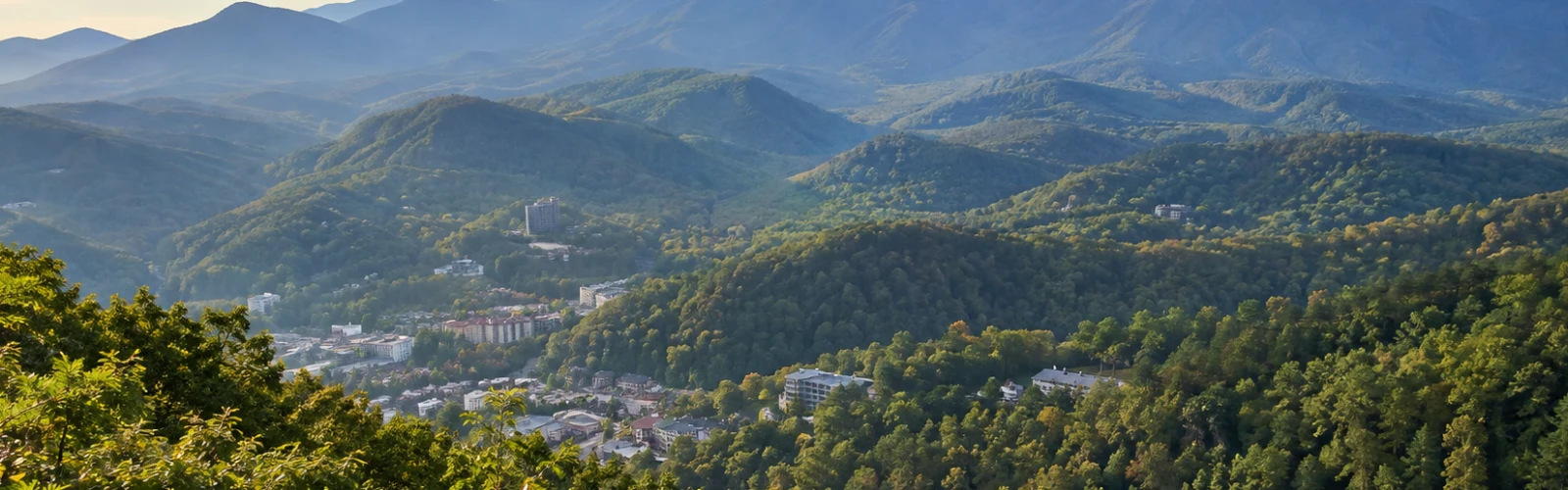
Where to Go When You Want a Quieter Gatlinburg Day

Gatlinburg can be loud, bright, busy, and thoroughly entertaining. It can also be surprisingly quiet without requiring a long drive or a complicated escape plan. That second version of town is easy to miss because the Parkway naturally grabs attention first. Attractions, restaurants, shops, and pedestrians compete for space through the center, while some of Gatlinburg’s calmest places sit only a few turns away.
A quieter Gatlinburg day works best when the goal changes from seeing as much as possible to finding places where there is actually time to notice the setting. The West Prong of the Little Pigeon River runs directly through town. The Gatlinburg Trail links the city with Great Smoky Mountains National Park. Sugarlands Valley Nature Trail offers an easy half-mile woodland loop, while Greenbrier Gatlinburg trades downtown traffic for a forested river valley roughly 20 minutes east. The Gatlinburg Arts and Crafts Community adds another kind of quiet, with studios and workshops spread around an eight-mile loop rather than packed onto one commercial block.
There is no promise that any Gatlinburg location will be empty, especially during fall weekends or holiday periods. Even traditionally quieter areas can become busy. The advantage is that these places give visitors more room to adjust. If one parking lot is full, another river, trail, park, or craft stop can take its place.
That flexibility is what turns a quieter day into a good one.

Start Along River Road Before the Center Finds Its Rhythm
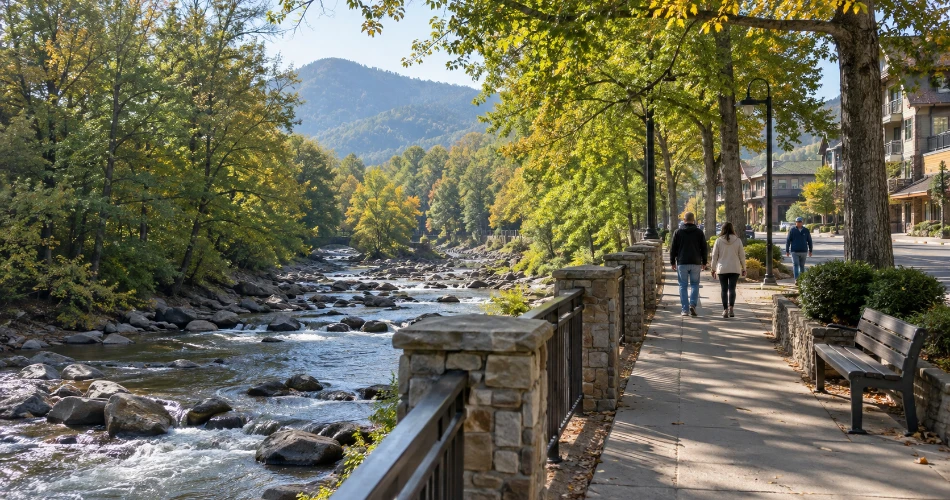
River Road is one of the simplest answers for anyone who wants a quieter start without leaving Gatlinburg. It runs close to the West Prong of the Little Pigeon River and stays within easy reach of the central Parkway, yet the mood can change remarkably quickly once the water and trees take over more of the view.
This is not wilderness, and it should not be described that way. Cars, buildings, bridges, and town activity remain nearby. What changes is the balance. The sound of water moving over rounded rocks becomes easier to hear, benches create natural stopping points, and a walk can happen without constantly passing attraction entrances.
Early morning suits this section particularly well. The sidewalks are calmer, sunlight filters through the trees at a lower angle, and the river feels more like part of the town rather than scenery squeezed between buildings. Returning visitors who have already walked the Parkway several times may find this simple detour surprisingly refreshing.
The best approach is not to give River Road a rigid time slot. Fifteen minutes can be enough for somebody heading toward breakfast. Another traveler might keep walking until the river pulls them closer to the national park end of town.
That freedom is exactly what a quieter Gatlinburg day needs. The goal is not to replace downtown completely. It is to start the morning somewhere that does not immediately demand a decision.
Let the Gatlinburg Trail Carry the Day Into the Woods
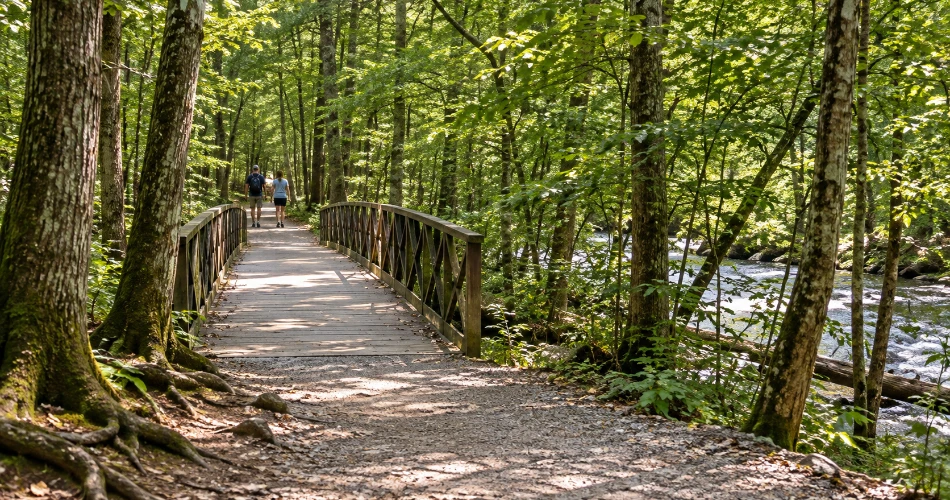
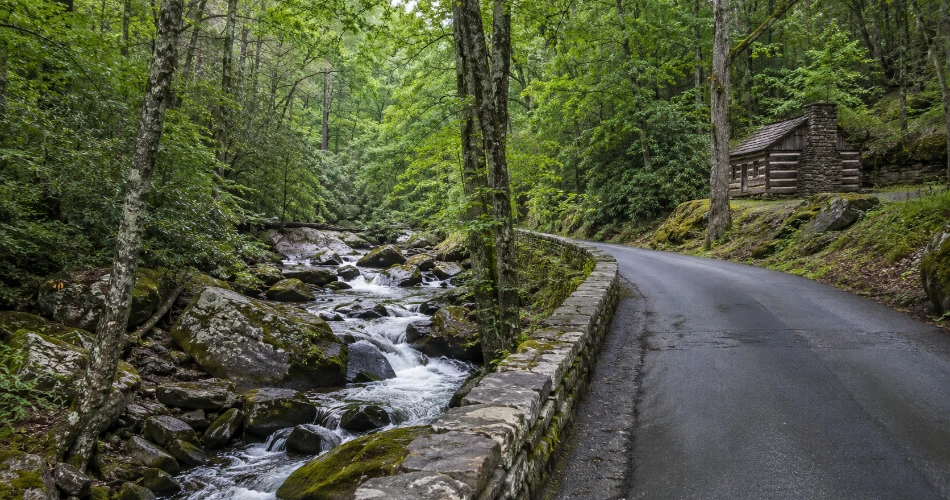
The Gatlinburg Trail is useful because the transition from town to forest happens without a major drive. The trail links Gatlinburg with the Sugarlands area and runs roughly two miles each way. The National Park Service describes it as a broad route that follows the river for much of its length, passing through cove hardwood forest and by remnants of earlier settlement, including old stone chimneys.
It is also one of the unusual park trails where bicycles are permitted. For walkers, the attraction is less about difficulty and more about atmosphere. The farther the route goes, the less important downtown noise becomes. The West Prong appears between trees, roots break through sections of the path, and the pedestrian bridge gives the trail one of its most recognizable scenes.
Nobody needs to complete the full out-and-back. A visitor can walk toward the bridge, continue for as long as the forest feels good, and turn around without treating the trail like a challenge that has to be finished.
That makes it particularly useful for mixed groups. One person may want a longer walk; another may prefer half an hour near the river.
For first-time visitors, the trail demonstrates just how closely Gatlinburg and Great Smoky Mountains National Park are connected. Returning travelers may appreciate something different: a familiar town suddenly feeling much farther away after only a relatively short walk.
Take the Easiest Forest Walk at Sugarlands Valley Nature Trail
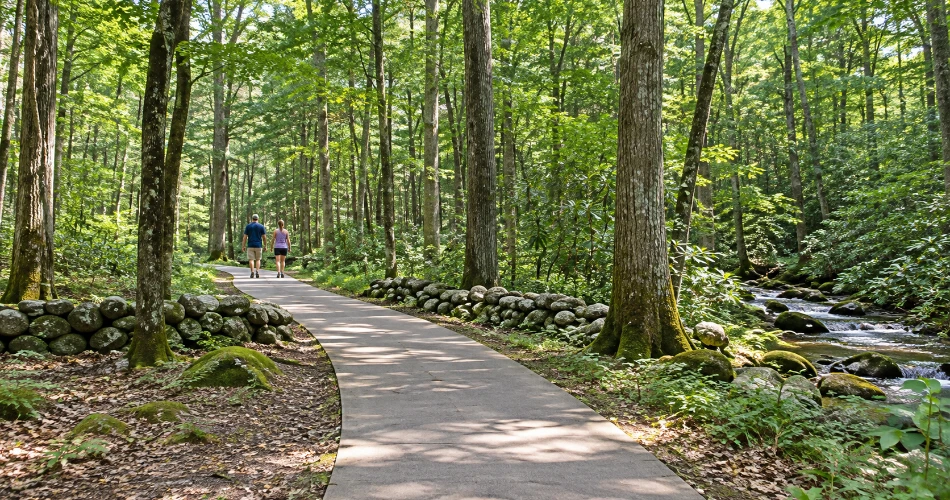
Not every quiet day needs a proper hike. Sugarlands Valley Nature Trail is one of the strongest choices for visitors who want woodland scenery without committing to uneven miles of trail. The National Park Service identifies it as a paved, flat half-mile loop near Sugarlands Visitor Center and currently lists it as the park’s only trail that meets ADA accessibility standards. The route runs through cove hardwood forest and includes streamside views, historic stone features, and an easy connection with the Sugarlands area.
The short distance is part of the appeal rather than a limitation. A traveler can pay attention to mossy rock walls, changes in tree cover, and the West Prong without worrying about reaching a distant destination before turning back.
It also works well on a day when weather is uncertain. Because the loop is short and close to park facilities, it can fit between showers or serve as a calm alternative when a longer hike no longer feels sensible.
Sugarlands Visitor Center itself sits about two miles south of Gatlinburg and provides maps, restrooms, natural-history information, and staff who can help with current conditions.
Visitors who park in Great Smoky Mountains National Park for longer than 15 minutes generally need a physical parking tag. A purchased tag does not guarantee a parking space, so even easy trails benefit from flexible timing.
Go to Greenbrier When the River Needs to Be the Main Attraction
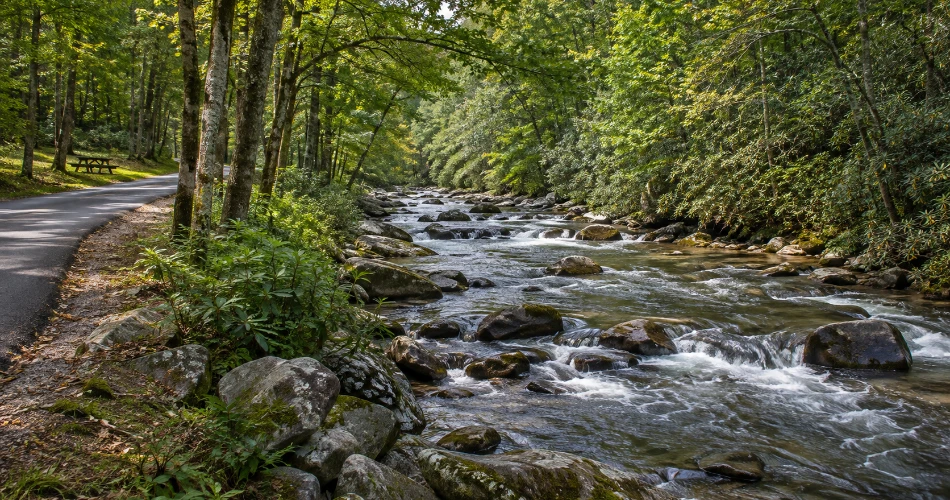
For a bigger break from the commercial center, Greenbrier Gatlinburg is one of the most useful options. The National Park Service places this heavily forested cove about 20 minutes east of Gatlinburg. Its partially paved entrance road follows the Middle Fork of the Little Pigeon River toward a riverside picnic area and trailheads leading farther into the mountains.
The landscape feels different almost immediately. The river spreads around large boulders, trees lean close to the road, and the setting becomes about water and forest rather than views across rooftops. Greenbrier is known for streams, wildflowers, historic sites, waterfalls, and access to longer trails, but a worthwhile visit does not require hiking for hours.
The picnic area is open year-round according to current park information, which makes Greenbrier particularly good for visitors who simply want lunch beside moving water or a quiet place to sit for a while.
That said, “quiet” should not be confused with “unknown.” Greenbrier attracts visitors too, especially during pleasant weekends and wildflower season. Its advantage is space and variety rather than guaranteed solitude.
A good visit can be remarkably simple: drive in slowly, stop legally, spend time beside the river, and decide whether the group wants a trail afterward. There is no need to force a bigger adventure onto the day.
Spend an Afternoon With People Making Things by Hand
A quieter day does not have to mean staying outside all day. The Gatlinburg Arts and Crafts Community gives visitors a completely different break from the Parkway: instead of forest silence, it offers small studios, galleries, and workshops spread around an eight-mile loop in the Glades and Buckhorn Road area.
The community dates to 1937 and today includes more than 100 artists and craftspeople along the loop, according to Gatlinburg’s current visitor information. Pottery, woodwork, paintings, quilts, leather goods, jewelry, baskets, musical instruments, and other handmade work are represented across the district.
The smart way to visit is not to try to stop everywhere. That turns an easy afternoon into another checklist. Instead, travelers can choose a few studios based on genuine interest and give themselves time to look around properly.
A working pottery studio can be more memorable than an hour of conventional souvenir shopping because the visitor sees the process rather than only the finished object. The same is true for woodcarving, weaving, or painting.
Individual hours vary, so a particular studio should be checked before making it the centerpiece of the day. The district is also accessible from Gatlinburg by car, with trolley service operating to the craft area on designated routes.
This is one of the best places for returning visitors who feel they already know downtown. It shows a quieter, more personal side of Gatlinburg without requiring another mountain road.

Use Mynatt Park for the Kind of Break Most Itineraries Forget
Sometimes the quietest stop is not a famous attraction at all. Mynatt Park, at 634 Asbury Lane, is one of Gatlinburg’s city parks and sits only a few minutes from the commercial center. The city lists picnic facilities, sports areas, walking opportunities, restrooms, and access to LeConte Creek among its features. Recent accessibility work added concrete paths throughout the park, improving access to the creek.
That makes Mynatt useful for families and travelers who do not need another “must-see” attraction. A visitor can bring lunch, sit near the water, let children use the playground, or simply take a break somewhere that feels connected to local daily life rather than tourism.
The playground was substantially updated in 2025 with inclusive equipment, shade structures, accessible surfacing, swings, slides, and sensory elements.
LeConte Creek also runs beside the park. Gatlinburg manages a children-only fishing section in this area, subject to local fishing rules and licensing requirements.
Mynatt Park is not trying to compete with the Smokies. That is precisely why it belongs in a quieter-day plan. After several hours of sightseeing, a picnic table beside a creek can feel more valuable than one more attraction ticket.
For families especially, this kind of stop creates the breathing room that keeps the rest of the day enjoyable.

Save Roaring Fork for the Right Time, Not Simply Any Time
The Roaring Fork Motor Nature Trail often sounds like the obvious choice for a quiet Gatlinburg outing. Sometimes it is. Sometimes it absolutely is not.
The 5.5-mile one-way road travels through dense forest past streams, historic buildings, and hiking access. The road begins beyond the Cherokee Orchard area and eventually passes trail access toward Grotto Falls and the roadside Place of a Thousand Drips.
But Roaring Fork is popular. The National Park Service specifically warns that it can experience heavy visitation and congestion, particularly during busy fall periods. A traveler looking specifically for quiet should therefore think about timing rather than assuming the road itself guarantees peace.
In 2026, the motor trail is scheduled to remain open through November 29, weather permitting. It is a steep, narrow, one-way road, and buses, motor homes, long vans, and vehicles towing trailers are prohibited.
A few practical choices improve the odds of a calmer experience:
- Go earlier in the day or outside peak weekend periods.
- Do not build the entire itinerary around one crowded trailhead.
- Keep Greenbrier, Mynatt Park, or Sugarlands as backup options.
Roaring Fork is beautiful enough to deserve time. It is simply better when the visitor understands that “scenic” and “quiet” are not always the same thing.
A Quiet Day Works Better When There Is a Second Choice
The easiest way to ruin a quieter Gatlinburg day is to become determined that one particular place must work. Great Smoky Mountains National Park has limited parking at many trailheads and overlooks, and the park itself recommends arriving with backup plans because popular locations can fill.
That advice fits this itinerary especially well. If the Gatlinburg Trail feels busy, Sugarlands Valley Nature Trail offers another short forest option. If Roaring Fork traffic is building, Greenbrier may better suit the mood. If weather makes the park less appealing, the Gatlinburg Arts and Crafts Community provides a slower afternoon without abandoning the day altogether.
Current park conditions should always be checked before driving toward a trail or secondary road. The park is open year-round, but weather, construction, and seasonal schedules can affect individual roads and facilities.
The useful part of a quiet day is not silence. Gatlinburg is too popular a destination for that to be guaranteed. What visitors can control is how much pressure they put on the schedule.
A walk beside the river, half an hour in a craft studio, a picnic at Mynatt Park, or an easy woodland loop may not sound as dramatic as a packed attraction list. Yet those are often the moments when Gatlinburg feels most like a mountain town instead of a race through one.
That is usually reason enough to slow the day down.
Next post Where to Go When You Want a Quieter Gatlinburg Day
Previous Post The Gatlinburg Stops That Feel Different the Second Time Around
About Author