English


 Home
 Hotels
 Car Rental
 Rewards
 Travel Guide
The Gatlinburg Sights That Are Actually Worth Seeing

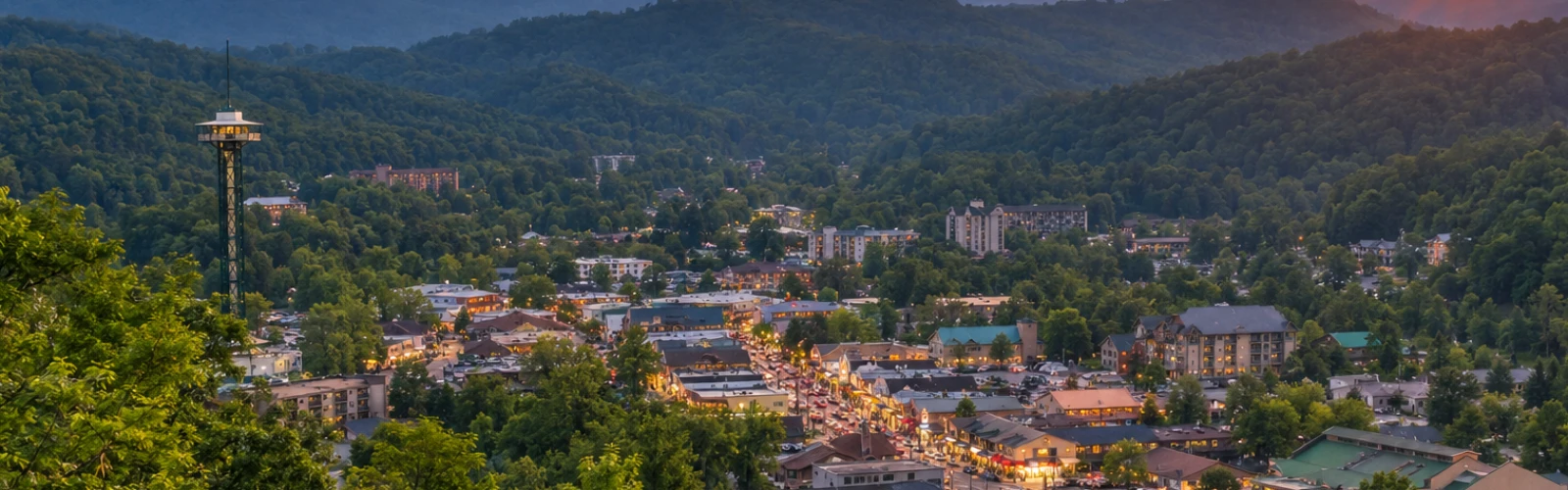
Gatlinburg has no shortage of things competing for attention. A short walk along the Parkway can put observation towers, arcades, mountain lifts, museums, restaurants, souvenir shops, and glowing signs within the same field of view. That variety is part of the town's personality, but it also makes a first visit surprisingly easy to overplan. The best Gatlinburg sights are not necessarily the ones with the biggest sign or longest queue. They are the places that show why this small Tennessee mountain town feels different from dozens of other vacation destinations.
That means giving the Great Smoky Mountains National Park a real share of the itinerary, making time for a few high-elevation views, choosing paid Gatlinburg attractions selectively, and leaving enough room to walk rather than rushing from ticket window to ticket window. Some worthwhile stops take half a day. Others need only an hour. A few are at their best when clouds roll through, the pavement is still damp from rain, or downtown lights begin coming on against a dark mountain backdrop.
Great Smoky Mountains National Park Deserves the Biggest Share of the Day
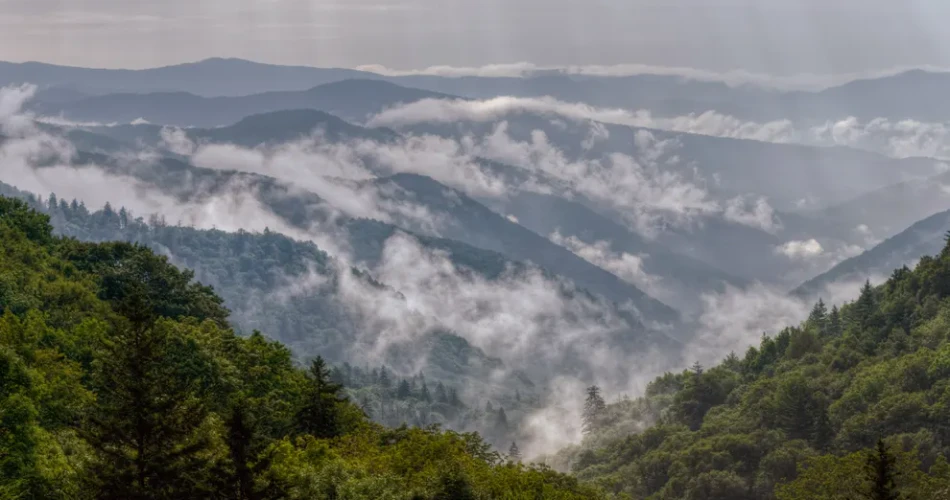
Anyone sorting through the long list of things to do in Gatlinburg should start with the reason the town became such an important mountain destination in the first place. Great Smoky Mountains National Park begins immediately south of Gatlinburg and covers more than 522,000 acres across Tennessee and North Carolina. Unlike a single viewpoint or attraction, the park rewards time spent moving slowly through different elevations, forests, streams, historic sites, and mountain gaps.
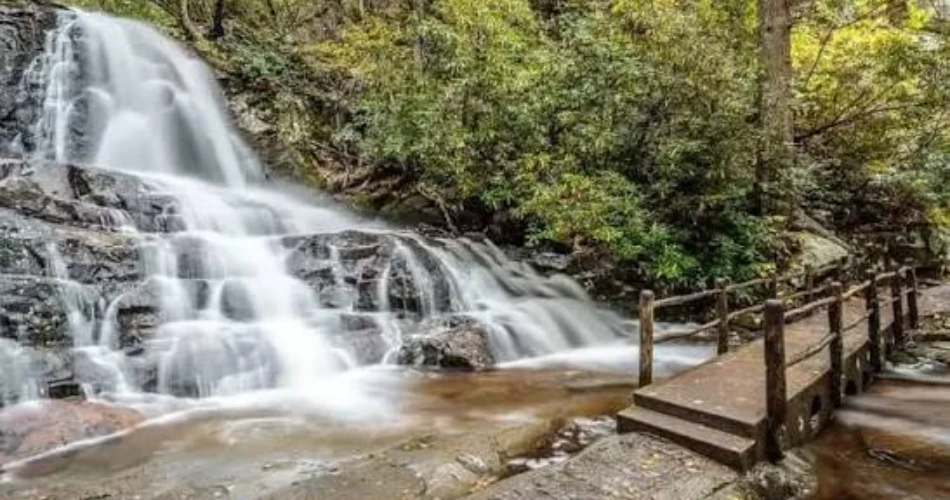
Sugarlands Visitor Center, about two miles south of Gatlinburg on Newfound Gap Road, is one of the easiest starting points. Inside are natural-history exhibits, maps, park information, a bookstore, and staff who can help visitors adjust plans for weather or closures. Nearby Cataract Falls adds an easy walk without turning the morning into a major hike. The waterfall is roughly 40 feet high and reached by a 0.7-mile round-trip walk from the visitor center. It tends to look its best after rain.
A few practical details make a park day easier:
- Great Smoky Mountains National Park does not charge an entrance fee.
- Vehicles parked for more than 15 minutes generally need a valid parking tag.
- Road, trail, and weather conditions should be checked before heading into higher elevations.
Roaring Fork Is the Scenic Drive That Feels Closest to Old Gatlinburg
Roaring Fork Motor Nature Trail earns its place among the best Gatlinburg sights because it changes the pace almost immediately. Instead of wide highways and open overlooks, this 5.5-mile one-way road slips through thick forest beside rushing water, old mountain structures, moss-covered rocks, and trailheads. The road is narrow enough that drivers naturally slow down, which is exactly how it should be experienced.
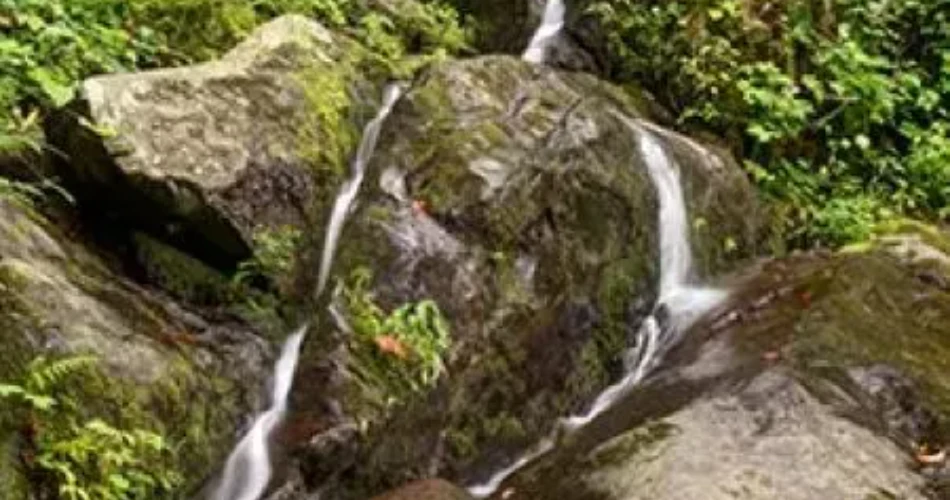
Before the motor trail itself, the Noah “Bud” Ogle area offers a look at a historic mountain farmstead. Farther along, streams appear beside the road, forest closes over the pavement, and historic buildings provide some context for the families who lived in these valleys long before modern Gatlinburg developed below. Toward the end of the route, Place of a Thousand Drips sends water over a rock face beside the roadway and becomes especially noticeable after wet weather.
This is also where planning matters. Roaring Fork is seasonal, parking at popular trailheads can be very limited, and buses, trailers, and motor homes are not permitted on the motor nature trail. In 2026, the scheduled road season runs from April 17 through November 29, although conditions can still cause changes.
For travelers who want Smoky Mountain views without spending every hour at a roadside overlook, Roaring Fork offers something better: the feeling of being inside the landscape rather than simply looking at it.
Newfound Gap and Kuwohi Are Worth the Climb for the High-Country Views
The drive from Gatlinburg toward Newfound Gap is one of the most effective ways to understand just how quickly the Smokies change with elevation. The road rises from lower hardwood forest toward cooler mountain environments, with pullouts appearing along the way. Newfound Gap sits at 5,046 feet on the Tennessee–North Carolina line and is the lowest drivable gap through Great Smoky Mountains National Park. Weather here can be noticeably different from Gatlinburg, so carrying an extra layer is sensible even when downtown feels warm.
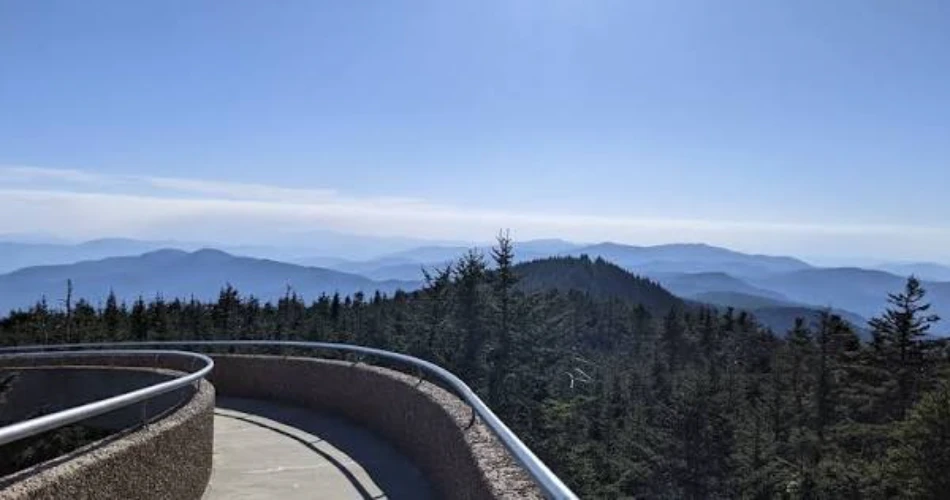
From Newfound Gap, Kuwohi Road continues toward the park's highest point when the seasonal road is open. Kuwohi, formerly known as Clingmans Dome, reaches 6,643 feet. The observation tower requires a one-mile round-trip walk. The path is paved, but the half-mile climb to the tower is steep enough to surprise visitors who see the word “paved” and assume “easy.” At the top, clear weather can open 360-degree Smoky Mountain views across repeated blue-green ridgelines.
The key phrase is clear weather. Clouds can swallow the summit in minutes, temperatures can be 10–20°F cooler than the surrounding lowlands, and road access can change because of weather or seasonal closures. That uncertainty is not a reason to skip Kuwohi. It is simply part of visiting a real high-elevation mountain environment.
Ripley's Aquarium of the Smokies Is One Indoor Attraction That Earns the Time
It would be easy to dismiss an aquarium in a mountain town as something to save only for rain, but Ripley's Aquarium of the Smokies is one of the downtown Gatlinburg attractions that works even when the weather is perfect outside. It also gives families or mixed-age groups a change of pace after a morning spent driving mountain roads or hiking short trails.
Shark Lagoon is the section most visitors remember. A moving glidepath travels through an underwater tunnel with sharks, green sea turtles, sawfish, moray eels, and large schools of fish moving above and around the viewing area. It is far more visually convincing than a small row of tanks and gives even visitors without a strong interest in aquariums something worth slowing down for.
Penguin Playhouse is another strong section, particularly because the aquarium keeps African penguins, an endangered species, in an indoor/outdoor habitat with underwater viewing areas and crawl-through viewing spaces. Daily programming can also include feedings, dive presentations, penguin activities, or other animal-focused events, although schedules vary by date.
It is best treated as a substantial stop rather than a 30-minute escape from rain. A visitor who actually watches the animals and reads some of the interpretation can easily spend a couple of worthwhile hours inside.

Gatlinburg SkyPark Is Most Worthwhile When the View Is the Main Reason to Go
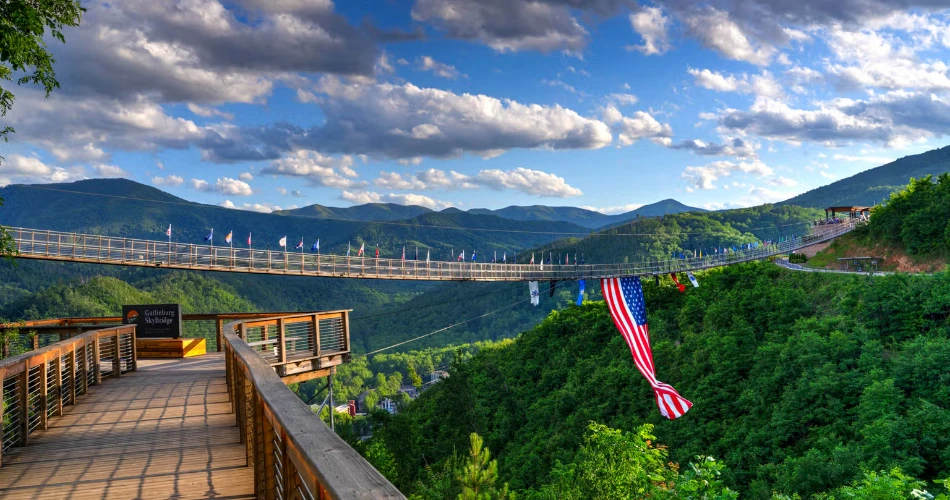
Gatlinburg SkyPark makes sense for travelers who want a classic elevated view of both town and mountains without committing to a mountain hike. The ride begins with the familiar yellow SkyLift climbing from downtown toward Crockett Summit. At the top, open viewing areas look across Gatlinburg toward the ridges of Great Smoky Mountains National Park, giving visitors a perspective that is difficult to appreciate while walking between buildings on the Parkway.
The SkyBridge is the attraction's headline feature. It stretches almost 700 feet across the valley and includes see-through sections that make the crossing considerably more interesting for anyone comfortable with heights. Visitors do not need to hurry across; the better approach is to walk slowly, stop where permitted, and pay attention to how compact Gatlinburg appears against the much larger mountain landscape.
Timing affects the experience. A flat gray afternoon can make a mountaintop ticket feel less rewarding, while late afternoon or the period around sunset can provide much better depth in the ridges. After dark, downtown lights create an entirely different view.
This is not a substitute for going into Great Smoky Mountains National Park. It is a complementary perspective—a town-and-mountain panorama rather than a wilderness experience—and that distinction is what makes Gatlinburg SkyPark worth adding selectively.
Anakeesta Is Better When It Gets More Than a Quick Ride to the Top
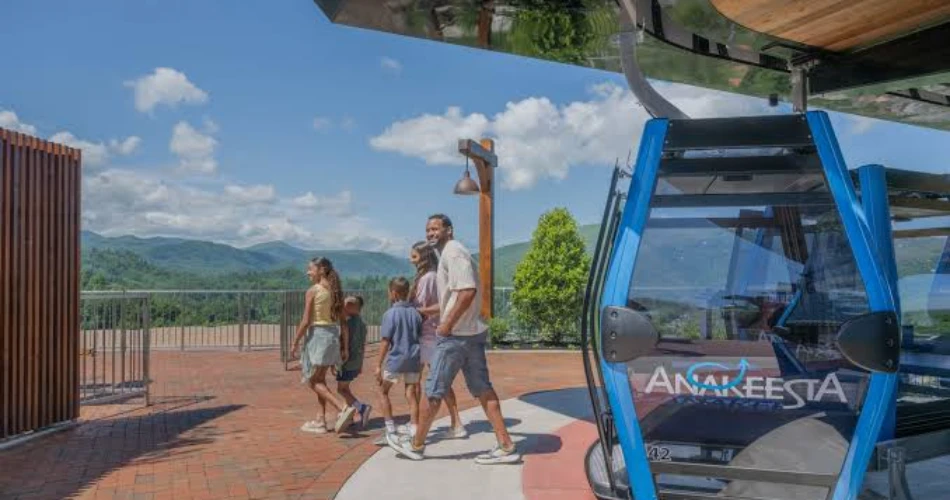
An Anakeesta trip can feel overpriced or rushed when it is treated simply as transportation to another overlook. It makes far more sense when several hours are set aside for the mountaintop itself. Visitors currently reach the summit from downtown by the Crystal Express Gondola or Ridge Rambler, then move between gardens, elevated walkways, viewing areas, play spaces, dining, and optional add-on activities.
For scenery, AnaVista Tower is the obvious target. The tower has 86 steps to its upper platform and provides a 360-degree view that helps visitors identify the surrounding ridges and Mt. LeConte area. Nearby Vista Gardens slows the experience down with landscaped paths rather than another queue-based attraction.
The Treetop Skywalk is another section worth making time for. Anakeesta describes it as more than 1,000 feet of elevated walkway spread across 16 suspension bridges in the forest canopy. The setting is more interesting when walked slowly enough to notice the trees and changing elevation rather than simply racing to the other end.
Extra-cost coasters and zip lines are available, but they are not essential to justify the visit. For many travelers, the better combination is the ride up, tower, skywalk, gardens, an unhurried meal, and a final mountain view before heading back downtown.
The Great Smoky Arts & Crafts Community Shows a Side of Gatlinburg the Parkway Cannot
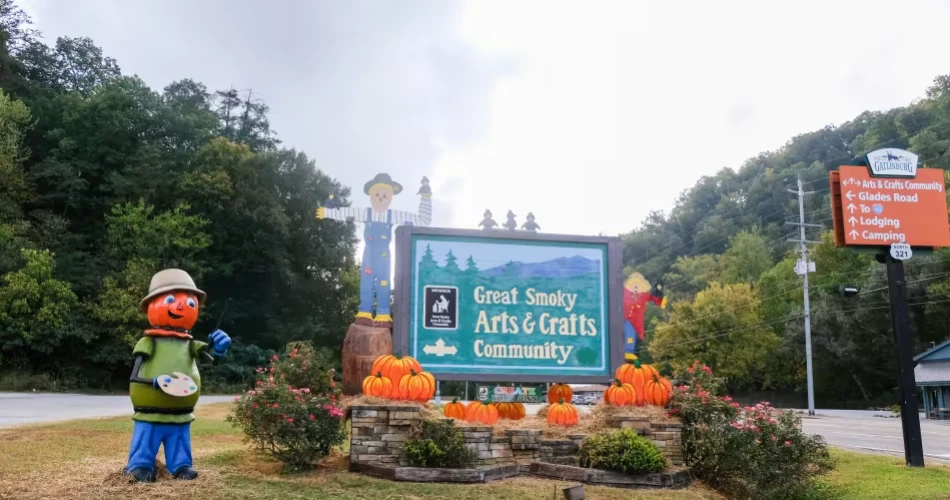
One of the easiest mistakes in Gatlinburg is assuming the entire town looks like the busiest blocks of the Parkway. The Great Smoky Arts & Crafts Community provides a useful correction. Its eight-mile loop east of downtown is associated with more than 100 artists, craftspeople, shops, studios, and galleries, with roots in an artisan community that began taking shape in the Glades area in 1937.
This is not a single attraction with an entrance gate, so it works best for travelers who enjoy wandering. Pottery, woodcarving, painting, weaving, leatherwork, jewelry, handmade musical instruments, and other forms of craft appear throughout the loop. Some studios allow visitors to watch makers working, which adds considerably more interest than simply walking into another souvenir store.
The best approach is not to try to stop everywhere. Choosing a few studios based on the craft itself keeps the visit manageable. Someone interested in ceramics might spend longer talking with a potter; another visitor may prefer woodwork or mountain-themed paintings. Returning travelers may find this area particularly rewarding because it reveals more of Gatlinburg's creative history after the obvious first-trip landmarks have already been checked off.
It is also one of the better places to buy something that actually reflects the region rather than a mass-produced souvenir that happens to have “Smoky Mountains” printed on it.
Downtown Gatlinburg Is Worth Walking Rather Than Treating as a Road Between Attractions
Downtown Gatlinburg can look chaotic from a car. On foot, its scale makes more sense. The Parkway runs through the core of town with side streets, pedestrian spaces, shops, attractions, and occasional views toward the surrounding forested slopes. A slower walk also makes it easier to notice the Little Pigeon River and quieter riverfront sections that are easy to miss in traffic.
Not every storefront needs attention. The worthwhile part is the contrast: one moment is bright signs and crowds, while a few minutes later the mountains appear between buildings or a chairlift rises toward the wooded hillside.
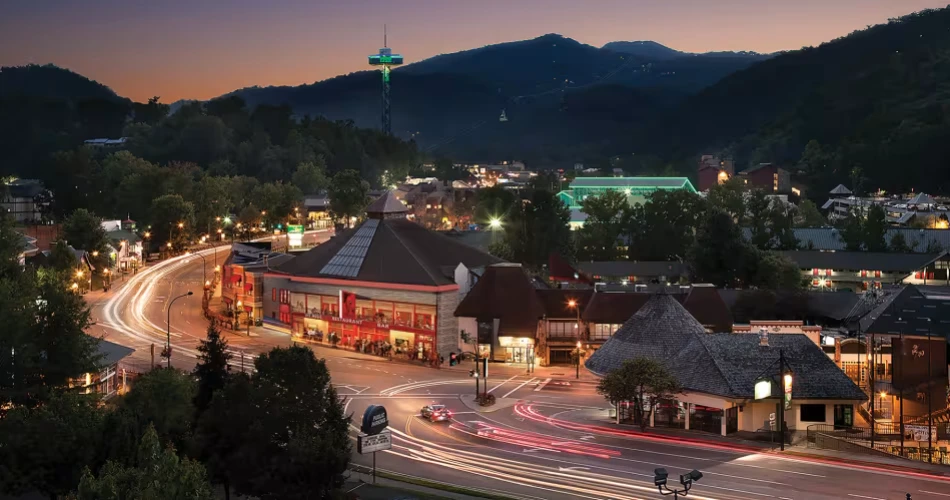
The Gatlinburg Space Needle remains a useful visual anchor. The 407-foot observation tower uses glass elevators to reach a deck with 360-degree views over Gatlinburg and the Smokies. Its view overlaps somewhat with the mountaintop attractions, so travelers do not necessarily need to pay for every elevated viewpoint in town. Those who already plan to visit SkyPark or Anakeesta can simply appreciate the tower from street level.
Early evening is particularly good for walking. The ridges become silhouettes before the sky goes fully dark, lights begin to appear along the Parkway, and Gatlinburg finally looks like what it is: a busy tourist town sitting in a surprisingly narrow mountain valley.
The Sights Worth Remembering Are the Ones That Could Only Belong Here
A good Gatlinburg itinerary does not need to collect attractions like checkmarks. It needs enough variety to show the destination properly. The strongest days usually pair something natural with something built: Sugarlands and Cataract Falls before downtown, Roaring Fork before the aquarium, or Newfound Gap and Kuwohi followed by an evening view over the Parkway.
That balance matters because Gatlinburg's identity comes from the line between the town and the national park. The mountains are never merely decoration behind the attractions. They control the weather, shape the roads, create the views, and explain why Gatlinburg exists where it does. The most worthwhile Gatlinburg sights make that relationship obvious.
First-time visitors should give the national park priority, choose one or two major paid attractions rather than trying to visit everything, and leave room for an unplanned stop when clouds lift or a roadside view suddenly opens. Returning travelers can go deeper with the Arts & Crafts Community, quieter park roads, or repeat visits to favorite high-elevation overlooks.
The result is a trip that feels less like a race down a list of Gatlinburg attractions and more like time genuinely spent in the Smokies—and those are usually the visits people remember longest.
Next post Where to Start Exploring Gatlinburg on a First Visit
Previous Post Places You Shouldn’t Miss on Your First Gatlinburg Visit
About Author