English

 Home
Home Hotels
  Car Rental
 Rewards
 Travel Guide
Where to Start Exploring Gatlinburg on a First Visit

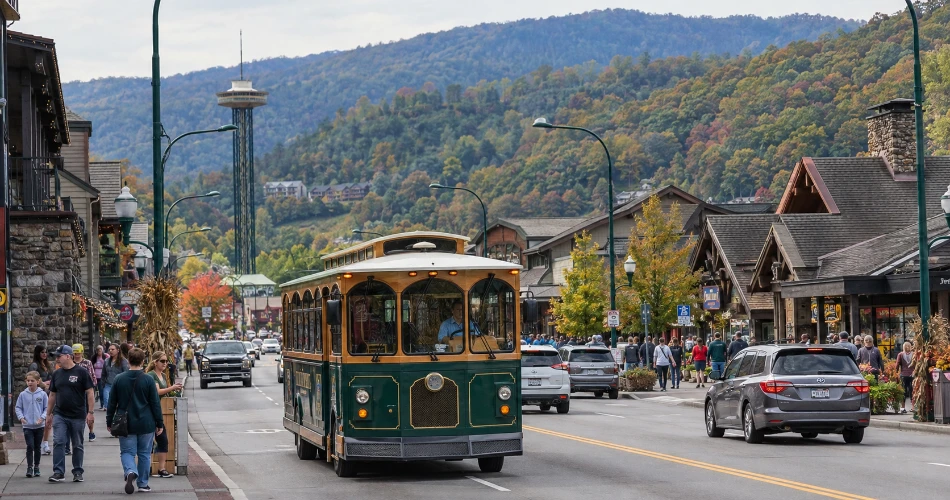
Gatlinburg can feel surprisingly busy for a mountain town. One moment there are wooded slopes and misty ridges ahead; a few minutes later, the sidewalks are lined with candy shops, restaurants, observation attractions, galleries, arcades, and families deciding where to go next. That contrast is part of the fun, but it also makes choosing a starting point important. Trying to fit every Gatlinburg attraction into the first few hours usually creates more rushing than sightseeing.
A better first day establishes the shape of the town before heading farther afield. Downtown Gatlinburg and the Gatlinburg Parkway provide an easy introduction, Sugarlands Visitor Center explains what lies beyond the city limits, and one well-chosen mountaintop attraction gives visitors the mountain panorama they came to Tennessee hoping to see. An aquarium visit, a quieter arts district, and a little time beside the river can then fill the day without turning it into a checklist. With that order, the first day becomes less about covering miles and more about understanding what makes Gatlinburg work.

Start on the Gatlinburg Parkway to Learn the Shape of Town
For visitors wondering where to begin with Gatlinburg attractions, the Parkway is the most sensible answer. It cuts through the center of Downtown Gatlinburg and places restaurants, shops, entertainment venues, mountain lifts, and side streets within a relatively compact area. The official tourism bureau specifically recommends walking the downtown Parkway, and the nearby River Walk provides a quieter alternative beside the Little Pigeon River.
The first walk does not need an itinerary down to the minute. It works better as reconnaissance. Visitors can note which attractions deserve a return later, look for dinner possibilities, locate trolley stops, and get a sense of how far apart places actually are. Gatlinburg often looks more spread out on a map than it feels while walking through the central district.
A few simple first-hour priorities make the walk useful:
- Walk a stretch of the Gatlinburg Parkway before committing to several paid attractions.
- Take a short detour toward River Road when the sidewalks feel crowded.
- Note the locations of mountain lifts and major attractions for later in the day.
This gentle start also provides something easily missed when arriving by car: views of the wooded slopes rising almost immediately behind Downtown Gatlinburg.
Make Sugarlands Visitor Center the Gateway to the Smokies
Downtown explains Gatlinburg as a vacation town; Sugarlands Visitor Center explains why the town exists where it does. Located about two miles south of Gatlinburg on Newfound Gap Road, Sugarlands is one of the most useful first stops for visitors planning time in Great Smoky Mountains National Park. Rangers can answer questions, and visitors can pick up park information before driving farther into mountain country.
This stop is especially worthwhile for first-time visitors because the national park begins almost at Gatlinburg's doorstep. Road conditions, weather, parking, trail plans, and the time required to reach different areas can affect an otherwise simple outing. A little preparation here can prevent a day from becoming an endless drive between crowded trailheads.
Great Smoky Mountains National Park has no general entrance fee, but vehicles parked inside the park for longer than 15 minutes generally require a parking tag. Current rates are $5 daily, $15 weekly, and $40 annually, and Sugarlands has a parking-tag machine.
Rather than treating Sugarlands as a quick restroom stop, visitors should allow enough time to look at the park information and decide whether the next few hours call for a waterfall walk, scenic drive, or longer trail.

Walk to Cataract Falls for an Easy First Taste of the Park
Cataract Falls makes sense immediately after Sugarlands because the walk begins from the visitor-center area rather than requiring another drive and another search for parking. According to the National Park Service, the route is about 0.7 mile round trip and leads through forest along Fighting Creek to a narrow, roughly 40-foot waterfall. The falls are typically more impressive following substantial rainfall.
This is not one of the Smokies' huge backcountry waterfall hikes, and that is precisely why it works well on an arrival day. Visitors can leave the noise of the Parkway behind, walk under a leafy canopy, hear moving water, and experience an actual park trail without committing half a day. The forest also provides an immediate contrast with Downtown Gatlinburg only a short distance away.
Proper footwear is still preferable even on a brief walk, particularly when the trail is damp. The National Park Service specifically warns visitors against climbing around Cataract Falls because people have been seriously injured there. The best photographs are taken from the viewing area at the bottom rather than from slippery rocks beside the cascade.

Take the Gatlinburg Trail When a Longer Walk Sounds Better
Travelers who still have energy after Sugarlands can consider the Gatlinburg Trail instead of immediately returning to downtown attractions. The trail runs for about two miles one way and follows relatively gentle terrain between the park and Gatlinburg, with forest, river scenery, and sections of wide pathway. The National Park Service describes it as mostly flat and wide, although roots, rocks, uneven dirt, and some steeper stretches remain.
Its location makes it particularly useful on a first day. Rather than heading straight into a strenuous mountain hike, visitors get a quieter introduction to the park's landscape while remaining close to town. It can be treated as an out-and-back walk, so there is no obligation to cover the full length.
The Gatlinburg Trail also has an unusual distinction inside Great Smoky Mountains National Park: it and the Oconaluftee River Trail are the two park trails where leashed pets are permitted. Park rules require pets to remain on a leash no longer than six feet.
For an arrival afternoon, even a partial walk can be enough. Mountain streams, broad trees, and the shift from traffic noise to forest sounds often provide a better introduction to the Smokies than simply viewing the mountains through a windshield.

Choose One Mountaintop View Instead of Trying to Do Everything
One of the easiest first-day mistakes is booking several elevated Gatlinburg attractions simply because they all promise mountain views. A better approach is choosing one major mountaintop experience and allowing enough time to enjoy it.
Gatlinburg SkyPark begins directly on the Parkway with the open-air yellow SkyLift. At the summit, its best-known feature is the roughly 680-foot SkyBridge spanning the mountainside, while newer areas include trails and Clayton's Landing. The attraction rises about 500 vertical feet above downtown and offers broad views toward Great Smoky Mountains National Park.
Anakeesta offers a different type of outing. Its downtown entrance is at 576 Parkway, and visitors travel to the mountaintop by its Crystal Express gondola or Ridge Rambler. The mountaintop park includes Vista Gardens, the AnaVista observation tower, a treetop walk, dining, and optional adventure activities. Its new Crystal Express system opened in 2026.
SkyPark suits travelers wanting a classic chairlift, suspension bridge, and panoramic stop. Anakeesta generally suits visitors wanting a longer mountaintop stay with gardens and multiple activities. Either can comfortably anchor part of a first afternoon without needing to squeeze both into the same schedule.

Keep Ripley's Aquarium of the Smokies for the Middle of the Day
Ripley's Aquarium of the Smokies is one of the easiest major Gatlinburg attractions to pair with a downtown day because it sits at 88 River Road near the center of town. It also works particularly well during the warmest part of a summer afternoon, during rain, or when families need a break from hills and outdoor walking.
The aquarium deserves more than a rushed walkthrough. Shark Lagoon uses a moving glidepath through an underwater environment containing sharks, green sea turtles, sawfish, moray eels, and other marine species. Penguin Playhouse focuses on African penguins and includes viewing areas that allow guests to see the birds swimming as well as moving around their habitat.
Daily programming can also include animal-focused presentations such as penguin feedings, a penguin parade, ray programs, and reef-related dive shows, although schedules should always be checked for the specific date of a visit.
What makes the aquarium especially useful on a first Gatlinburg day is its location. Once visitors finish, they can walk back toward the Parkway rather than losing another hour repositioning the car. It adds a completely different environment to a day otherwise dominated by mountains, forests, and outdoor views.

Leave Time for the Great Smoky Arts & Crafts Community
The Great Smoky Arts & Crafts Community shows a side of Gatlinburg that can disappear beneath the brighter Parkway signs. Located away from the busiest central blocks around Glades Road and East Parkway, the community follows an approximately eight-mile loop filled with working studios, galleries, shops, and places connected to regional craft traditions. Official Gatlinburg visitor information lists more than 100 artists and craftspeople around the loop.
This area rewards slower travel. A pottery studio is more interesting when there is time to watch clay being shaped rather than simply walking past shelves. Woodcarving, basketry, paintings, leatherwork, candles, jewelry, and other handmade pieces give visitors a clearer connection to the creative traditions that have long been part of the region.
The community traces its organized history to 1937, when craftspeople began establishing studios in the Glades area outside downtown.
It is best treated as a separate block of the day rather than a quick shopping stop. Visitors interested in handmade work could easily spend several hours moving around the loop, while others can select a few studios and combine them with an East Parkway drive. Either approach creates a welcome change of rhythm after the concentrated activity of Downtown Gatlinburg.

Use the Free Gatlinburg Trolley Before Moving the Car Again
Driving into Downtown Gatlinburg, parking, leaving, and then trying to find another space a few blocks away can consume more time than expected. The city's trolley system is therefore worth understanding on the first day rather than the last.
Gatlinburg Trolleys do not charge a fare and operate daily throughout the year, although individual route hours can vary. All trolleys stop at the Mass Transit Center near Ripley's Aquarium of the Smokies, making that area a useful reference point for visitors getting oriented. A Park-n-Ride option is also available at the Gatlinburg Welcome Center, allowing travelers to leave a vehicle outside the busiest downtown blocks and ride into town.
The trolley is most useful when visitors group nearby activities together instead of treating it as a door-to-door shuttle for every stop. A morning Parkway walk, aquarium visit, and downtown meal can often be handled without repeatedly returning to a vehicle.
First-time visitors should also remember that trolley schedules can change with routes and special events. Checking the current route information before setting out is more reliable than assuming an older map is still accurate.
Using transit does not remove Gatlinburg's busy-season traffic, but it can remove the annoyance of searching for a new parking space every time the itinerary changes.

Finish the First Day With a Slower Walk Along River Road
After several Gatlinburg attractions, a quiet final stop often feels better than another ticketed activity. River Road and the Little Pigeon River provide exactly that change of pace. The river runs close to the Parkway, yet even a short move away from the main commercial strip reduces some of the noise and visual clutter.
Visitors can walk beside the water, sit for a while, and look back toward town without needing another schedule. The official Gatlinburg walking guide specifically recommends the River Walk as a quieter alternative to the Downtown Parkway and notes its benches and riverside setting.
Late afternoon and early evening are particularly pleasant when the temperature begins to ease and the light reaches through gaps between buildings and wooded slopes. It is also a useful moment to decide what deserves more time on the following day. After seeing downtown, Sugarlands, and at least one major attraction, travelers usually have a much clearer sense of whether their next priority should be hiking, scenic driving, crafts, family attractions, or additional mountain viewpoints.
That is the real value of a well-paced first day. Gatlinburg stops feeling like dozens of unrelated signs along one crowded road and begins to make geographic sense.

Let the First Day Set Up the Rest of the Gatlinburg Trip
A good start in Gatlinburg does not require checking off every famous attraction. It requires learning how the town, the national park, and the surrounding mountains fit together. Walking the Gatlinburg Parkway first establishes the downtown layout. Sugarlands Visitor Center provides the transition into Great Smoky Mountains National Park. A short trail brings visitors into the forest, while a mountaintop attraction shows how closely the city sits against the ridges.
From there, the trip becomes easier to shape. Families may decide to spend more time around Downtown Gatlinburg and the aquarium. Hikers may shift their attention toward longer national park trails. Travelers interested in Appalachian craftsmanship can devote an afternoon to the Great Smoky Arts & Crafts Community. Others may simply want another mountain road and several hours with no schedule at all.
That flexibility is one of Gatlinburg's strengths. Its busiest attractions, quiet forest paths, local studios, riverside walks, and mountain viewpoints are packed surprisingly close together. Starting slowly makes those contrasts easier to appreciate. Instead of spending the first day racing between things to do in Gatlinburg, visitors leave it knowing exactly which part of the Smokies they want to see next.
Next post A Walk Through the Most Interesting Parts of Gatlinburg
Previous Post The Gatlinburg Sights That Are Actually Worth Seeing
About Author