English

 Home
Home Hotels
  Car Rental
 Rewards
 Travel Guide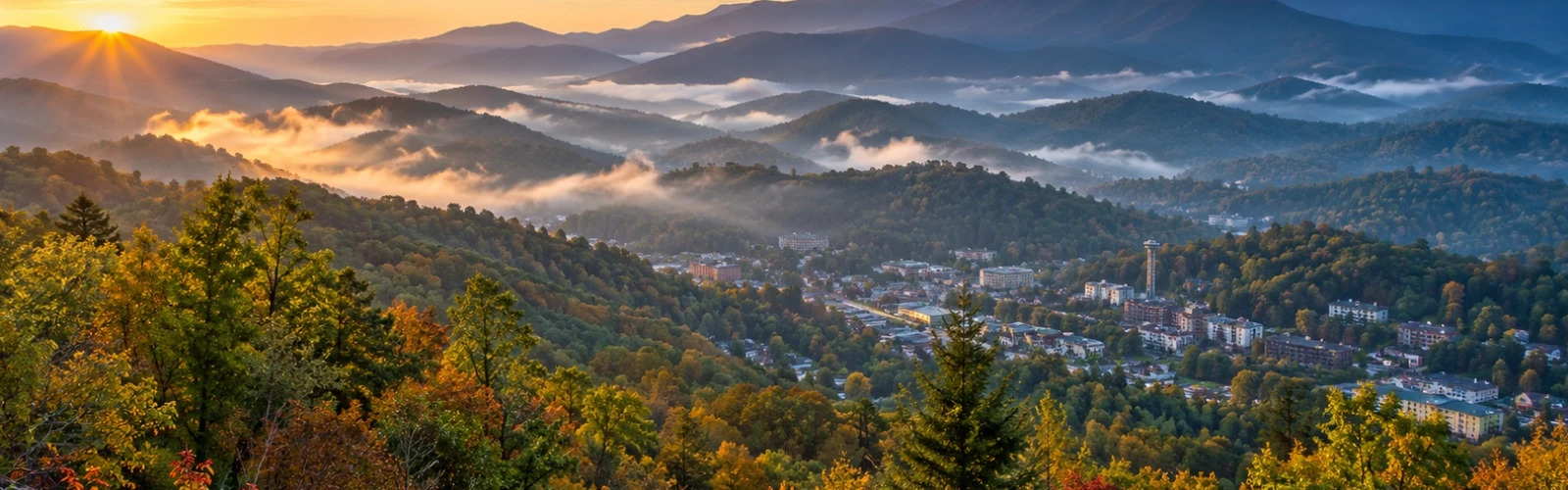
The Stops Around Gatlinburg That Make You Want to Linger

A useful thing happens when a Gatlinburg day is not planned down to the minute: places start deciding the schedule instead of the schedule deciding the places. A waterfall reached by a short path becomes an hour in the woods. A scenic road takes twice as long because the stream beside it looks better after rain. Someone who planned ten minutes at a mountain overlook stays until the cloud covering one ridge lifts and another disappears.
That slower rhythm suits Gatlinburg particularly well. Downtown sits beside Great Smoky Mountains National Park, so a day can move from busy sidewalks to riverbank, hardwood forest, historic buildings, high-elevation spruce-fir country, and a mountain viewpoint without turning into a long-distance road trip.
Not every one of the major Gatlinburg attractions needs half a day, of course. The trick is knowing which places reward extra time. The stops below are the ones where rushing usually saves less than expected and costs more than it seems. Some are simple walks. Others are scenic drives, historic areas, working craft studios, or paid viewpoints. None needs to become a checklist.
The better approach is to arrive, look around, and leave enough room for the place to change the plan.
Sugarlands Works Better as the Beginning of the Day, Not Just a Stop for a Map
The Sugarlands Visitor Center sits only about two miles south of Gatlinburg on Newfound Gap Road, and that closeness makes it easy to underestimate. Plenty of visitors arrive, collect information, use the restrooms, and continue toward the bigger names on the park map. Spending another hour here often makes more sense.
Inside, the visitor center has natural-history exhibits about the park's plants and animals, a bookstore, visitor information, and staff who can answer questions about current conditions. The National Park Service also offers a free 20-minute park film. That may sound like a minor stop, but it is useful on a first park morning because conditions in the mountains can make yesterday's plan a poor choice today.
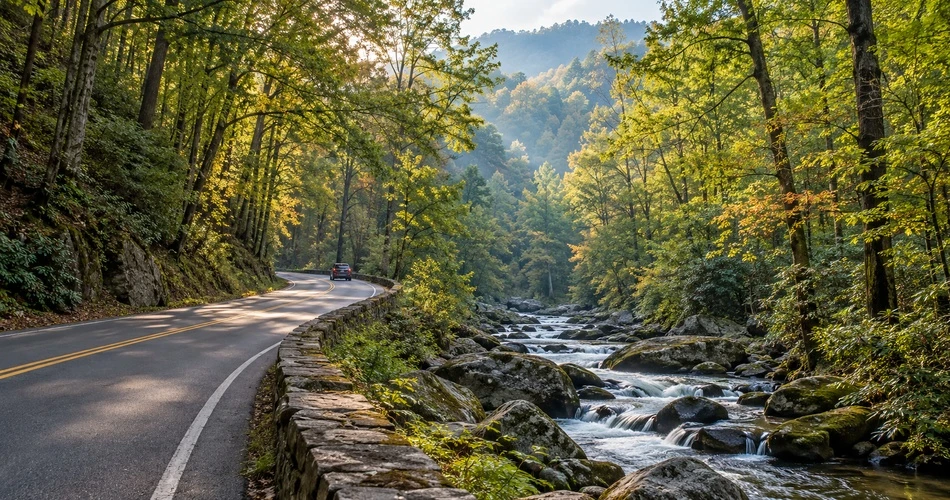
The easy walk to Cataract Falls begins nearby. It is about 0.7 mile round trip, ending at a narrow waterfall roughly 40 feet high. The waterfall becomes more impressive after substantial rain. NPS warns against climbing around it because serious injuries have occurred, so the worthwhile view is from the bottom rather than from slippery rocks above.
Sugarlands is not dramatic in the way Kuwohi is dramatic. That is exactly why it works. It eases a traveler into the Smokies instead of demanding that the first hour become an achievement.
Roaring Fork Is Only 5.5 Miles, but Treating It Like a Short Drive Misses the Point
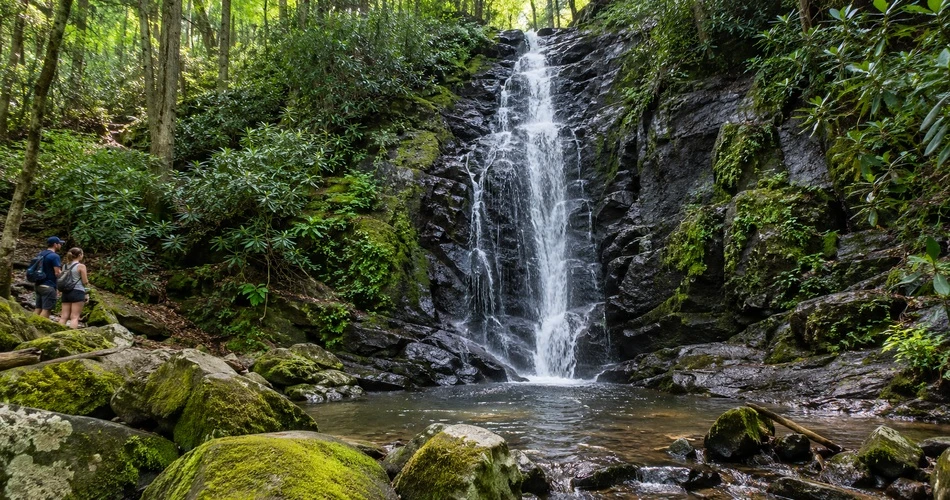
The Roaring Fork Motor Nature Trail is a good example of why distance is a poor way to measure a Gatlinburg outing. The one-way road runs for only 5.5 miles, yet an hour can disappear quickly once historic structures, trailheads, streams, and pull-offs begin interrupting the drive.
The road is narrow, winding, wooded, and closely tied to the fast-moving Roaring Fork stream. After rain, the water alone is enough reason to stop where parking is legally available. Before the motor trail begins, the Noah “Bud” Ogle farmstead gives visitors a closer look at historic mountain life. Farther into the route, the Trillium Gap Trail leads toward Grotto Falls, while Place of a Thousand Drips appears beside the road near the latter part of the drive. Parking can be difficult at popular trailheads, particularly around Grotto Falls.
For 2026, Roaring Fork Motor Nature Trail is scheduled to be open April 17 through November 29, subject to conditions. The road is one-way and very steep in places, and buses, motorhomes, longer vans, and vehicles towing trailers are restricted.
Nobody needs to stop at everything. Two or three good pauses make more sense than driving the loop while looking constantly for the next numbered sight.
Greenbrier Is the Kind of Place That Can Quiet Down the Second Half of a Busy Day
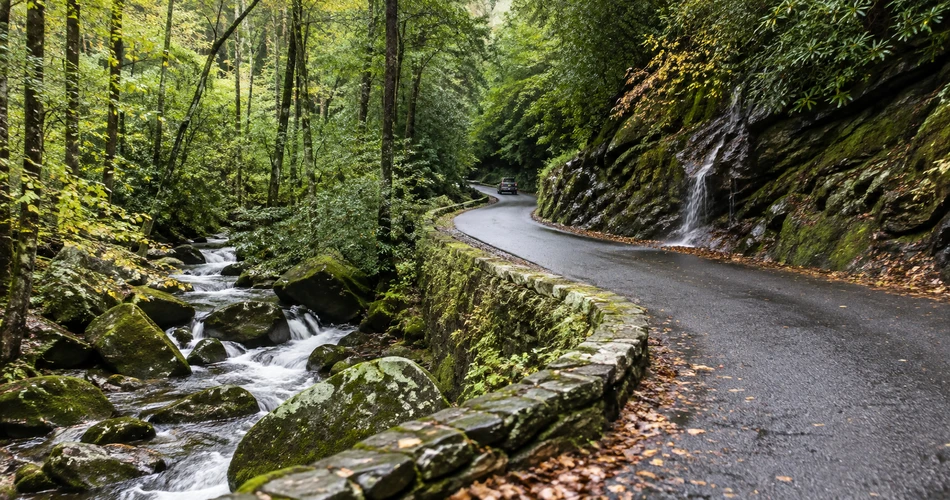
After several hours around central Gatlinburg, Greenbrier can feel like somebody turned the volume down. The area lies roughly 20 minutes east of Gatlinburg in the northeastern part of Great Smoky Mountains National Park. A partially paved entrance road follows the Middle Fork of the Little Pigeon River upstream toward a picnic area and several trailheads.
There is no need to arrive with a long hike planned. Greenbrier works just as well as a slower afternoon stop: a walk near the river, lunch at the picnic area, some time beside the water, or a short section of trail before turning back. The area is known for wildflowers, waterfalls, fishable streams, historic structures, and cemeteries, so visitors who stay longer can turn it into something more substantial.
What makes Greenbrier useful in a real itinerary is its contrast with downtown. A traveler can have breakfast near the Parkway, spend part of the morning among the town's Gatlinburg attractions, and still reach a heavily forested river valley without devoting half the day to getting there.
Spring brings especially good wildflower interest, while summer offers shade and moving water. After heavy weather, current park alerts are worth checking before setting off.
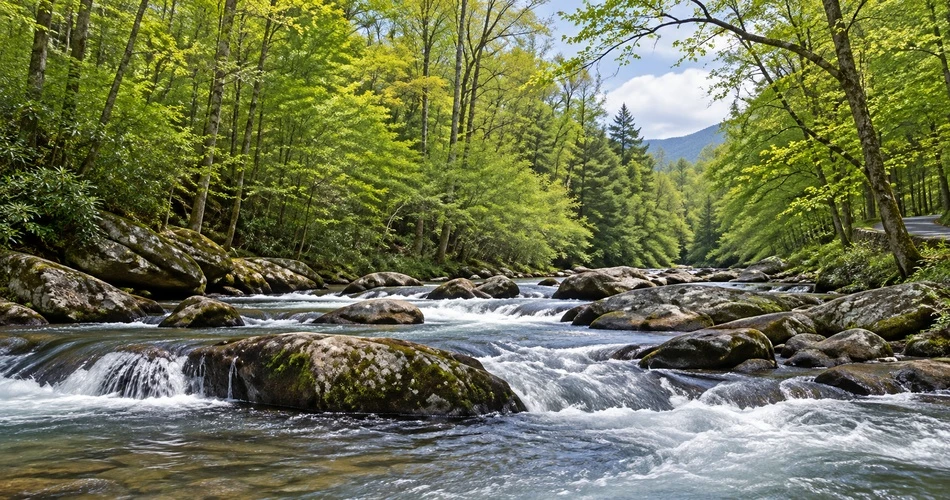
The Gatlinburg Trail Is a Good Reminder That a Walk Does Not Need a Big Finish
Some Gatlinburg hiking trails are approached with a goal: reach a waterfall, climb to a viewpoint, or finish a certain mileage. The Gatlinburg Trail is more useful when none of that matters very much.
The National Park Service lists the trail at about two miles one way, running between the Gatlinburg side of the park and the Sugarlands area. It stays relatively low and provides an easy way to put some quiet walking between busier parts of the day.
It is also one of only two park trails where leashed pets are permitted; the other is the Oconaluftee River Trail. Dogs must remain on a leash no longer than six feet. Bicycles are permitted on the Gatlinburg Trail as well, another unusual feature in a national park where most trails are closed to bikes.
Those rules aside, the real attraction is simplicity. There is river sound, forest shade, and enough distance for visitors to decide for themselves how much walking feels right. Someone with an hour can turn around early. Someone who wants a longer morning can keep going.
For a traveler already doing several major sights, that flexibility is valuable. Not every stop should require a reservation, queue, steep climb, or grand finale.
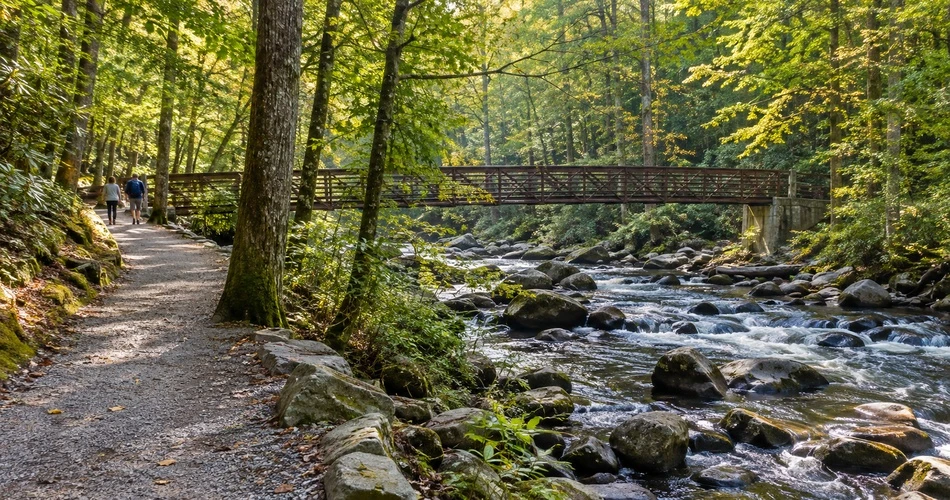
The Arts & Crafts Community Is Better When Only a Few Studios Make the Day’s List
The Great Smoky Arts & Crafts Community is not the place to drive an eight-mile loop and congratulate the day for being efficient. The official Gatlinburg tourism organization describes the community as an eight-mile loop with more than 100 shops, studios, and galleries, with a craft tradition in the area stretching back decades.
The more interesting approach is to choose a few places and actually go inside.
Pottery makes a good example. A finished mug on a shelf says very little about the work behind it. A working studio can show clay waiting beside a wheel, half-finished vessels drying, glaze samples, hand tools, kilns, and pieces that look completely different before firing. Woodworkers, painters, jewelers, leatherworkers, and other makers bring the same kind of process into view.
That is where this stop separates itself from conventional souvenir shopping. Visitors do not need to buy something in every studio for the afternoon to work. Watching somebody produce an object, talking briefly about materials, and seeing the imperfect stages before the polished result gives the community more meaning.
It also breaks up a trip dominated by scenery. The mountains remain part of Gatlinburg's identity, but craftsmanship adds the people who have worked and created within that landscape.

Newfound Gap Road Is One of Those Drives Where the Stops Matter as Much as the Destination
Newfound Gap Road leaves the lower elevations near Gatlinburg and climbs through noticeably changing forest. That transition is not just something travelers imagine through an open car window. The National Park Service compares the sequence of forest ecosystems on the climb toward the high country to traveling from Georgia to Maine.
Eventually the road reaches Newfound Gap at 5,046 feet. It is the lowest drivable gap through Great Smoky Mountains National Park, and the temperature there can be considerably cooler than in Gatlinburg. Rain in the lower elevations can even become snow at Newfound Gap, which is why an extra layer in the car is useful well beyond winter.
The experienced way to make this drive is to stop selectively rather than pull over at every opening. Some overlooks are worth five minutes; others become worth twenty when cloud begins moving through the valleys. The view is not fixed. Light changes, ridgelines disappear, and distant layers return.
That is why Newfound Gap Road deserves more time than a navigation app suggests. The drive itself is one of the Great Smoky Mountains experiences, not simply the road that leads to the next attraction.
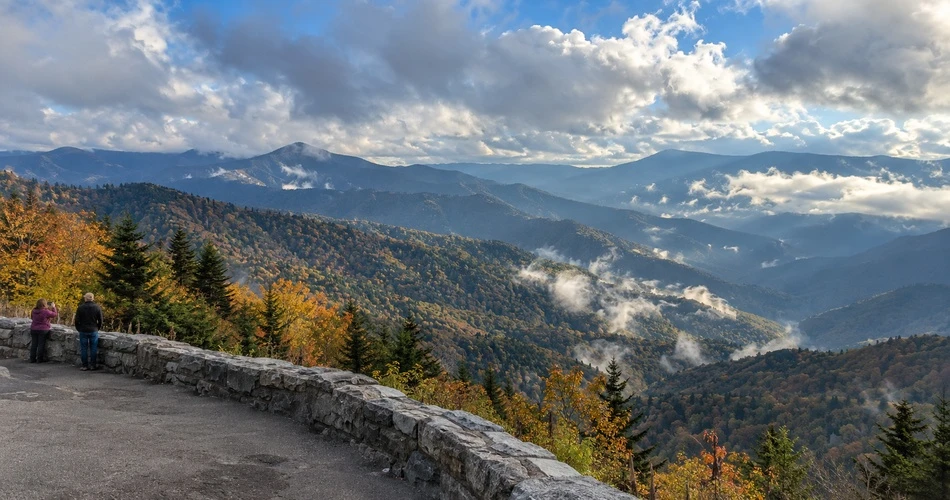
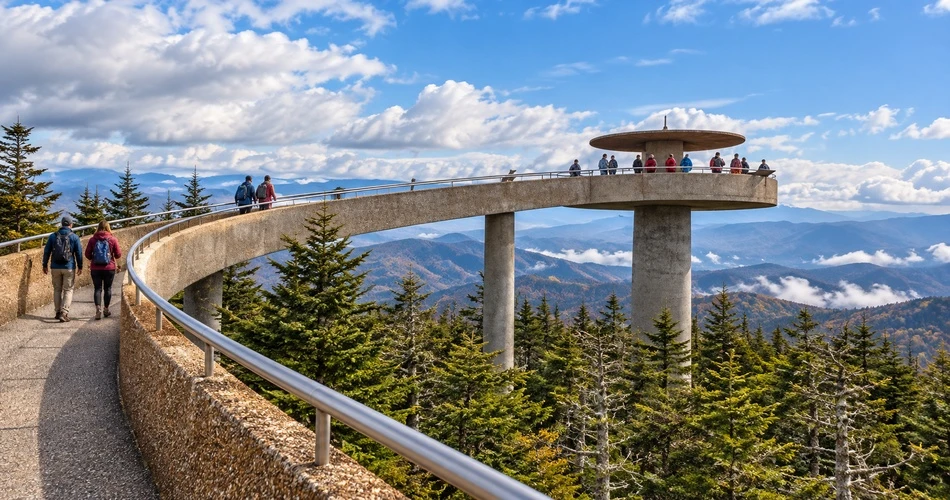
Kuwohi Is Worth the Steep Walk, but the Weather Should Be Allowed to Make the Decision
From Newfound Gap, Kuwohi Road climbs another seven miles toward the highest point in the Smokies. Kuwohi reaches 6,643 feet, making it the highest peak in Great Smoky Mountains National Park and in Tennessee.
The observation tower is reached on a paved but steep climb of roughly half a mile from the parking area, making the walk about one mile round trip. Benches along the route offer opportunities to stop. On a clear day, the observation tower opens broad 360-degree views across ridges and valleys, but the high elevation also means weather can change the experience completely.
In 2026, Kuwohi Road is scheduled to remain open from April 1 through November 29, although snow, ice, or hazardous weather can close it temporarily. Newfound Gap Road itself is normally open year-round, weather permitting.
This is one place where forcing an itinerary rarely makes sense. If the summit is buried in cloud, another park stop may produce a better day. When the weather opens, though, it is worth walking slowly. The steepness is real, and there is no prize for arriving at the tower out of breath simply to leave five minutes later.
Gatlinburg SkyPark Makes More Sense When the Light Is Allowed to Change
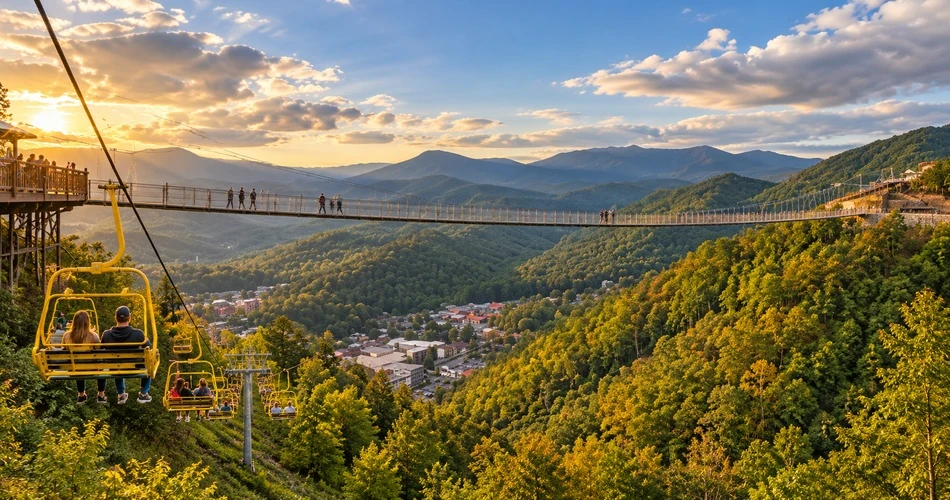
Gatlinburg SkyPark is a paid attraction, but treating it as a chairlift ride followed by one photograph is an expensive way to miss what makes the location useful.
The open-air yellow SkyLift climbs about 500 vertical feet from downtown toward Crockett Mountain. At the top, the SkyBridge stretches nearly 700 feet across the valley, while the current mountain trail system includes about 1.5 miles of trails. The bridge also includes see-through sections near its midpoint.
Late afternoon is particularly suited to this kind of stop because the view changes without anybody having to go anywhere. The lower streets begin falling into shade while higher ridges can still hold light. Haze that looked flat in the middle of the day may begin separating the mountain layers as the sun drops.
Travelers who are uncomfortable on the bridge do not need to treat crossing it as a requirement. The mountaintop overlooks and trail areas provide other ways to spend time above town.
The practical move is to arrive before the light becomes interesting rather than racing the sunset. That leaves time for the chairlift, walking, queues, and weather changes without turning the final twenty minutes of daylight into a competition.
A Day With Fewer Stops Usually Needs Better Planning, Not More Planning
Going slowly around Gatlinburg does not mean ignoring logistics. In fact, a loose day works better when a few practical details have already been handled.
Great Smoky Mountains National Park does not charge an entrance fee, but vehicles parked for more than 15 minutes require a parking tag. Current rates are $5 for a daily tag, $15 weekly, and $40 annually. A tag does not reserve or guarantee a parking space.
A few habits make the rest of the day easier:
- Popular park areas are generally more comfortable when reached earlier in the morning or later in the day rather than at the busiest midday period.
- A parking tag is best handled before arriving at small trailheads, since machines are not available at every parking location.
- Current road, trail, and weather alerts deserve a check before heading toward Roaring Fork, Newfound Gap, or Kuwohi.
- Water, walking shoes, and one extra clothing layer are worth keeping in the vehicle because temperatures can change substantially with elevation.
Once those details are settled, there is less reason to keep looking at the clock. Two park stops and one evening attraction can make a fuller day than six rushed stops joined together by traffic.
Leave Enough Room for the Stop That Was Supposed to Be Quick
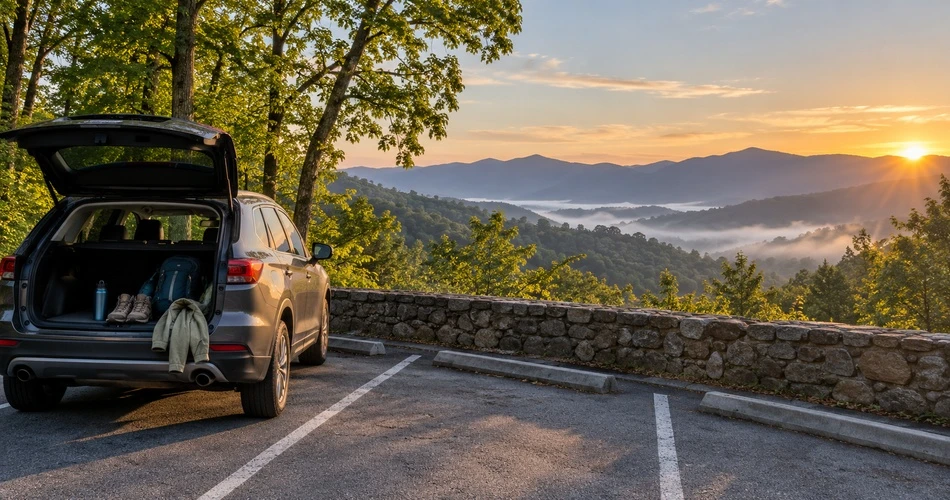
The best part of slowing down around Gatlinburg is that the day stops behaving exactly as planned.
Sugarlands may have been included only for information, until the trail behind the visitor center turns into a morning walk. Roaring Fork may have looked short on the map, until rushing water beside the road keeps producing reasons to pull over. Greenbrier can take what was meant to be an hour and quietly turn it into an afternoon. A clear spell at Newfound Gap may be too good to leave simply because another attraction has been assigned a time slot.
That does not mean every traveler should abandon the plan. It means the plan should have somewhere to bend.
There are plenty of Gatlinburg attractions competing for attention, and first-time visitors naturally want to see as much as possible. The Smokies tend to reward the opposite instinct. A stream becomes more noticeable after ten quiet minutes. Mountain layers become clearer when the sun moves. A working studio becomes more memorable after someone stops looking toward the door.
A good Gatlinburg day can still include plenty. It simply does not need to prove it.
The stops worth remembering are often the ones that took longer than anyone expected.
Next post What a Good Day Around Gatlinburg Actually Looks Like
Previous Post The Gatlinburg Stops That Are Easy to Miss the First Time
About Author