 English

 Home
Home Hotels
  Car Rental
 Rewards
 Travel Guide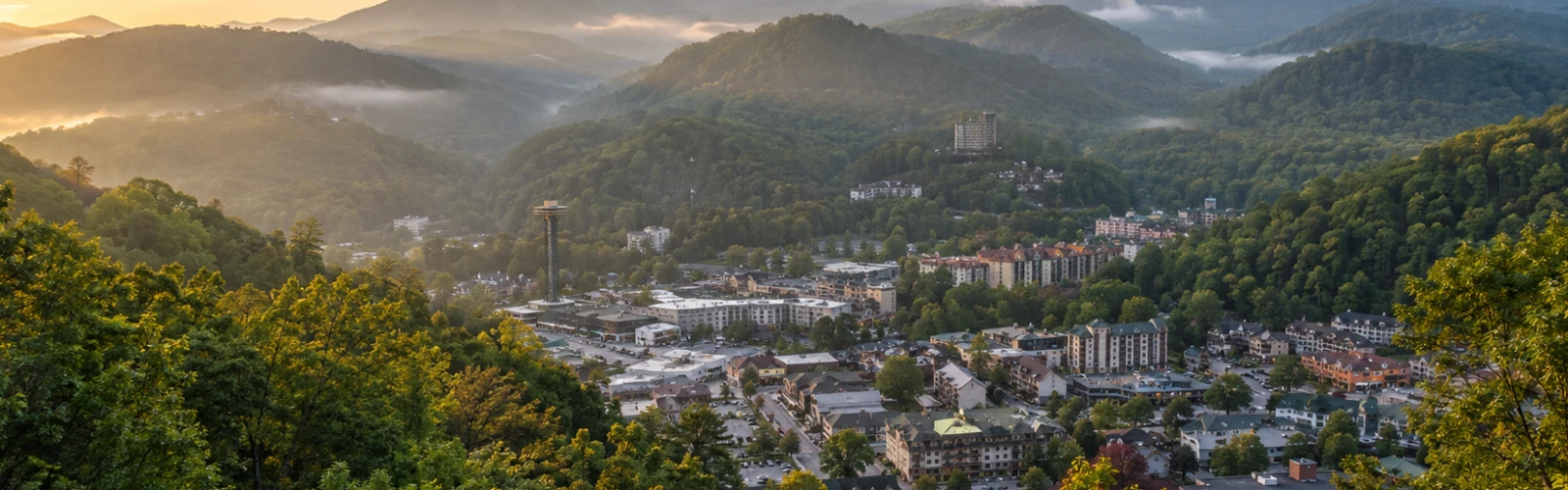
Gatlinburg Is More Than a Place to Start a Mountain Trip

Gatlinburg is often treated like a front door. Travelers arrive, pick up supplies, point the car toward the Great Smoky Mountains, and assume the important part of the trip begins somewhere beyond town. That approach misses quite a lot.
The interesting thing about Gatlinburg travel is how little distance separates completely different experiences. A morning can begin beside a mountain stream, continue through an old farmstead shaded by hardwood forest, and finish on a busy downtown sidewalk with the ridges still visible between buildings. A visitor can spend one hour looking across layers of mountains and the next watching a potter shape clay in a working studio.
That range is what makes Gatlinburg more useful than a simple base for the national park. The park matters enormously, of course, but so do the river, the historic roads, downtown Gatlinburg, the craft community, the mountaintop attractions, and the quieter corners that appear when a visitor stops rushing toward the next trailhead.
A good Smoky Mountains itinerary therefore gives Gatlinburg some room of its own rather than treating every hour in town as time that should have been spent somewhere else.
Downtown Gatlinburg Deserves More Than a Walk Through
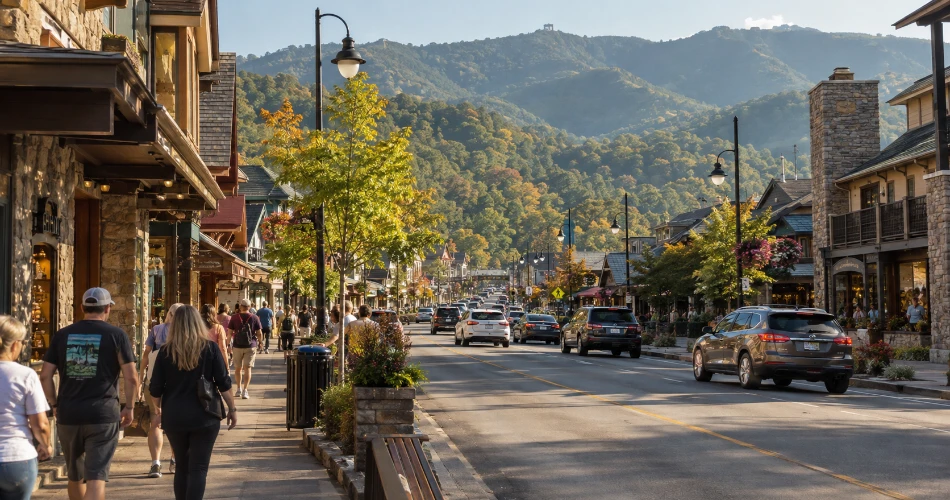
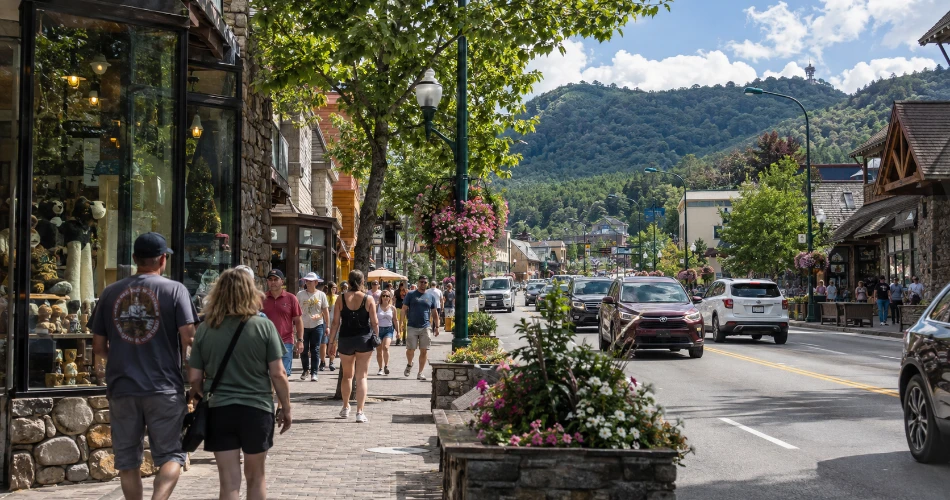
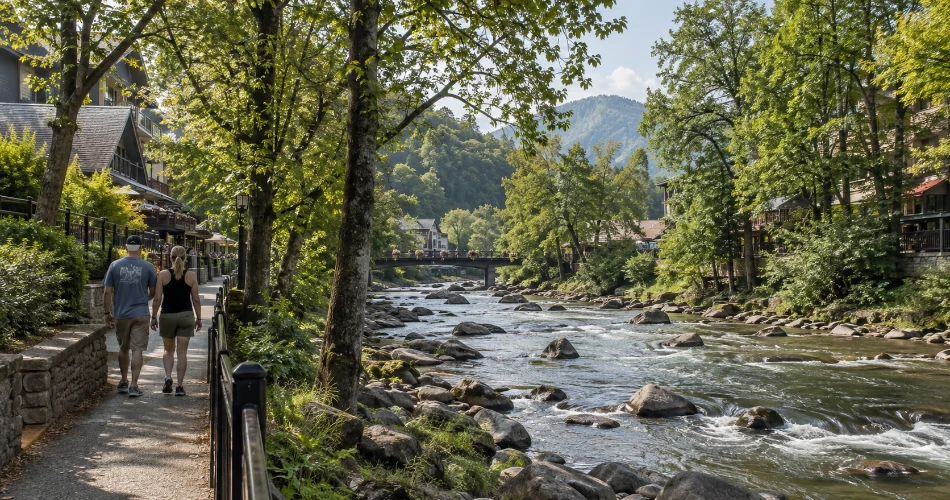
The busiest stretch of Gatlinburg is easy to dismiss as somewhere to pass through between breakfast and the national park, but it works better when travelers stop trying to cover it quickly. The Parkway is compact enough for a long walk, and side streets repeatedly pull visitors away from the main traffic. The Little Pigeon River is never far away, either; riverside sections with benches and quieter walking space provide an immediate change from the storefronts and attractions. Gatlinburg's tourism bureau specifically points visitors toward both the Parkway and the quieter river walk.
Walking also removes one of downtown's common frustrations: repeatedly moving a car for relatively short distances. The city's trolley system is free, operates daily throughout the year, and connects downtown with other parts of Gatlinburg, although individual route hours vary by season.
A sensible downtown visit is not about entering every attraction. It is better to choose one or two Gatlinburg attractions, walk the Parkway between them, detour toward the river, and leave enough unscheduled time for whatever looks interesting along the way. That slower pace makes the town feel much less like a collection of stops on a checklist.
The National Park Starts Almost at the Edge of Town
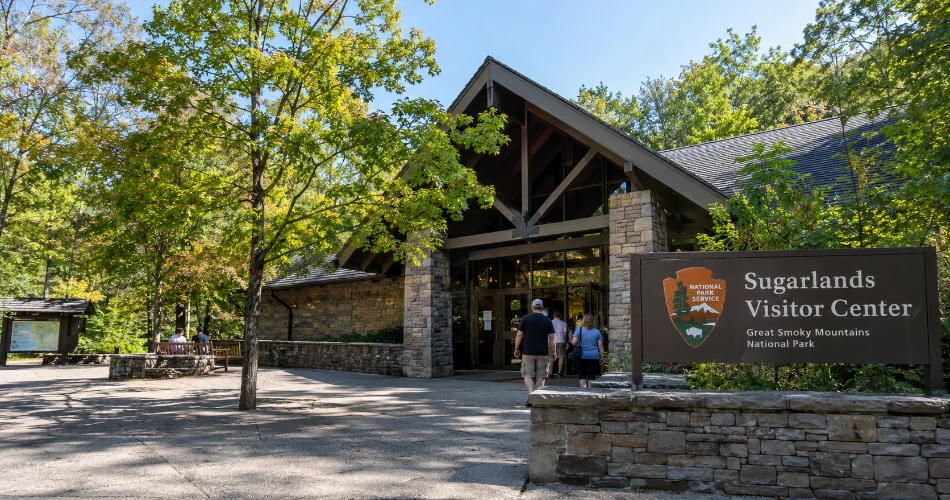
Gatlinburg's relationship with the Great Smoky Mountains is unusually immediate. Sugarlands Visitor Center sits about two miles south of town on Newfound Gap Road, which makes it a much more useful first stop than simply driving past the park boundary. It has natural-history exhibits, visitor information, restrooms and access to short walks that do not require committing half a day to a major hike.
The nearby Sugarlands Valley Nature Trail is a paved, roughly half-mile accessible loop, while the Cataract Falls route branches through the forest near the visitor-center area. NPS accessibility information lists the Cataract Falls side route as about half a mile one way.
There is no entrance fee for Great Smoky Mountains National Park, but vehicles parked for longer than 15 minutes normally require a parking tag. A tag does not reserve or guarantee a parking space, an important distinction during busy periods.
For first-time visitors, this area is useful precisely because it does not demand a heroic hiking plan. A ranger stop, a short forest walk and some time beside the streams can provide a proper Smokies morning while leaving plenty of the day for Gatlinburg itself.
Roaring Fork Feels Farther From Town Than It Really Is
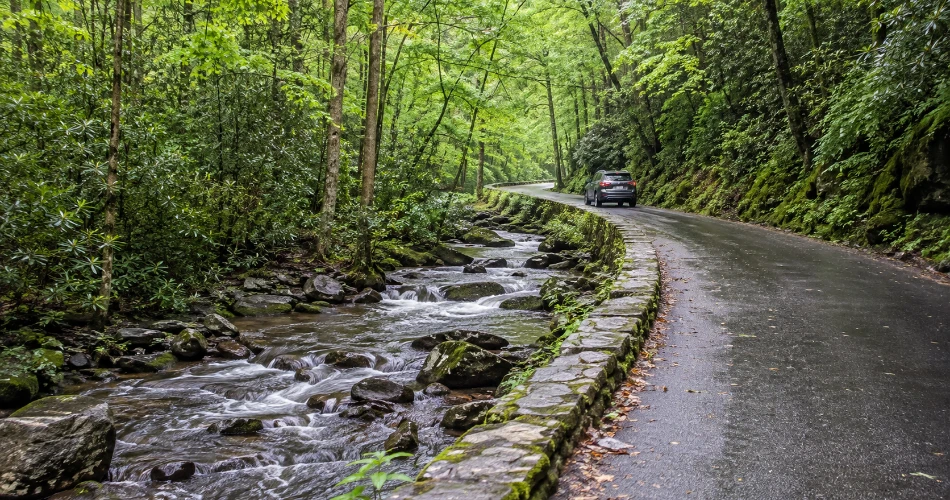
Among the best things to do in Gatlinburg for travelers who want mountain scenery without spending the entire day on a long hike is the Roaring Fork area. Its appeal comes from how quickly the town gives way to thick forest, rushing water and reminders of earlier mountain settlement.
The Roaring Fork scenic drive, formally the Roaring Fork Motor Nature Trail, follows a narrow 5.5-mile one-way road through Great Smoky Mountains National Park. It passes forest, streams and historic structures, and it is intentionally slow. Buses, trailers and motor homes are prohibited, parking around popular trailheads can be limited, and the road closes for part of the year, so current road conditions should be checked before leaving town.
Before the motor trail begins, travelers can stop around the Noah “Bud” Ogle farmstead. Farther along, the Trillium Gap Trail provides access toward Grotto Falls, while visitors who would rather stay close to the road can watch for Place of a Thousand Drips near the latter portion of the loop. The waterfall is especially noticeable after wetter weather and is visible from the roadway or a nearby pull-off.
This is one of those outings where covering fewer miles makes the experience better.
Mountain Views Do Not All Require a Long Hike
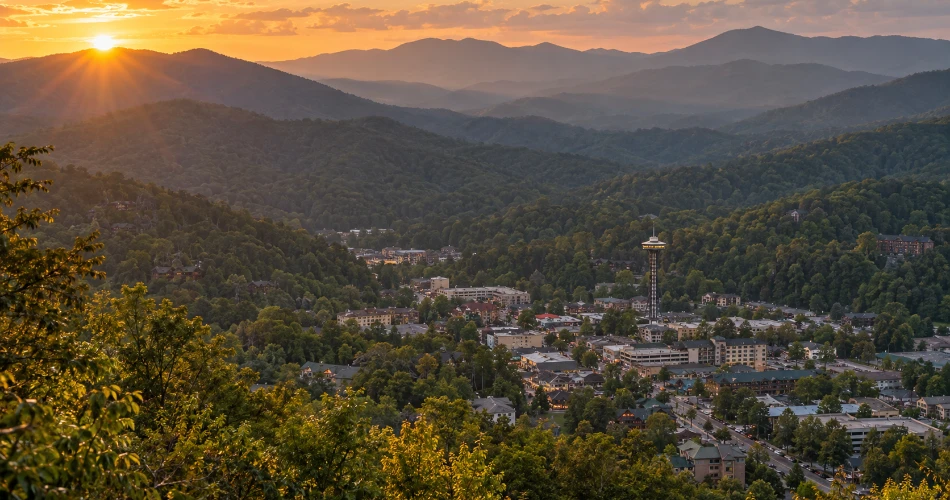
A visitor does not have to choose between serious hiking and seeing Gatlinburg from above. Several elevated viewpoints give very different perspectives on the town, and choosing one can make more sense than trying to squeeze every observation attraction into the same afternoon.
The Gatlinburg Space Needle rises 407 feet above its base and uses glass elevators to reach an observation level with a 360-degree view over Gatlinburg and the surrounding Smokies. The view is particularly useful for understanding the town's geography: downtown suddenly looks compact, the mountains feel much closer, and the narrow valley makes sense in a way that it rarely does from street level.
The Gatlinburg SkyPark provides a different experience. Its SkyBridge spans almost 700 feet across the mountainside and includes a 30-foot glass section near the midpoint.
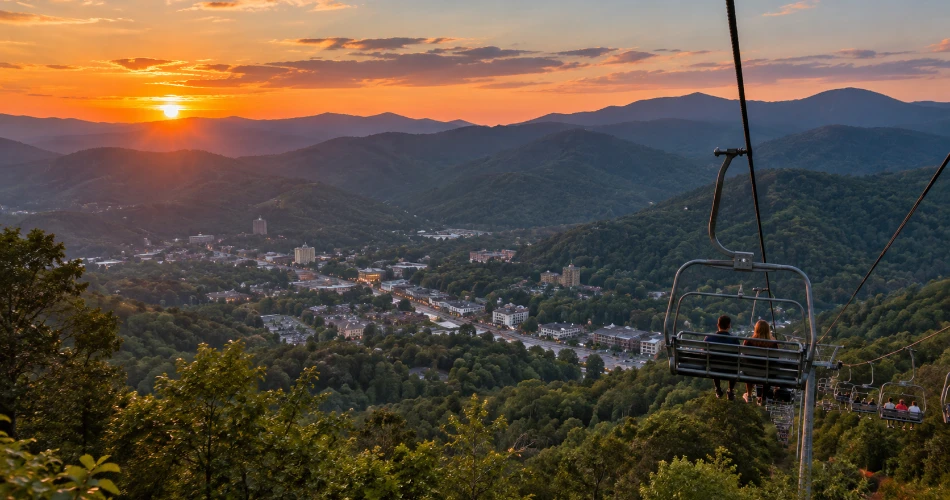
Anakeesta adds another way uphill. Its newer scenic lift uses 56 glass-bottom cabins, with the ride from the Parkway to the mountaintop taking about four minutes according to the attraction's current information.
The better approach is to choose the viewpoint that fits the day rather than collecting overlooks for the sake of it.
Two Very Different Ways to Get Above Gatlinburg
SkyPark and Anakeesta may both begin with a ride uphill, but they should not be treated as interchangeable stops. SkyPark's identity is strongly tied to the SkyLift, the broad view back over downtown, the SkyBridge and the feeling of crossing open space high above the valley. The bridge itself reaches nearly 700 feet from end to end, while its transparent central section changes the experience from a simple overlook into something more physical.
Anakeesta spreads the visit across a larger mountaintop setting. The recently introduced lift has changed the trip up the mountain, but visitors still need enough time at the top rather than treating the gondola as the attraction by itself.
Neither requires the same preparation as a backcountry hike, yet weather still matters. Clouds can obscure ridgelines, summer afternoons can turn hazy, and sunset periods can be busy. Travelers who care most about photography often get more from choosing one mountaintop experience and staying long enough to watch the light change.
The Craft Community Shows a Side of Gatlinburg the Parkway Cannot
The Gatlinburg craft studios east of downtown make a strong case for spending an extra half-day in town. The Great Smoky Arts & Crafts Community follows an approximately eight-mile loop and includes more than 100 artists and craftspeople working in media such as pottery, painting, woodwork, jewelry and other traditional or contemporary crafts. Its roots date to 1937, when local artisans began establishing studios in the Glades area.
What makes the area worthwhile is not simply shopping. A good visit involves watching how objects are actually made. In a working pottery studio, shelves may hold mugs and bowls while unfinished pieces wait beside wheels and tools. Other workshops focus on carving, weaving, metalwork or painting. That process gives the Gatlinburg arts and crafts tradition more context than a shelf of finished souvenirs can provide.
The loop is also a useful change of pace after several hours downtown. Stops are more spread out, so a car is convenient, although a seasonal trolley route also serves the community during specified periods.
Allowing two or three studios more time is usually more rewarding than racing through ten.

Evening Should Be Part of the Plan, Not Leftover Time
A common mistake in a packed Smoky Mountains itinerary is treating the evening as whatever remains after a full day of driving and hiking. Gatlinburg makes more sense when at least one evening is deliberately left open.
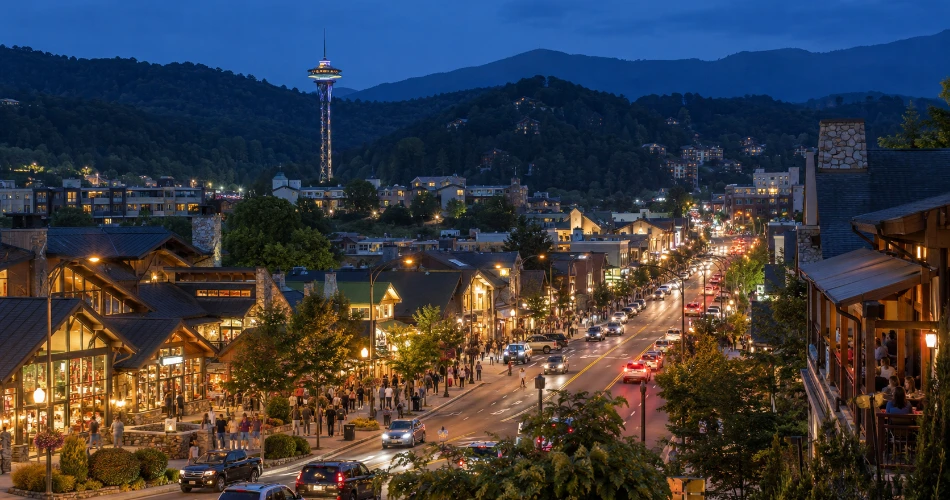
Around sunset, the Parkway changes character. Day-trippers begin heading out, mountain ridges turn into dark silhouettes above the rooftops, and lights start appearing along the valley. That is a good time for a slower downtown walk, especially for anyone who spent the afternoon on a trail or scenic drive and does not need another scheduled attraction.
The Space Needle's high viewpoint can also work after daylight begins fading because its observation deck looks over both the city and the surrounding mountains. Travelers using the trolley can avoid making every evening decision around moving a vehicle; city trolleys are fare-free, though seasonal operating hours and individual routes should be checked on the day of travel.
The point is not that Gatlinburg suddenly becomes quiet after dark—it usually does not. The appeal comes from seeing the same compact mountain town in a different mood once the day's driving has stopped.
A Better Gatlinburg Day Leaves Some Space Between Stops
Trying to combine a major hike, a scenic drive, several downtown attractions, a craft loop and two mountaintop visits usually produces more time in traffic than meaningful travel. Gatlinburg is better when each day has one major anchor and a few smaller stops that fit naturally around it.
A workable day might begin around Sugarlands, continue into town for lunch and walking, and finish with one elevated viewpoint. A separate day could give Roaring Fork the morning, the craft community part of the afternoon, and downtown the evening. Before entering the national park, road and trail status should always be checked because weather, maintenance and seasonal closures can change access. Roaring Fork, for example, is specifically listed as seasonally closed.
A few habits make Gatlinburg travel noticeably easier:
- Start popular national-park areas earlier in the day when possible.
- Obtain the required parking tag before heading toward trailheads where tags are not sold.
- Wear shoes comfortable enough for both forest paths and downtown walking.
- Pair one substantial mountain outing with only one or two paid attractions.
- Keep at least an hour unassigned instead of scheduling the day from breakfast to bedtime.
That breathing room is often where the memorable parts of Gatlinburg turn up.
Give Gatlinburg a Day of Its Own
Gatlinburg earns more attention when it is treated as part of the trip rather than the parking lot before the mountains. The national park remains the great presence behind almost everything here, but the town has developed its own ways of experiencing that setting: walking beside the river, looking down on the valley from a tower or mountainside, following the Roaring Fork road into the forest, and spending an afternoon among working craftspeople.
That variety also gives travelers options when conditions change. A cloudy morning that hides distant viewpoints may still be excellent for Roaring Fork. A tired afternoon after a hike can become a trolley ride and an easy downtown walk. A rainy spell may be a good excuse to spend more time inside studios rather than forcing a scenic overlook that has disappeared into cloud.
For returning travelers, that flexibility may be the best reason to give the town another look. There is no need to repeat the same Parkway stops on every visit. One trip can lean toward trails and mountain roads; another can leave more room for downtown Gatlinburg, crafts and evening views.
The mountains may be what first puts Gatlinburg on the map, but they do not have to be the only reason to stay.