English

 Home
Home Hotels
  Car Rental
 Rewards
 Travel Guide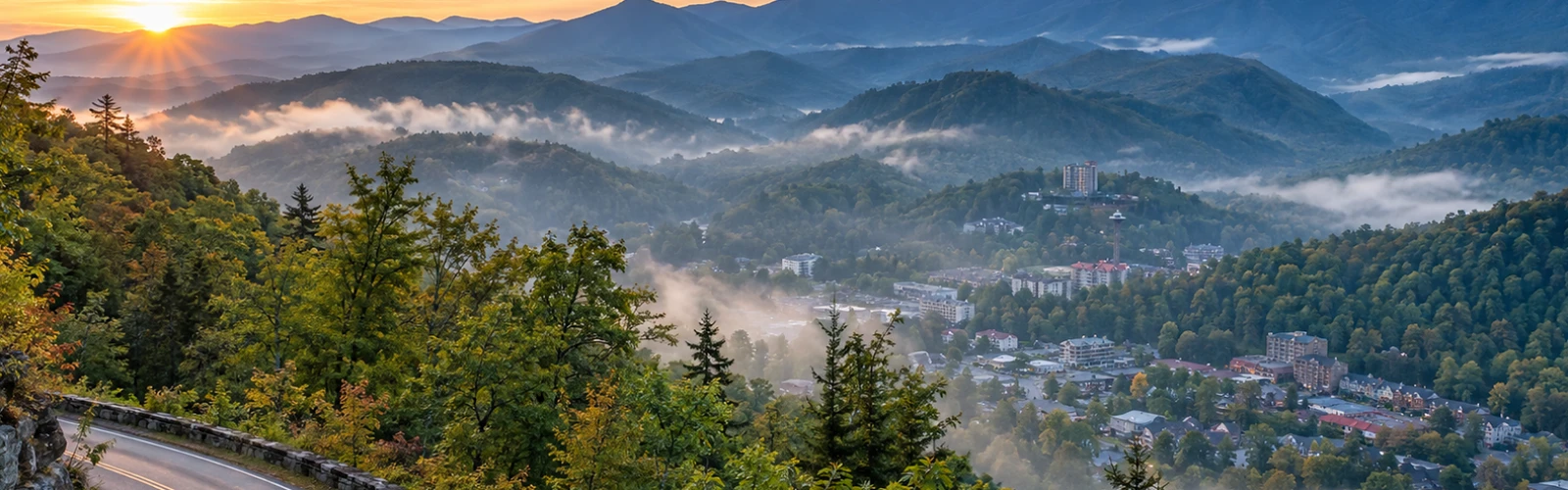
A Day Around Gatlinburg With No Need to Rush Back

A good Gatlinburg itinerary does not always need an attraction booked for every hour. Gatlinburg works particularly well when a visitor has enough time to leave downtown, spend several hours inside Great Smoky Mountains National Park, and return without watching the clock. The distances may look short on a map, but mountain roads, overlooks, changing weather, trail stops, and full parking areas have a way of changing the rhythm of the day. That is part of the appeal.
This version of Gatlinburg is less about fitting in the greatest number of stops and more about letting a few places earn their time. A morning can begin only a couple of miles from town at Sugarlands, climb gradually toward Newfound Gap, continue toward Kuwohi when conditions make sense, and then drift back toward quieter corners of Gatlinburg in the afternoon. There is still time for local craft studios, the river, and downtown after the busiest part of the day has passed.
The route below is intentionally flexible. Kuwohi can be skipped when cloud cover is heavy, a forest walk can be shortened after rain, and a long craft stop can easily replace another attraction. That flexibility is what makes a day around Gatlinburg feel like a day off rather than a schedule.
Start at Sugarlands Before the Day Gets Complicated
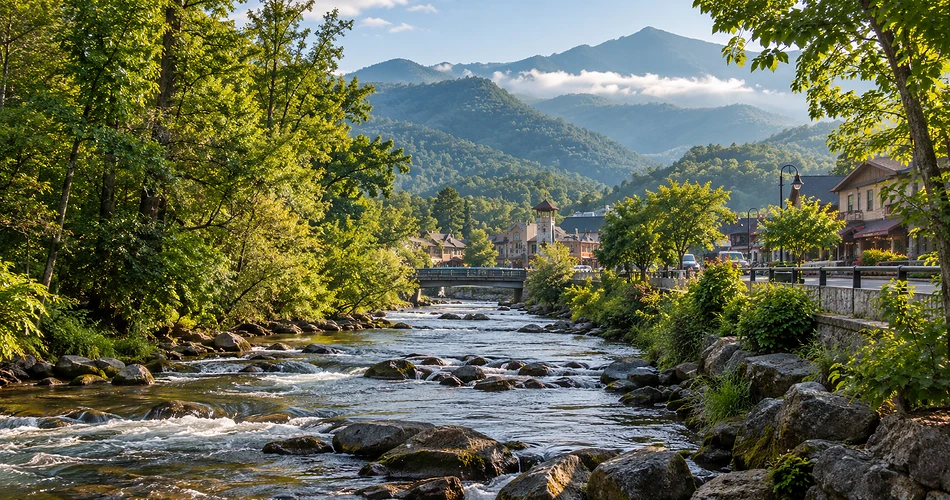
Sugarlands Visitor Center is one of the easiest places to begin a mountain day because it sits on Newfound Gap Road about two miles south of Gatlinburg. It gives first-time visitors a useful introduction to the park without demanding much time. Inside are natural-history exhibits, park information, maps, restrooms, a bookstore, and staff who can answer questions about current road and trail conditions.
There is a practical reason to stop here as well. Great Smoky Mountains National Park does not charge an entrance fee, but vehicles parked for longer than 15 minutes require a parking tag. Sugarlands is one of the locations where tags can be obtained, although buying one before a busy morning can save time.
A traveler with no need to rush back should resist treating Sugarlands merely as a restroom break. Ten or fifteen minutes with the park map makes the rest of the day easier. Conditions at higher elevations can differ sharply from what is happening in Gatlinburg, and the park specifically advises visitors to check current closures and weather before heading farther into the mountains.
Take a Short Forest Walk Before Getting Back in the Car
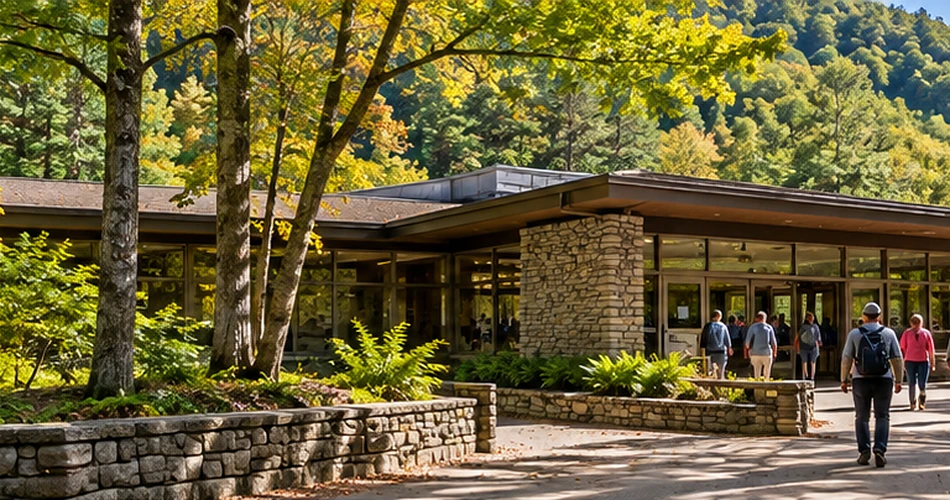
The woods behind Sugarlands are a better introduction to the Smokies than immediately committing to a long hike. Cataract Falls is reached on a short forest route beginning near the visitor center. The NPS describes it as a 0.7-mile round trip to a narrow, roughly 40-foot waterfall following Fighting Creek. It tends to look strongest after substantial rain, and visitors are warned not to climb around the falls because serious injuries have occurred there.
Travelers wanting an even gentler start can instead use the Sugarlands Valley Nature Trail. This paved, half-mile loop passes through cove hardwood forest beside the West Prong of the Little Pigeon River and includes stream views, old stone walls, and historic chimney remains. It is the park's ADA-accessible trail and has a notably different feel from the steeper paths higher in the mountains.
Neither walk needs to become a workout. Twenty minutes spent listening to Fighting Creek or stopping beside the river often does more to establish the pace of the day than another roadside attraction. For a relaxed Great Smoky Mountains day, that is exactly the point.
Let Newfound Gap Road Be the Main Scenic Drive
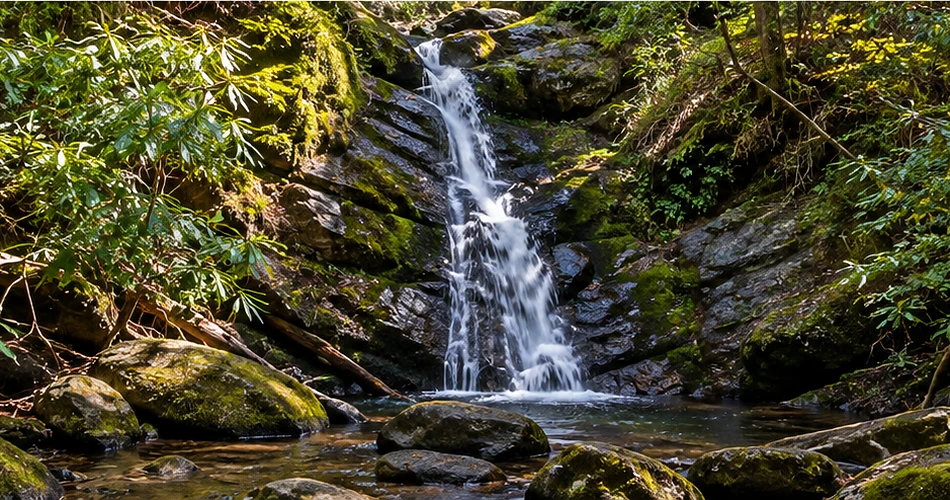
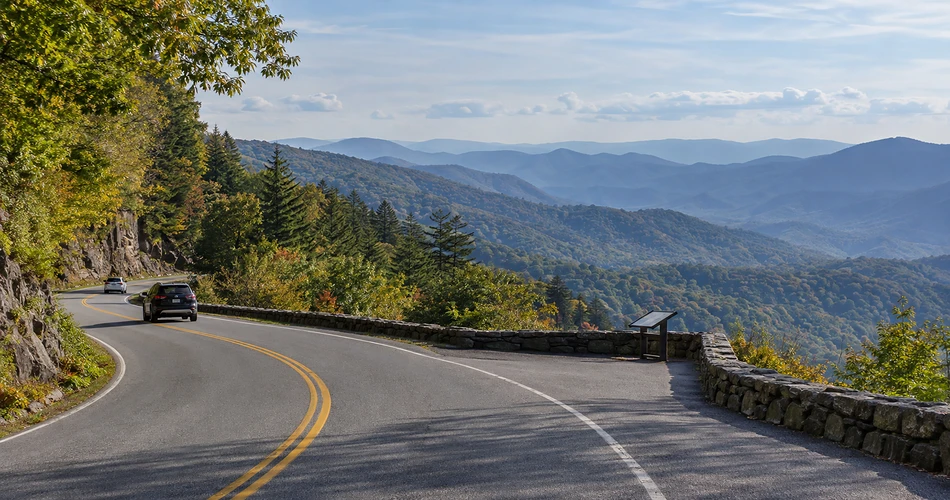
Once the morning walk is finished, Newfound Gap Road becomes the day's main movement rather than simply transportation. US 441 crosses the park between Gatlinburg and Cherokee, climbing from lower-elevation hardwood forest toward the spruce-fir environment of the high Smokies. The National Park Service uses this road to illustrate how dramatically vegetation changes with elevation; its Sugarlands itinerary compares the ecological transition to traveling from Georgia toward Maine.
The road rewards patience. There is little reason to drive straight to the highest point while passing every overlook. Pullouts appear along the climb, and cloud layers can make one viewpoint completely different from another only a few miles away. Newfound Gap itself sits on the Tennessee–North Carolina boundary and provides access to the Appalachian Trail as well as broad mountain views.
This is the Gatlinburg scenic drive that works best when the car is allowed to stop occasionally. A useful rhythm is simple:
- Pull over only in designated, safe parking areas.
- Leave room for one or two unplanned overlooks.
- Expect temperatures to fall as elevation increases.
- Skip a viewpoint when its parking area is already overwhelmed.
The best drive is not necessarily the one that reaches the farthest point. It is the one that leaves enough time to actually stand outside the car.
At Newfound Gap, Decide Whether Kuwohi Fits the Day
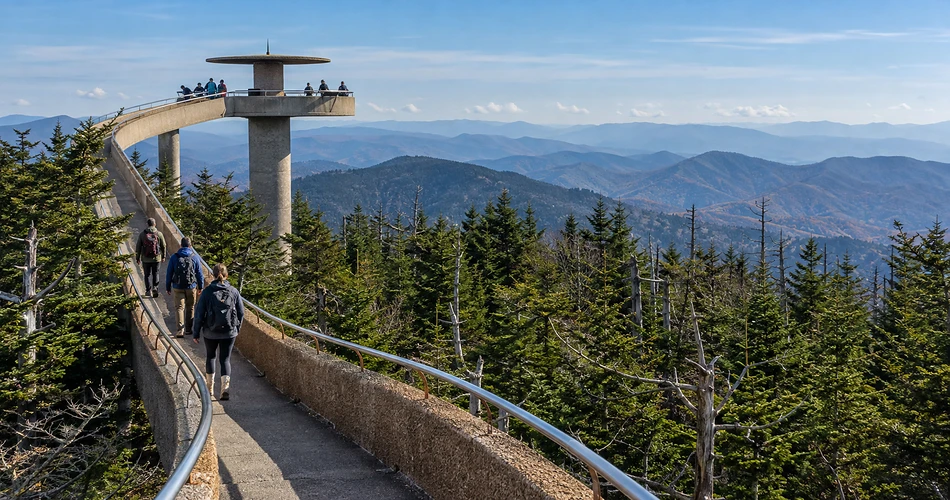
Kuwohi, formerly known as Clingmans Dome, is the highest point in Tennessee and one of the obvious extensions of a Newfound Gap drive. The route branches from Newfound Gap Road and climbs into higher-elevation spruce-fir forest. At the top, a steep paved path leads from the parking area toward the observation tower, where clear conditions can produce sweeping views across the Smokies. Benches along the climb give visitors places to stop.
What matters on an unhurried day is knowing that Kuwohi is optional. If heavy clouds have swallowed the ridgeline, or if the parking area is extremely busy, turning back at Newfound Gap can be the better use of time. The park warns that demand for parking at Kuwohi can exceed capacity.
Kuwohi Road is also seasonal. For the 2026 season, the NPS lists it as scheduled from April 1 through November 29, weather permitting; snow, ice, or other hazardous conditions can still cause temporary closures.
That uncertainty is worth building into any Gatlinburg itinerary. Mountain weather makes poor company for rigid schedules.
Give the Return Drive as Much Time as the Climb
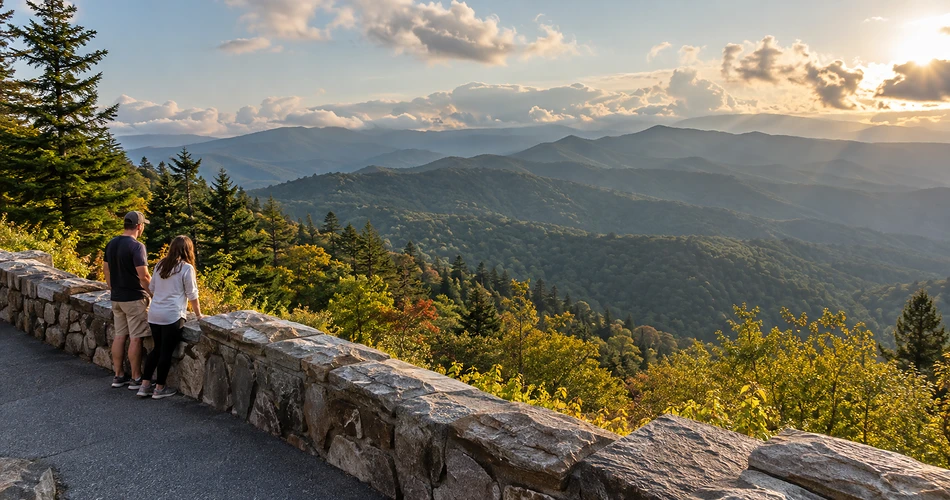
The trip back toward Gatlinburg should not feel like the part that has to be completed quickly. Light changes across the slopes as the day moves on, and overlooks that seemed flat in late morning can look completely different after clouds shift. Newfound Gap Road is generally open year-round, weather permitting, but mountain conditions can always interrupt the plan.
This is also the right point to keep lunch simple. There is no prize for turning a peaceful morning into a race across town for a particular table. Travelers carrying food can use an appropriate picnic area when open, while others can return toward Gatlinburg and choose somewhere convenient before continuing east. What matters is preserving enough afternoon for the next stop.
The temptation on a day full of things to do in Gatlinburg is to interpret spare time as empty time that needs filling. The Smokies tend to reward the opposite approach. Fifteen minutes beside a stream, a longer-than-planned overlook stop, or an extra coffee after lunch can become the part that makes the day feel like a vacation rather than a collection of attractions.
Spend the Afternoon Where Gatlinburg Still Makes Things by Hand
After several hours in the park, the Gatlinburg Arts and Crafts Community provides a useful change of pace. The historic craft district is centered around an eight-mile loop in the Glades and Buckhorn areas east of downtown, with more than 100 artists and craftspeople represented across studios, galleries, and shops. Pottery, woodwork, painting, leatherwork, baskets, quilts, candles, and handmade musical instruments are among the traditions associated with the community.
It is not a place that benefits from trying to enter every shop. A better afternoon might involve choosing three or four studios that genuinely interest the traveler and giving each enough time to look carefully. Some workshops allow visitors to see craftspeople at work, which gives the area far more character than a conventional shopping stop.
Pottery is particularly well suited to the slower rhythm of this itinerary. A working studio with shelves of finished pieces, clay-covered tools, kilns, and partially completed work tells more about Appalachian craft traditions than a quick souvenir purchase ever could.
The loop also gets visitors away from the concentrated foot traffic of central Gatlinburg without requiring another long mountain drive.

Make Room for the Gatlinburg Trail Instead of Another Big Attraction
By late afternoon, many visitors are ready to move again but may not want another steep trail. The Gatlinburg Trail is one of the most practical choices because it connects the Gatlinburg side of the park with the Sugarlands area and runs roughly two miles one way. Unlike most park trails, it is among the limited routes where bicycles are permitted, and it also accommodates leashed pets.
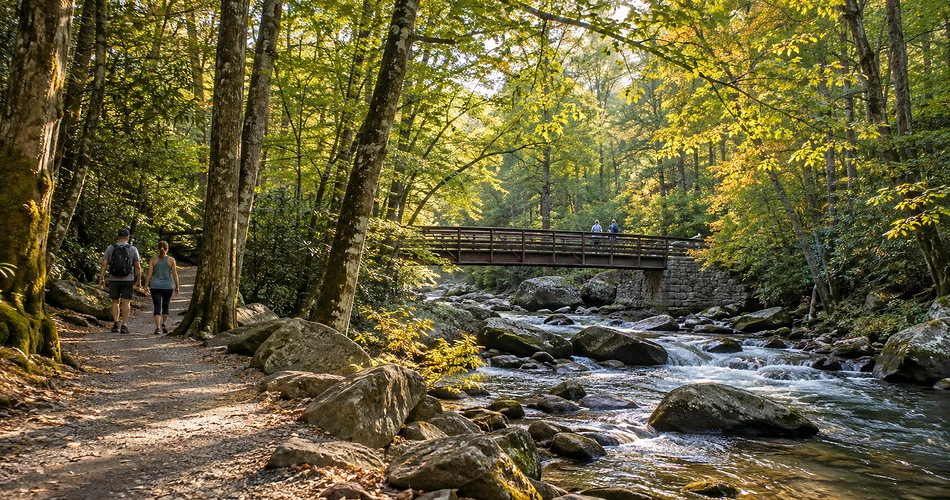
The trail follows the West Prong of the Little Pigeon River for part of its route and crosses the water on a pedestrian bridge. The scenery is not a dramatic summit view, and that is precisely why it works here. After a morning of high-country roads and overlooks, the river corridor feels grounded and close: moving water, hardwood forest, old traces of settlement, and the occasional sound of town nearby.
Nobody needs to walk the complete out-and-back route. A traveler can simply enter from the Gatlinburg side, walk until the forest has provided enough quiet, and turn around.
That kind of flexible walking is one reason a slower Gatlinburg itinerary can feel fuller than one built around tickets and timed entries.
A Few Practical Details Keep the Day Relaxed
The easiest way to protect an unhurried day is to handle small practical details before they become interruptions. Great Smoky Mountains National Park still has no entrance fee, but a physical parking tag is required when a vehicle is parked inside the park for more than 15 minutes. As of 2026, NPS lists daily tags at $5, weekly tags at $15, and annual tags at $40. Purchasing a tag does not guarantee a parking space.
Visitors should also check NPS road conditions on the morning of the trip. Clear weather downtown does not guarantee clear conditions at Newfound Gap or Kuwohi, and seasonal or temporary closures can change the day's route.
A sensible day bag needs little more than water, comfortable walking shoes, a light layer for higher elevations, and rain protection when showers are possible. Cell service also becomes less dependable in mountain areas, so having the route understood before leaving town is useful.
None of those preparations are complicated. They simply remove the small sources of urgency that can turn a good mountain day into constant clock-checking.
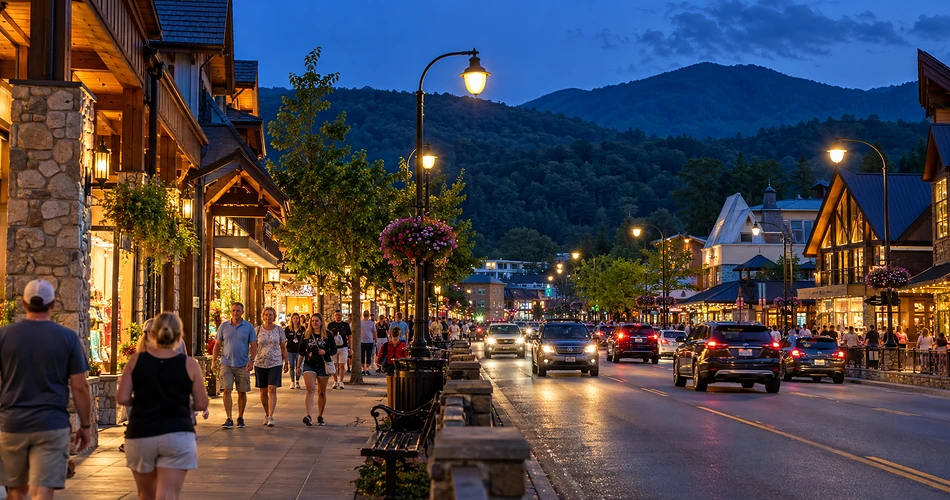
Leave Enough of Gatlinburg Unfinished to Come Back For
A day around Gatlinburg does not need to end with the sense that everything important has been completed. In fact, the town and the Smokies work better when something is left for another morning. Roaring Fork Motor Nature Trail, Greenbrier, longer waterfall hikes, additional craft studios, and the many paid attractions downtown can all fill another day without being squeezed into this one.
The useful lesson is that proximity does not mean every place belongs on the same schedule. Sugarlands is close to downtown, Newfound Gap appears simple on a map, and the craft community sits only a short drive away, yet each is more rewarding when allowed to occupy its own part of the day.
For first-time visitors, this route introduces several sides of Gatlinburg without making the destination feel frantic. Returning travelers may find it even more useful because it leaves space to linger in places that were previously rushed past.
The best sign of a successful day is not a completed checklist. It is reaching evening with enough energy to take one more river walk, watch the mountains darken behind town, and feel no particular need to rush back anywhere.
Next post The Gatlinburg Places That Are Worth a Second Look
Previous Post What to Do in Gatlinburg When You Have More Time Than Plans
About Author