English

 Home
Home Hotels
  Car Rental
 Rewards
 Travel Guide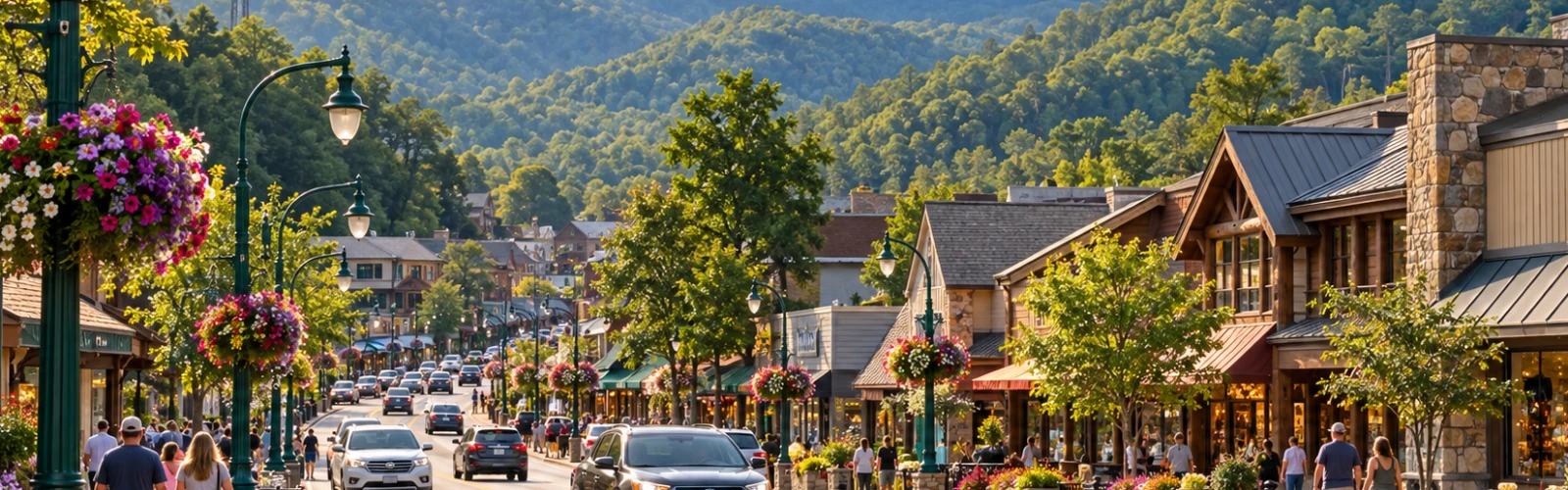
A Simple Sightseeing Day in Gatlinburg

A good day in Gatlinburg does not need an early alarm, a complicated route, or a ticket for every attraction in town. This mountain town is best enjoyed by giving its different sides room to breathe: a downtown breakfast, a few interesting streets, a view from above, and enough time in the forest to remember why travelers have been coming to the Smokies for generations. Gatlinburg sits at the edge of Great Smoky Mountains National Park, with the Parkway forming its busy commercial heart and wooded ridges rising beyond the rooftops. That close connection between town and mountains makes it possible to experience two very different settings in the same day without spending hours on the road.
This Gatlinburg sightseeing itinerary keeps most of the morning on foot, when the downtown streets are easier to enjoy before the afternoon crowds build. A visitor might begin with pancakes, wander through the brick courtyards of The Village Shops, take a quieter detour beside the West Prong of the Little Pigeon River, and then ride above town for a wider look at the surrounding landscape. After lunch, the route heads toward Sugarlands Visitor Center, approximately two miles south of Gatlinburg, where a short woodland walk leads to Cataract Falls. It is a manageable introduction to the national park, with enough variety to make the afternoon feel like a genuine change of scenery.
The plan works especially well for first-time visitors who want a sense of Gatlinburg without rushing from one queue to another. Returning travelers can just as easily skip a familiar attraction, spend longer beside the river, or replace a downtown stop with a favorite trail. There is no need to cover every landmark in a single visit. Choosing a few places worth lingering over, leaving some space between them, and allowing the mountains to set the pace often makes for a more memorable day than an overpacked schedule.a

Begin With Breakfast and an Easy Route
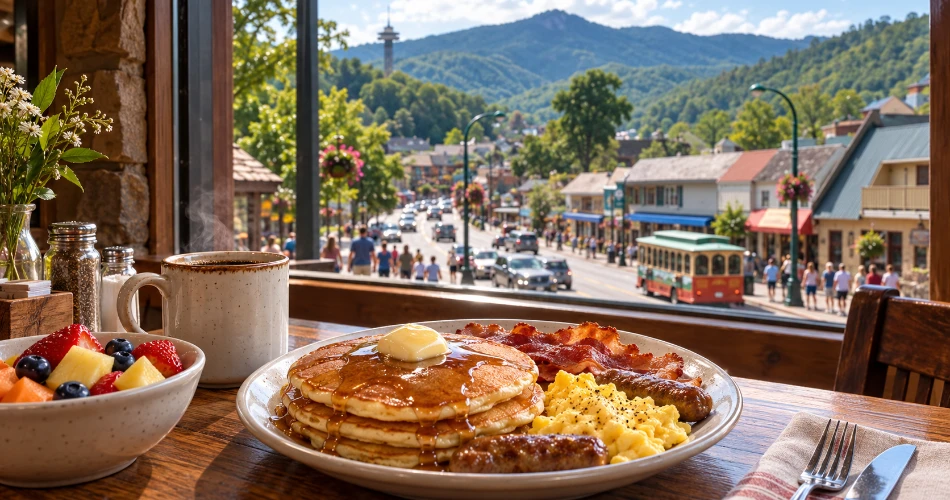
Breakfast is a sensible first stop, especially before the busiest part of the day reaches the Parkway. Pancakes are a long-standing Gatlinburg tradition, and Pancake Pantry at 628 Parkway is one well-established option. The family-owned restaurant opened in 1960 and normally serves breakfast daily from 7 a.m. to 3 p.m. A plate of pancakes, eggs, or another substantial breakfast gives visitors a comfortable start before several hours of walking. Those who prefer a quicker morning can choose a nearby café and begin with coffee instead.
The easiest route begins in downtown Gatlinburg, where shops, restaurants, and attractions sit close enough together for a pedestrian-focused morning. Drivers can use a municipal garage or another designated public lot rather than moving the car between stops. The city’s free trolley is useful for reaching downtown and reducing walking later, although routes and operating hours vary seasonally. The Welcome Center park-and-ride is another option for visitors who do not need their vehicle until the afternoon.
A practical morning can begin around 8 or 9, continue through the central Parkway, and leave the mountain excursion until after lunch. If breakfast takes longer than expected, one downtown stop can simply be shortened.
Walk Through the Downtown Sights at an Unhurried Pace
Downtown Gatlinburg is compact enough to reward a slow walk, but it is not a single uninterrupted shopping strip. The Parkway is the main corridor, with smaller courtyards, connecting streets, and quieter riverside sections branching away from it. This is where visitors can get a feel for the town without spending the morning behind a windshield. Storefronts, mountain views between buildings, and the occasional sound of the river make the walk more varied than a standard commercial district.
The following three stops give the morning a useful shape: a distinctive shopping courtyard, a quieter walk with a little local history, and one optional ticketed attraction with an elevated view. They can be visited in that order without trying to cover every attraction on the Parkway. A traveler who prefers crafts can spend more time browsing; someone who would rather sit beside the water can shorten the shopping portion.
The central streets are also a good place to notice how Gatlinburg changes throughout the day. Morning deliveries and breakfast crowds gradually give way to shoppers and families heading toward attractions. Rather than treating the walk as a race between landmarks, visitors can use the side streets and occasional benches to enjoy the town at a more comfortable pace.

Browse the Courtyards at The Village Shops
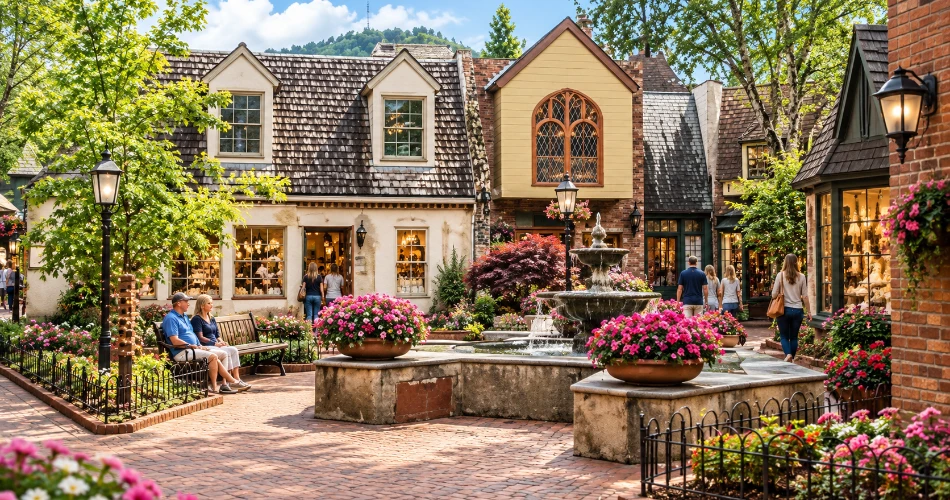
The Village Shops, at 634 Parkway, is a good place to slow down after breakfast. Its brick entrance leads into a network of small lanes and courtyards rather than a conventional indoor mall. The European-inspired buildings, decorative trim, stonework, and central fountain give the setting a character of its own. The property was developed beginning in the late 1960s, and the first shops opened in 1970. Today, the complex contains 27 shops, although individual tenants and their opening hours can change.
The pleasure here is in looking around rather than trying to buy something from every doorway. Visitors might browse specialty foods, gifts, clothing, or locally made items, then sit near the fountain and watch the morning traffic move through the courtyard. It is also a useful place to take a break from the busier sidewalk outside. The architecture makes an appealing photography subject, particularly when sunlight reaches the brickwork and flower displays.
For a simple sightseeing day, 30 to 45 minutes is a reasonable starting allowance, with more time for anyone who enjoys shopping. The courtyard can be visited without an admission ticket, and a purchase is not necessary to appreciate the setting. It is a small stop, but one that helps explain why downtown Gatlinburg has more character than its busiest roadside signs might suggest.
Follow the River and Make a Small Stop for Local History
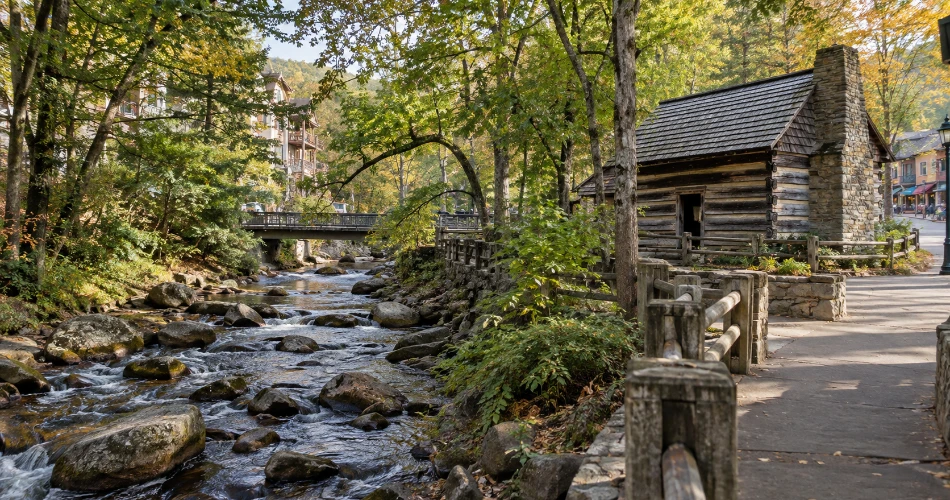
After the courtyard, a short detour toward River Road provides a noticeable change of pace. Gatlinburg’s River Walk follows sections of the West Prong of the Little Pigeon River, with places to sit and watch the water move over rocks. The route is not a remote hiking trail, and that is precisely its advantage: visitors can step away from the Parkway without committing to a long walk. A few minutes beside the river can feel like a useful reset after the shops and traffic.
For another glimpse of local history, the Historic Ogle Log Cabin near the Parkway and East Parkway intersection makes a worthwhile brief stop. William Ogle selected a settlement site around 1802 but died before returning with his family. His widow, Martha Jane Huskey Ogle, arrived with family members in 1807, completed the cabin, and established a home in the area. The structure was later moved a short distance from its original location.
The cabin is a modest reminder that Gatlinburg’s story began long before its modern attractions. Visitors should check current access arrangements rather than assume that the interior is open. Even a short exterior visit adds historical context to the morning. Those who have more time can consider the Gatlinburg Trail, but its approximately four-mile round trip is better treated as a separate walk than squeezed into this itinerary.
Take in the Mountain Views at Gatlinburg SkyPark
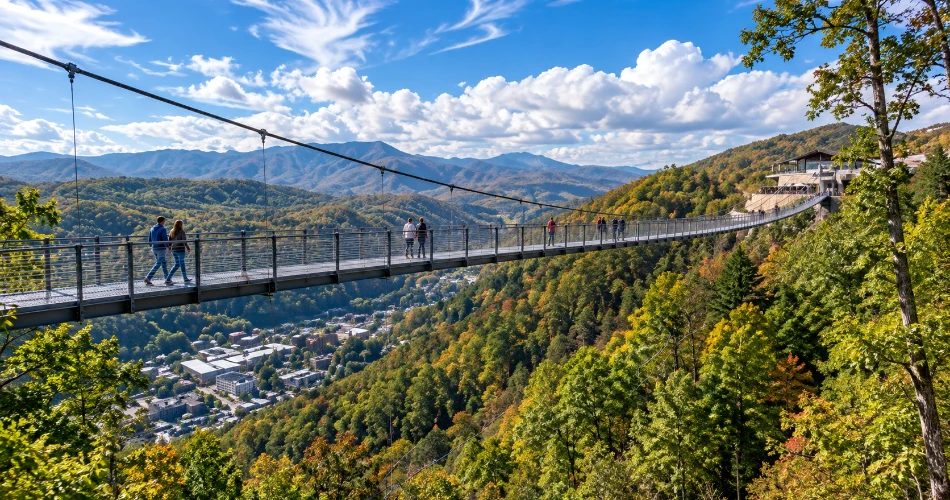
For a broader view of the town, Gatlinburg SkyPark is the morning’s main optional paid stop. Its entrance is at 765 Parkway, where the yellow SkyLift carries visitors up to the mountaintop attractions. The ride itself is part of the experience: buildings gradually give way to a wider view of the valley, and the surrounding ridges become easier to appreciate from above. On a clear day, the contrast between the busy town below and the wooded mountains beyond is especially striking.
At the top, the SkyDeck provides a place to pause before considering the SkyBridge. The pedestrian suspension bridge stretches almost 700 feet across a valley and includes glass-floor sections. Visitors who enjoy heights can cross at their own pace, while those who are uncomfortable with exposed bridges can spend more time at the viewing areas. The park also has walking trails and other mountaintop facilities, but there is no need to fit everything into one visit.
Allow roughly 90 minutes to two hours if the bridge and views are priorities, and check the forecast before purchasing tickets. Operations are weather-dependent, and admission options and prices can change. A single-visit ticket is generally the simplest fit for this itinerary. The view is the reason to go, so visitors should not feel obliged to turn the stop into an entire afternoon.
Make Lunch a Proper Break Before Heading Into the Park
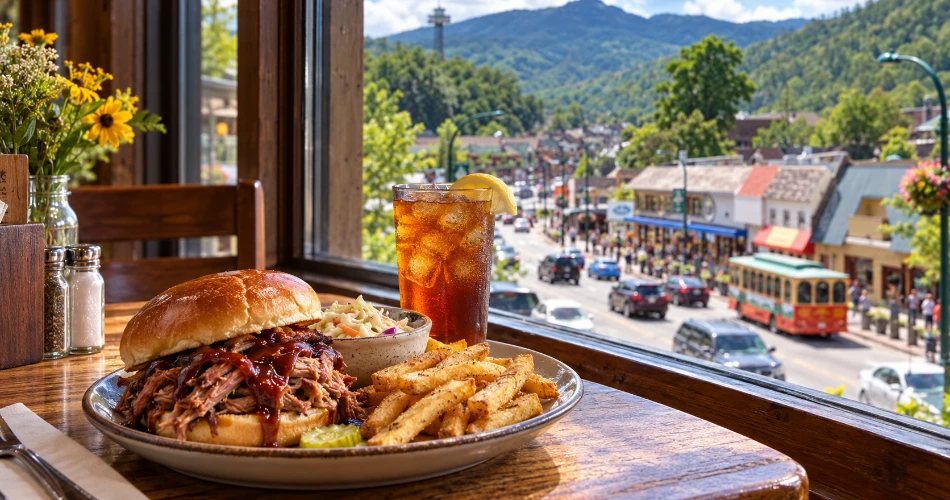
By early afternoon, a proper lunch is more useful than another attraction. Downtown Gatlinburg has plenty of casual choices, including sandwich shops, barbecue, cafés, and restaurants serving Southern comfort food. A simple meal near the Parkway keeps the route convenient, while a quieter table away from the busiest intersections can make the break feel more restful. Visitors with a large breakfast may prefer a lighter lunch and save room for dessert later.
This is also the right moment to decide how much walking the rest of the day should include. The morning’s paved sidewalks and courtyards are quite different from a woodland path, so a few practical preparations are worth making before leaving town:
- Comfortable walking shoes and drinking water make the afternoon easier.
- A light layer or rain jacket is useful when mountain conditions change.
- A park map and a check of current trail conditions can prevent an unnecessary detour.
A useful plan is to finish lunch around 1:30 or 2 p.m., retrieve the vehicle if necessary, and head toward Sugarlands. Visitors who have spent longer at SkyPark can leave the mountain portion for another morning rather than rushing. For those continuing, a short park visit offers a pleasant contrast to the built-up downtown. The next stop is close to town, so a worthwhile stretch of forest does not require driving all the way across the Smokies.
Spend the Afternoon at Sugarlands and Cataract Falls
Sugarlands Visitor Center sits on Newfound Gap Road, approximately two miles south of Gatlinburg, and provides an easy introduction to Great Smoky Mountains National Park. It is a good first stop for visitors unfamiliar with the park because the exhibits explain its natural history, staff can answer questions, and free maps are available. The center also has restrooms and a bookstore. A short orientation film is available, making it possible to learn a little about the landscape before heading outside.
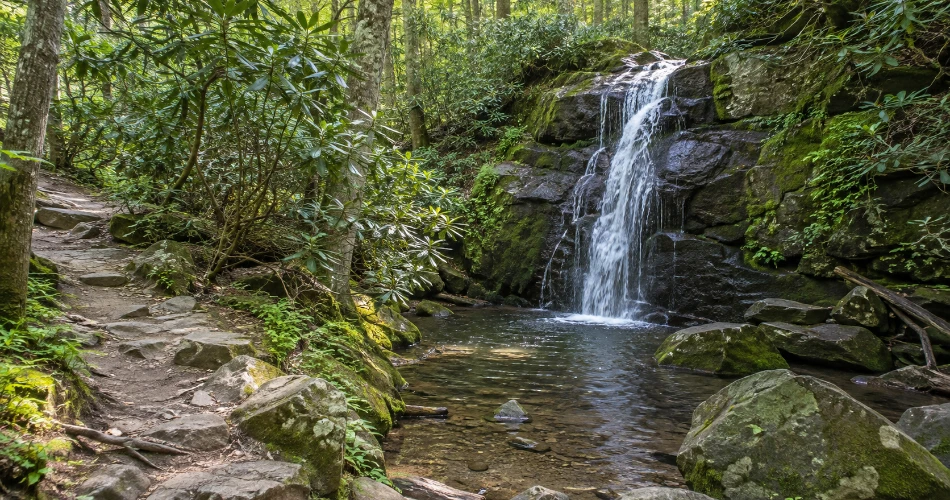
A simple visit can combine the center with Cataract Falls, a small waterfall reached by a forested trail behind the building. The National Park Service describes the walk as approximately 0.7 mile round trip. The route follows Fighting Creek and includes a junction after a bridge, so visitors should follow the posted directions rather than assume every path leads to the falls. The waterfall is about 40 feet high and is most dramatic after substantial rain. It is not a huge cascade, but the surrounding trees, stream, and short approach make it a satisfying afternoon stop.
The trail is not the same as a fully paved accessible path. Visitors needing a smoother option can consider the nearby Sugarlands Valley Nature Trail, a paved half-mile loop. Those who prefer a longer walk can save the Gatlinburg Trail for another day. At Cataract Falls, photographs should be taken from the bottom; climbing around the falls is dangerous.
Park entrance is free, but vehicles parked for longer than 15 minutes generally require a parking tag. The current standard prices are $5 daily, $15 weekly, and $40 annually. Tags can be purchased online or at designated locations, and a purchased tag does not guarantee an available space. Before leaving town, visitors should check current park conditions and closures, particularly after heavy rain or during winter weather.
Return Downtown for an Easy Evening
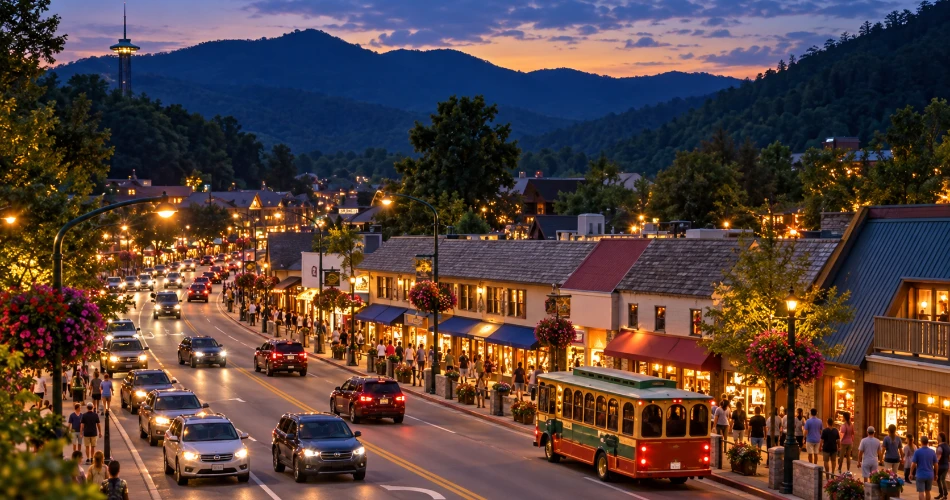
Returning to Gatlinburg in the late afternoon leaves room for a relaxed finish rather than another round of major attractions. The Parkway looks different as daylight fades and shop windows begin to glow, while the river remains a quieter alternative to the busiest sidewalks. Visitors can choose a comfortable dinner spot, take one final stroll, or simply sit with a dessert and enjoy the atmosphere. There is no requirement to fill every remaining hour.
For those who still have energy, a short walk around the central Parkway provides an opportunity to revisit a shop that was too busy earlier or pick up a small souvenir. A return to the riverside is equally appealing, particularly when the weather is mild. Travelers who purchased an admission option allowing re-entry to a mountaintop attraction should check its terms before planning a second visit; a standard single-entry ticket should not be assumed to include that privilege.
The most useful evening decision is often knowing when to stop. Families with younger children may prefer an early dinner, while couples or groups can linger over a meal. Either way, the day has already included the town’s commercial heart, a mountain view, and a genuine taste of the national park. Another expensive attraction is optional, not necessary for the itinerary to feel complete.
A Day That Leaves Room for the Mountains
A simple sightseeing day in Gatlinburg works best when the route remains flexible. The town’s appeal comes from the short distance between its lively streets and the forested landscape beyond them. A visitor can have breakfast in the center of town, browse a courtyard, look across the valley, and still reach a waterfall before the afternoon is over. That variety is what makes Gatlinburg a useful base for both a first Smokies visit and a return trip.
The itinerary can also be adjusted without losing its character. On a rainy day, more time indoors and a shorter riverside walk may be the better choice. In pleasant weather, the forest portion can take priority. Travelers who dislike heights can omit SkyPark, while those with limited mobility can choose suitable paved routes and confirm accessibility details in advance. The goal is not to see the greatest possible number of attractions.
A little preparation makes the day easier: check opening hours, review the park’s current conditions, and choose parking before arriving downtown. Then leave enough unscheduled time for a good meal, an unexpected view, or a quiet bench beside the water. Gatlinburg is most enjoyable when visitors have time to notice both the town and the mountains that surround it.
Next post What to See Around Gatlinburg Beyond the Main Attractions
Previous Post The Gatlinburg Sights You’ll Be Talking About Later
About Author