English

 Home
Home Hotels
  Car Rental
 Rewards
 Travel Guide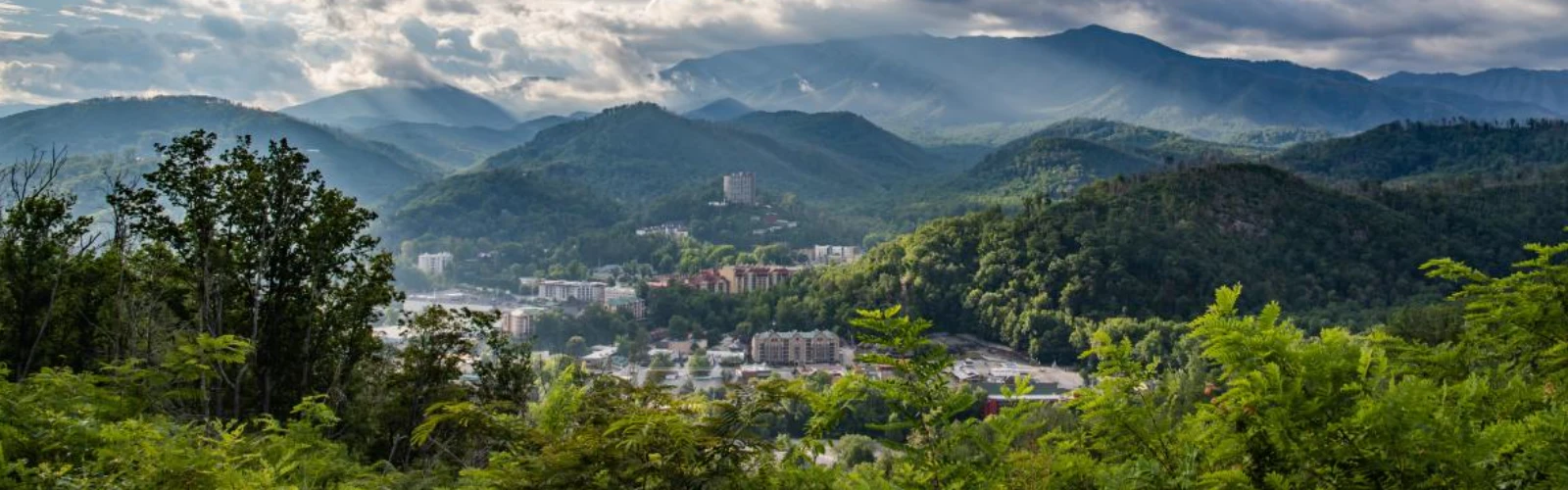
Mountain Views Worth Chasing Around Gatlinburg

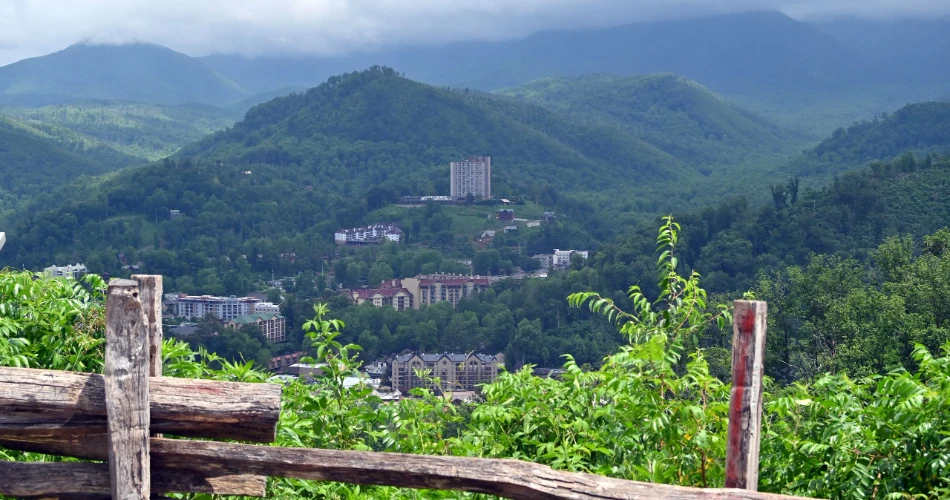
Gatlinburg is the kind of mountain town where a short drive can completely change the view outside the windshield. One minute, the road may be following a creek beneath a thick canopy of hardwoods; a little later, the trees open and layer after layer of blue-green ridges stretches toward the horizon. The best mountain views around Gatlinburg are not limited to one famous lookout, either. Some require a short uphill walk, some appear beside a quiet road, and others are best enjoyed from the car with no hiking involved at all. The surrounding Great Smoky Mountains also change character with the weather and season. Clear mornings bring distant ridgelines into focus, while mist can soften the mountains into the hazy appearance for which the Smokies are famous. For visitors who enjoy photography, scenic drives, peaceful stops, or simply seeing the landscape from a higher point, Gatlinburg makes an excellent base for chasing those changing views.
Kuwohi and Newfound Gap for the Big Mountain Panorama
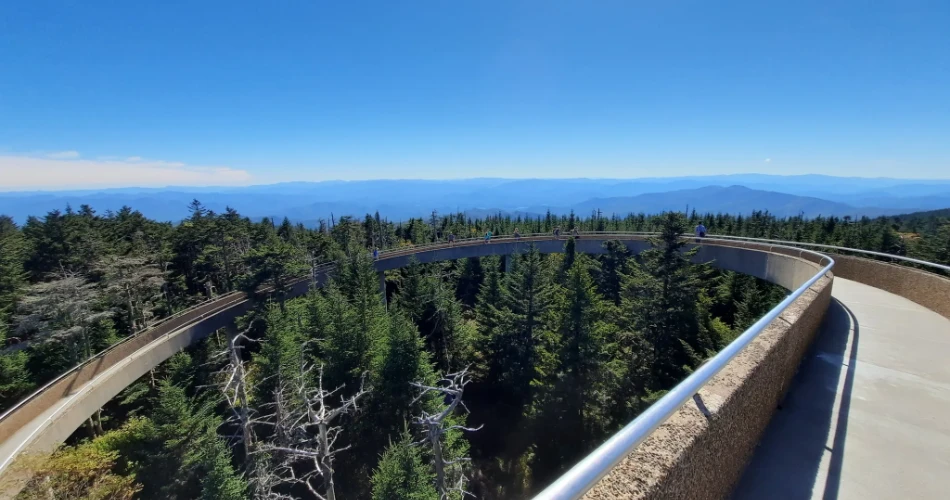
For visitors who want the classic high-elevation Smokies experience, the road from Gatlinburg toward Newfound Gap is difficult to beat. Newfound Gap sits on the Tennessee-North Carolina state line and is reached by U.S. 441, the main road crossing the park. From this elevation, the landscape feels noticeably different from downtown Gatlinburg. Forested ridges spread in every direction, and the higher elevations can be considerably cooler than the town below. The Kuwohi area, formerly known as Clingmans Dome, provides an even bigger perspective. Kuwohi is the highest point in the Great Smoky Mountains, and its lookout tower is reached by a steep, paved uphill walkway from the parking area. The National Park Service notes that sweeping views are available when weather permits, although clouds and fog can quickly change the scene.
The journey matters almost as much as the destination. Newfound Gap Road passes through changing forest zones, with pullouts where travelers can stop safely. Because parking demand can be high around Kuwohi, especially during busy periods, visitors should have another viewpoint in mind rather than stopping along the roadway. A clear day can make the high point spectacular, but a cloudy morning is not necessarily wasted. The shifting mist can create a completely different Smoky Mountain atmosphere.
Foothills Parkway for Long, Open Views
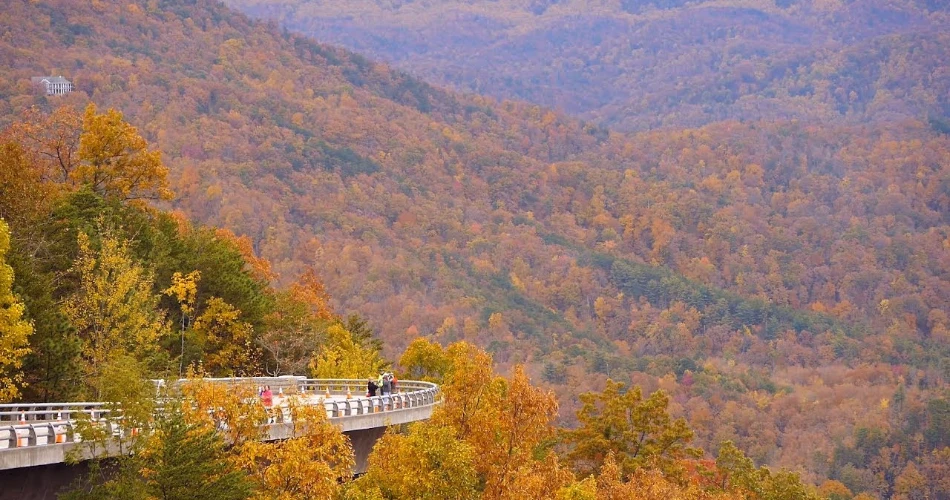
Foothills Parkway is one of the strongest choices for travelers who want scenic drives near Gatlinburg rather than a strenuous hike. Unlike many mountain roads where thick forest limits the view, sections of the parkway provide broad openings across the ridges. The Walland-to-Wears Valley section is approximately 14.75 miles long and climbs to nearly 2,500 feet near Caylor Gap. The National Park Service describes the route as having expansive views of Great Smoky Mountains National Park, with overlooks and parking areas along the way.
The road is particularly appealing to photographers because the scenery keeps changing as the route winds along the mountain slopes. Instead of reaching one lookout and leaving, visitors can make several stops and compare the views from different elevations. The western section also offers numerous scenic parking areas, including Look Rock, where visitors can access viewing platforms and a short paved trail to the tower.
Another useful detail is that the Foothills Parkway is not one continuous completed road. The National Park Service currently lists three completed sections totaling 22.5 miles of the planned 72-mile corridor. Checking the intended route before leaving is therefore worthwhile.
Gatlinburg Bypass for a Quick View Without a Long Drive
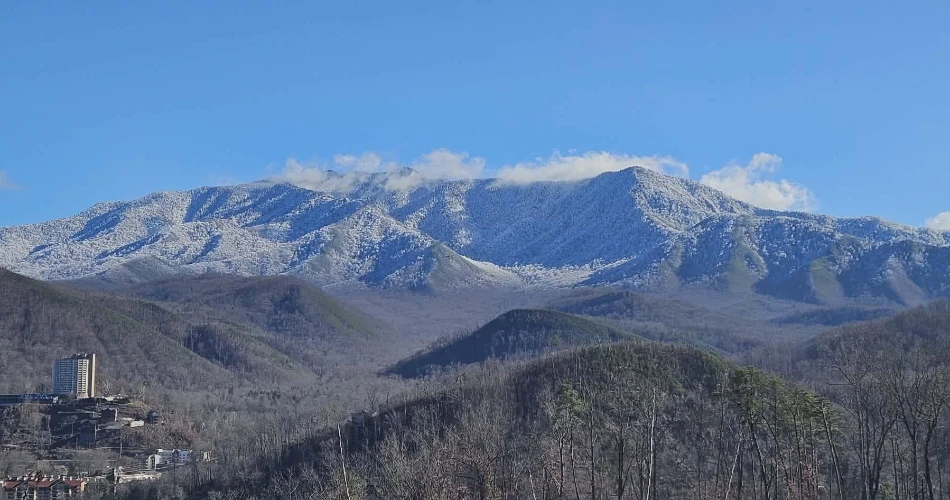
Travelers do not always have half a day available for a mountain drive. The Gatlinburg Bypass is useful in that situation because it provides scenic pullouts with views over the town and surrounding Smokies without requiring a trip deep into the park. The National Park Service identifies two overlooks along the bypass, with the southern overlook closer to the park and Newfound Gap Road and the northern overlook nearer the Gatlinburg entrance area.
This makes the bypass particularly convenient for visitors who want a quick photo stop before continuing with their day. The perspective is also different from the higher viewpoints. Instead of looking across an uninterrupted wilderness landscape, visitors can see Gatlinburg positioned beneath the surrounding mountains. That combination of town and ridgeline makes the bypass a useful location for photographs that show the relationship between the mountain community and the national park.
The bypass is also worth considering around changing light. Early morning can give the ridges a soft appearance, while late afternoon can create stronger shadows across the valleys. Visitors should use designated pullouts rather than stopping along travel lanes. For anyone staying in Gatlinburg who wants one of the easiest Gatlinburg scenic overlooks to add to a busy itinerary, this is a practical choice.
Roaring Fork Motor Nature Trail for Mountain Scenery and Smokies History
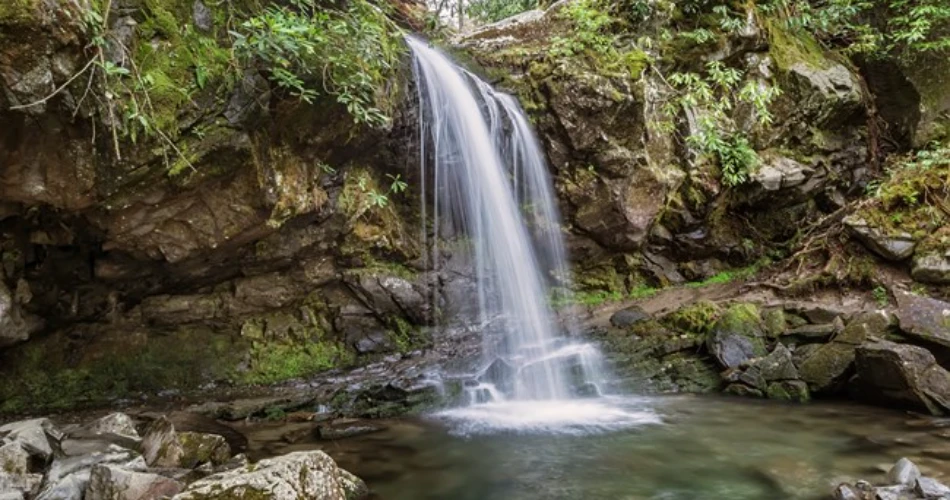
The Roaring Fork Motor Nature Trail offers a different kind of mountain experience. Rather than concentrating on one enormous panoramic overlook, the one-way loop takes visitors through a forested landscape where mountain streams, historic structures, waterfalls, and wooded slopes create a sequence of smaller views. The route is only a short distance from central Gatlinburg, making it particularly convenient when travelers want to stay close to town while spending time inside the national park.
The road feels slower and more intimate than an open scenic parkway. Water frequently becomes part of the scenery, with rushing streams beside portions of the route. Historic cabins and other preserved structures provide reminders that the Smokies were once home to Appalachian communities before the national park was established. The combination makes the drive useful for travelers who prefer scenery with a sense of place rather than stopping repeatedly at overlooks.
A Better Choice for a Slow Morning
Roaring Fork works particularly well when the goal is not simply to collect photographs. Visitors can drive slowly, stop at appropriate pullouts, walk short sections, and spend time looking at the streams and historic buildings. Wildlife is also possible, although sightings are never guaranteed. The National Park Service lists Roaring Fork among the park's popular auto-touring routes and notes that its popularity can sometimes result in traffic.
What Makes the Scenery Different
The route's appeal comes from variety. One stop may offer water and forest, another a historic cabin, and another a glimpse through trees toward a mountain slope. It is therefore less about one dramatic vista and more about experiencing the character of the Smokies at road level.
Greenbrier for a Quieter Mountain Landscape
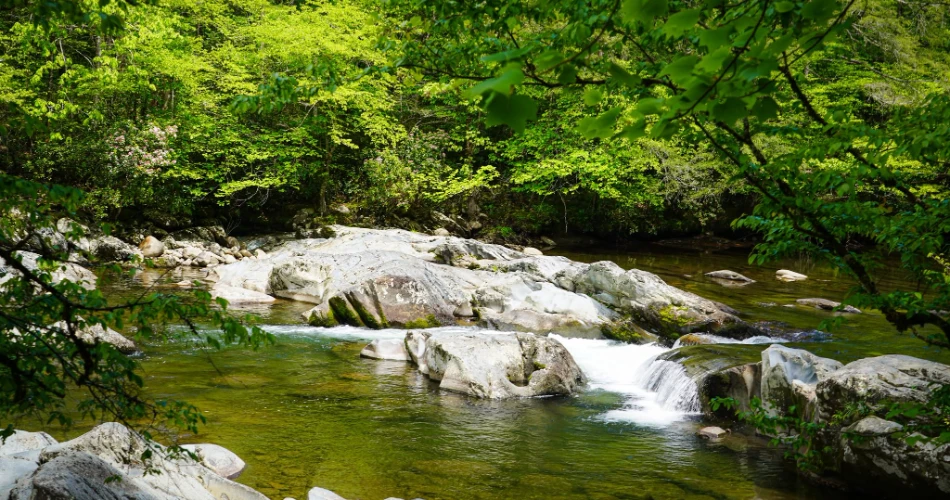
Greenbrier is a strong option for travelers who want Smoky Mountain views without immediately heading toward the busiest high-elevation destinations. Located in the northeastern portion of Great Smoky Mountains National Park, Greenbrier is characterized by thick forest, mountain streams, and quieter surroundings. The National Park Service places the area approximately 20 minutes east of Gatlinburg, making it relatively convenient for a half-day outing.
The scenery here feels more enclosed than the open panoramas found along Foothills Parkway. That is not a disadvantage. For many travelers, the appeal is seeing how the mountains look from within the landscape rather than only from above it. Roads and trails follow the contours of the area, and the combination of trees, water, rocks, and ridges creates plenty of smaller photographic compositions.
Greenbrier can be especially attractive during spring and fall, when changes in vegetation add color to the forest. Visitors should still expect weather to influence visibility. The Smokies can become misty or cloudy quickly, and that atmospheric quality is part of the area's identity. Travelers looking for a quieter alternative to the most famous viewpoints may find Greenbrier more rewarding than spending an entire day waiting in traffic elsewhere.
Sunrise and Sunset Spots That Make the Extra Drive Worth It
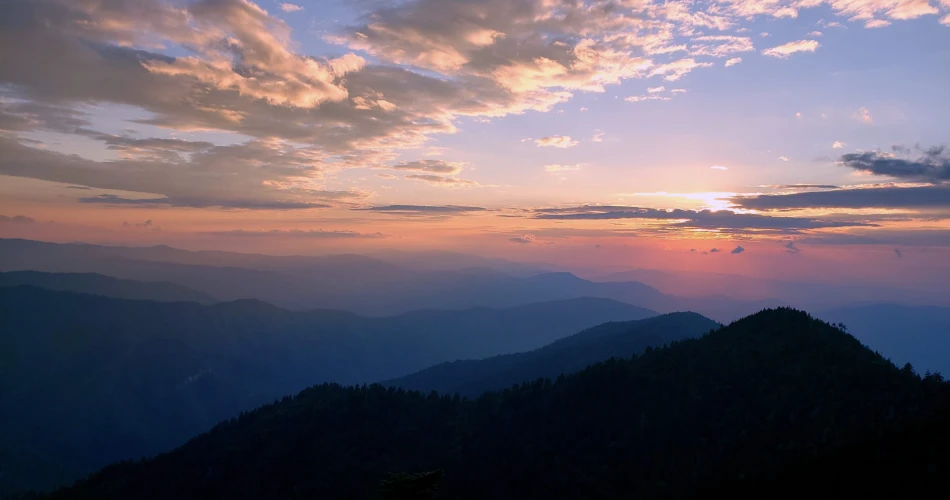
Timing can completely change the appearance of the mountain views in Gatlinburg. A viewpoint that looks ordinary in the middle of the afternoon may become memorable when the ridges are layered with early-morning haze or illuminated by low evening light. Sunrise is particularly rewarding at viewpoints that face east or southeast. The National Park Service specifically identifies Green Mountain Overlook on the Foothills Parkway East as a sunrise-friendly viewpoint because it faces southeast.
Sunset requires more planning because mountain roads become darker quickly after daylight fades. Travelers should never let a desire for a photograph encourage unsafe roadside parking or hiking after dark without proper preparation. It is usually better to arrive early, choose a designated viewpoint, and allow enough time to leave before conditions become difficult.
Green Mountain Overlook for Sunrise
Green Mountain Overlook sits along the Cosby-to-I-40 section of Foothills Parkway East. The National Park Service lists the overlook at about 2,136 feet and notes its southeast-facing orientation. The entire section is 5.6 miles long and has four scenic overlooks, giving visitors several opportunities to stop and compare the changing landscape.
Look Rock for a Broader Perspective
Look Rock on the western Foothills Parkway provides both a lower viewing area and access to a tower via a short paved trail. The National Park Service lists the tower trail as 0.8 miles and notes that the route has some steepness.
Weather Makes the Difference
Clear weather is best when the goal is maximum distance. However, light haze can make the ridges appear softer and more atmospheric. Travelers should check weather and road conditions before setting out because mountain visibility can change considerably over a single day.
Best Scenic Drives for Travelers Who Prefer Staying in the Car
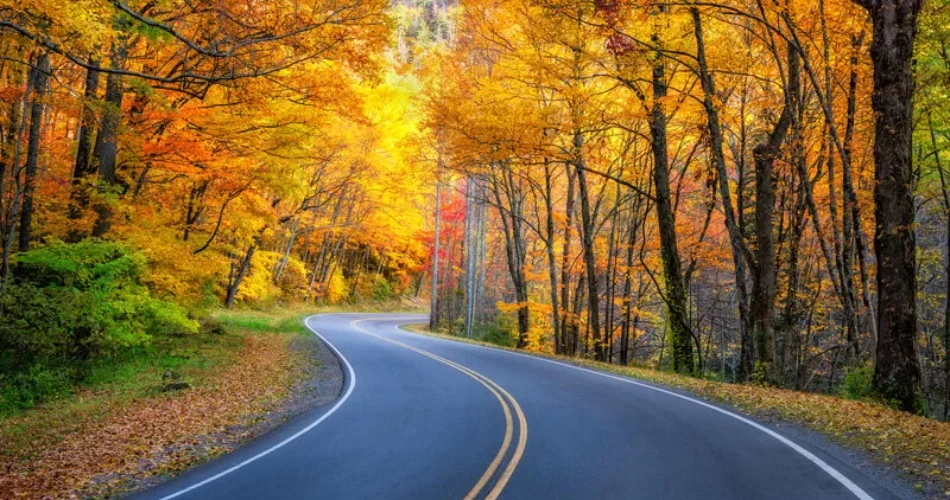
Not everyone visits Gatlinburg to hike. Some travelers have young children, limited mobility, older family members, or simply prefer enjoying the landscape from the road. Fortunately, several routes provide substantial scenery without requiring a long trail. The National Park Service lists Cades Cove Loop Road and Roaring Fork Motor Nature Trail among the park's popular auto-touring options, while recommending Foothills Parkway for travelers looking for excellent views with less traffic.
Foothills Parkway is particularly suited to travelers who want repeated panoramic views. Roaring Fork is better for forest scenery, streams, historic buildings, and waterfalls. Cades Cove provides a completely different setting, with an 11-mile one-way loop passing through a broad mountain valley surrounded by ridges.
Foothills Parkway for Panoramas
The Walland-to-Wears Valley section has 10 waysides and overlooks, while the Chilhowee-to-Walland section includes 14 scenic overlooks among its parking areas.
Roaring Fork for Forest and Water
Roaring Fork Motor Nature Trail is a 5.5-mile one-way scenic drive near Gatlinburg that combines mountain scenery with rushing streams, dense hardwood forest, historic cabins, and waterfalls. Unlike high-elevation overlooks, the route takes travelers directly through the forest, making the drive feel more immersive.
A popular stop is the Noah “Bud” Ogle farmstead, where visitors can see a preserved historic home and learn about Appalachian life. Those wanting a short hike can take the 2.6-mile round-trip trail to Grotto Falls, a 25-foot waterfall where the trail passes behind the falling water.
For an easier stop, the Place of a Thousand Drips offers a roadside cascade that is particularly impressive after rainfall. Roaring Fork is best visited early because the narrow road and limited parking can become busy. The route is also seasonally closed, so checking current conditions before visiting is worthwhile.
For travelers looking for mountain views around Gatlinburg with more than just a distant panorama, Roaring Fork delivers a closer look at the Smokies—water, forest, wildlife, history, and mountain scenery all packed into one scenic drive.
Cades Cove for Valley Scenery
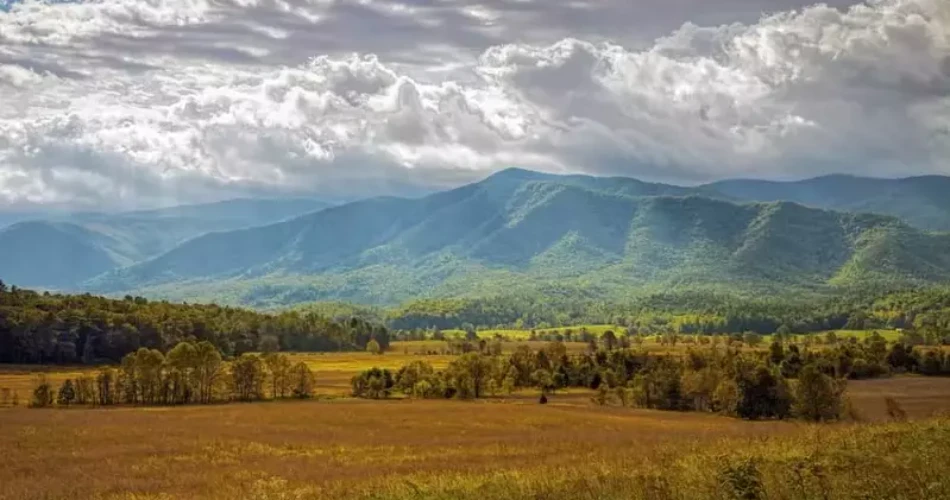
Cades Cove offers a slower way to enjoy Smoky Mountain views, with an 11-mile one-way loop winding through a broad mountain valley surrounded by forested ridges. Along the drive, travelers can spot historic cabins, churches, open meadows, and wildlife while enjoying changing mountain views. The loop is best treated as a scenic outing rather than a shortcut. Visitors should allow plenty of time for stops, photographs, and wildlife sightings, especially during busy seasons when traffic can move slowly. For travelers who prefer a relaxed drive with scenery, history, and plenty of opportunities to stop, Cades Cove is a worthwhile addition to a Gatlinburg itinerary.
Choosing the Right Mountain View by Season and Weather
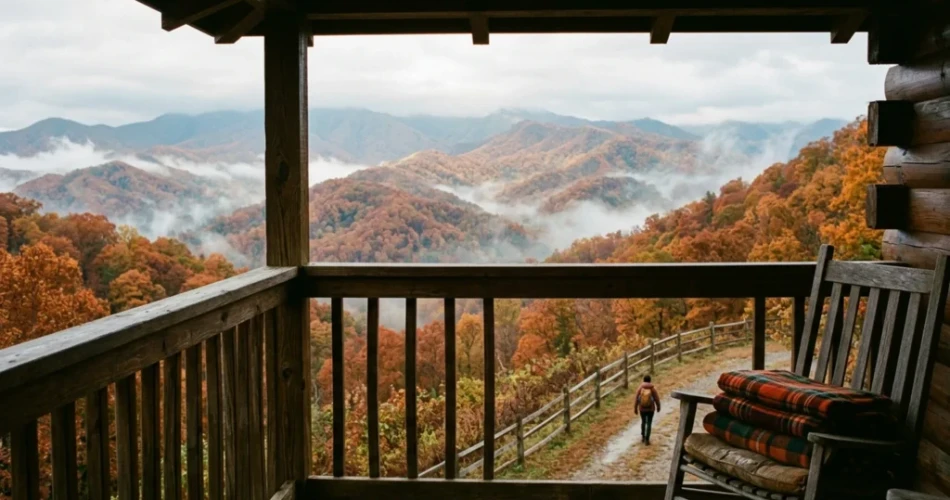
The best mountain views around Gatlinburg depend heavily on conditions. Autumn is an obvious choice for travelers who want colorful forests, but it is also one of the busiest periods in the Smokies. A mountain overlook surrounded by changing leaves can be beautiful, yet heavy traffic and crowded parking areas may affect the experience. Spring brings fresh greenery and flowering plants, while summer provides fuller forests and longer daylight hours. Winter can open views through bare trees at lower elevations, although higher roads may have seasonal closures or difficult conditions.
Weather is especially important at high elevations. Kuwohi and Newfound Gap can be much cooler than Gatlinburg, and clouds can obscure distant ridges even when the town below is sunny. The National Park Service warns that parking demand around Kuwohi can exceed capacity and advises visitors to plan an alternative destination.
For photography, early morning often offers softer light and fewer harsh shadows. After rain, the atmosphere may become hazy, which can create the layered appearance associated with the Smokies. Travelers should avoid assuming that a cloudy forecast means a poor trip. Mountain weather can create constantly changing scenery, and mist moving between ridges can be as visually interesting as a perfectly clear horizon.
A Practical Way to Plan a Mountain-View Day Around Gatlinburg
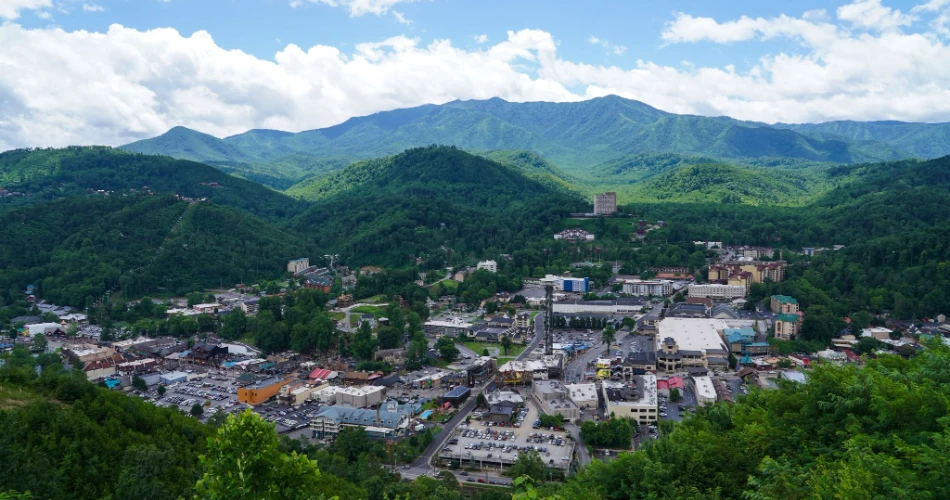
A good mountain-view day does not need to involve driving from one famous overlook to another without stopping. A better approach is to group locations geographically and allow extra time for parking, photographs, short walks, and changing road conditions. For a high-elevation day, travelers can follow Newfound Gap Road toward Newfound Gap and Kuwohi, stopping at appropriate overlooks along the way. Because Kuwohi is a popular destination, having a backup viewpoint makes the day less stressful.
Another option is to dedicate a morning or afternoon to Foothills Parkway. Its multiple overlooks make it easy to slow down and enjoy the drive rather than rushing toward a single destination. Visitors should remember that parking within Great Smoky Mountains National Park for more than 15 minutes requires a parking tag.
For travelers with less time, the Gatlinburg Bypass or Roaring Fork can provide a scenic outing without committing to a longer drive. Checking current road closures before leaving is important, particularly when planning high-elevation routes. The National Park Service specifically recommends checking road closure information for Foothills Parkway sections.
The most rewarding approach is simple: choose one major viewpoint, add one scenic drive, and leave enough time to actually look around. Gatlinburg has plenty of mountain scenery, but the best moments often happen when travelers stop rushing and give the landscape a few quiet minutes.
Mountain Views That Are Worth Chasing
Gatlinburg's strongest scenic experiences come from the variety of ways the mountains can be seen. Kuwohi offers the high-elevation perspective, Newfound Gap provides a dramatic crossing through the heart of the Smokies, and Foothills Parkway delivers long-distance views from a scenic road. Roaring Fork provides a more intimate combination of mountains, streams, forest, and Appalachian history, while Greenbrier offers a quieter setting for travelers who prefer less obvious routes. The Gatlinburg Bypass, meanwhile, proves that a memorable view does not always require a long excursion.
The important thing is to match the viewpoint with the type of day being planned. A photographer chasing sunrise may prefer Green Mountain Overlook. Someone wanting a classic Smokies panorama may choose Kuwohi. Families looking for a relaxed drive may enjoy Roaring Fork or Foothills Parkway. Travelers with limited time can make the bypass part of a short sightseeing loop.
Mountain scenery around Gatlinburg is also constantly changing. Clear skies, low clouds, autumn foliage, summer greenery, morning haze, and evening light can make the same viewpoint look completely different from one visit to the next. That unpredictability is part of the appeal. Rather than searching for one perfect overlook, travelers who leave room for a few scenic stops are more likely to come away with the kind of views that make a Smoky Mountain trip memorable.
Next post Best Places for a Peaceful Walk in Gatlinburg
Previous Post Where to Enjoy the Natural Beauty of Gatlinburg
About Author