English

 Home
Home Hotels
  Car Rental
 Rewards
 Travel Guide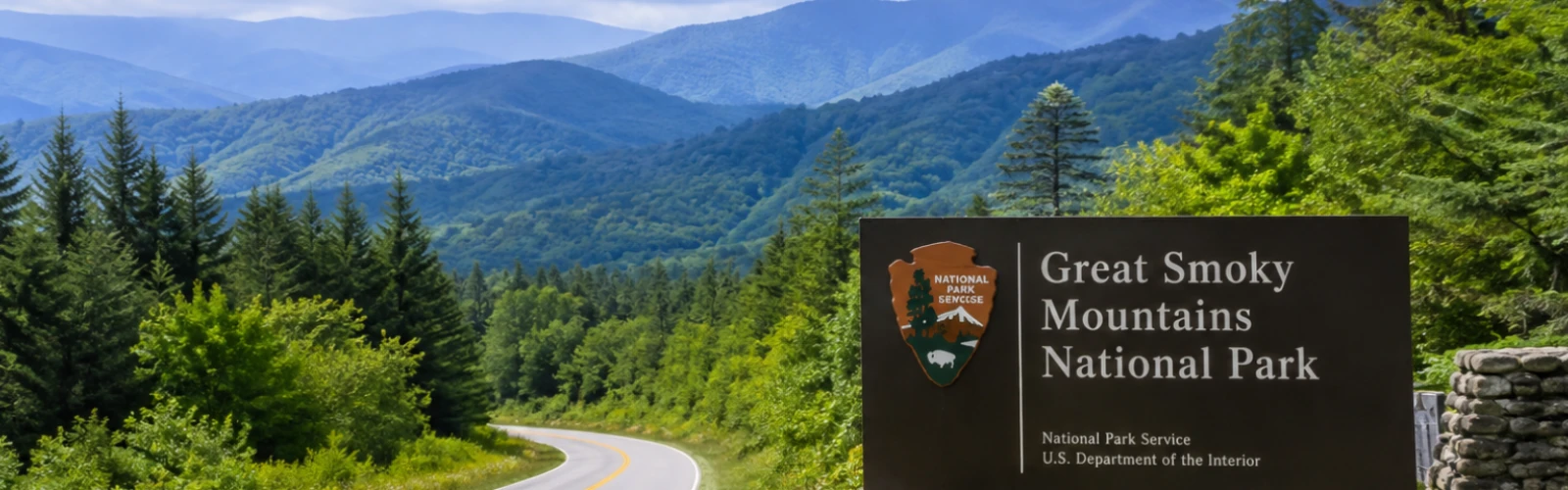
Scenic Drives to Add to Your Gatlinburg Vacation

Gatlinburg is one of those places where the drive can easily become part of the day rather than simply the way to reach an attraction. Within minutes of downtown, busy streets give way to mountain roads that follow rushing rivers, climb toward high-elevation overlooks, circle broad valleys, and pass forests that change noticeably with every season.
Some of the best Gatlinburg scenic drives require only an hour or two, while others can fill most of a day once overlooks, historic buildings, short walks, wildlife sightings, and traffic are added to the schedule. The key is not trying to cover every road at once. Newfound Gap Road feels completely different from the shaded Roaring Fork Motor Nature Trail, while the open views along Foothills Parkway offer another side of the Smokies altogether.
Drivers should also remember that mountain conditions change quickly. Roads that are comfortable in Gatlinburg can be foggy, icy, or considerably cooler at higher elevations, making a quick road-status check worthwhile before leaving town.

Drive Newfound Gap Road From Gatlinburg Into the High Smokies
For a first scenic drive near Gatlinburg, Newfound Gap Road is difficult to beat because it shows how dramatically the Great Smoky Mountains change with elevation. The 31-mile road crosses the national park between Gatlinburg, Tennessee, and Cherokee, North Carolina, making it the principal paved route across the mountains. Rather than climbing straight toward one viewpoint, the road gradually moves through different forest communities before reaching the high country near the Tennessee–North Carolina border.
Leaving Gatlinburg, drivers pass the Sugarlands area and begin following forested slopes and mountain streams. Several pullouts make it possible to stop without turning the outing into a major hike. The experience changes again approaching Newfound Gap, where long ridgelines replace the enclosed forest scenery of the lower elevations.
It is a road worth driving slowly rather than treating as a shortcut to Cherokee. Curves, changing weather, cyclists, wildlife, and visitors pulling into overlooks all reward patient driving.
Make Time for Newfound Gap Overlook
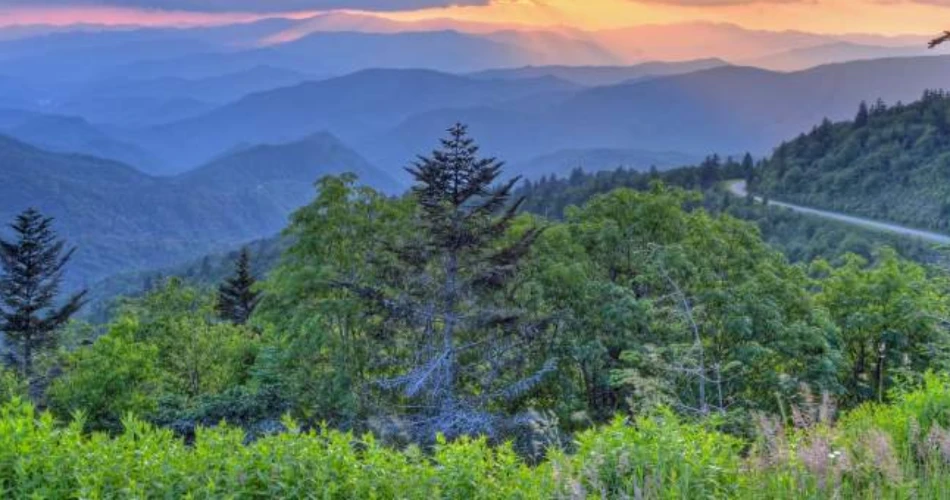
Newfound Gap is the natural stopping point on this Smoky Mountains road trip. The overlook sits at 5,046 feet, considerably higher than downtown Gatlinburg, and marks the Tennessee–North Carolina state line. The elevation difference matters: temperatures can be significantly cooler here, and conditions that produce rain at lower elevations may bring snow to the gap during colder periods.
The viewpoint gives travelers a chance to step out of the car and look across the overlapping ridges that give the Smokies their familiar blue-gray appearance. It is also crossed by the Appalachian Trail, adding another layer of interest for visitors who know the mountains mainly from the road.
A light jacket is sensible even when Gatlinburg feels warm. Parking can also become crowded during busy weekends and peak fall color, so early morning often makes the stop easier. The road itself is normally open year-round, weather permitting, but temporary closures can occur during snow, ice, storms, or maintenance.
Take the Roaring Fork Motor Nature Trail for Forest, Water, and History
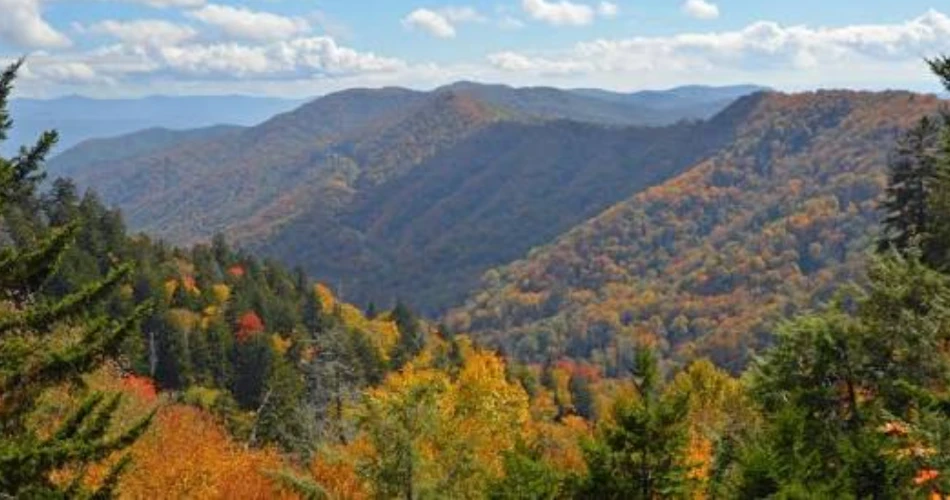
Roaring Fork Motor Nature Trail offers a much more intimate drive than Newfound Gap Road. Instead of wide mountain panoramas, this 5.5-mile, one-way road winds through dense forest beside rushing water and historic homesteads. The narrow pavement and tight curves naturally slow traffic, which suits a route where many of the most interesting details sit close to the roadside.
The approach begins from Gatlinburg through the Cherokee Orchard area. Once on the motor nature trail, drivers pass old-growth forest, cabins and other structures connected to families who lived in the mountains before the national park was established. This is one of the Great Smoky Mountains scenic drives where looking into the trees can be as rewarding as searching for a distant overlook.
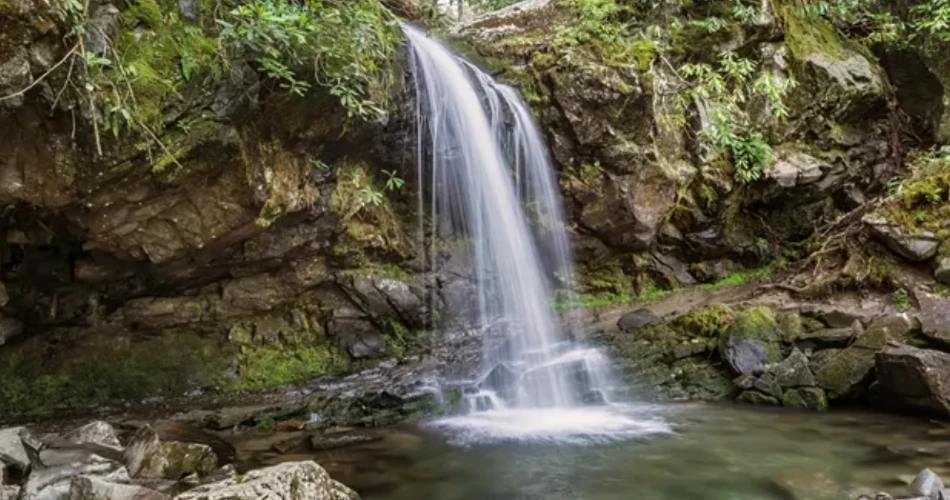
Toward the end of the road, Place of a Thousand Drips appears along a rock face. It becomes especially noticeable after periods of rain, when numerous small cascades flow across the stone.
Roaring Fork is seasonal, and buses, trailers, and motor homes are not permitted, so current road status should be checked before setting out.
Follow Little River Road for a Relaxed Waterside Drive
Little River Road works well for travelers who prefer rivers, forest, and roadside stops to high mountain overlooks. The route runs west from the Sugarlands area toward the Townsend side of Great Smoky Mountains National Park, often staying close enough to Little River for drivers to see or hear the water.
The pleasure of this drive comes from its variety. Rock walls, hardwood forest, river bends, picnic areas, trail access points, and small pullouts appear gradually rather than all at once. Metcalf Bottoms is one of the useful stopping places along the route, particularly for travelers who want to turn the drive into an easy half-day outing rather than remain in the car continuously.
Little River Road is also one of the park's primary roads and is generally open throughout the year, weather permitting. Drivers should still avoid rushing. The road has curves and sections where sight distances are limited, and park guidance specifically calls for caution between the Townsend entrance and the Elkmont area.
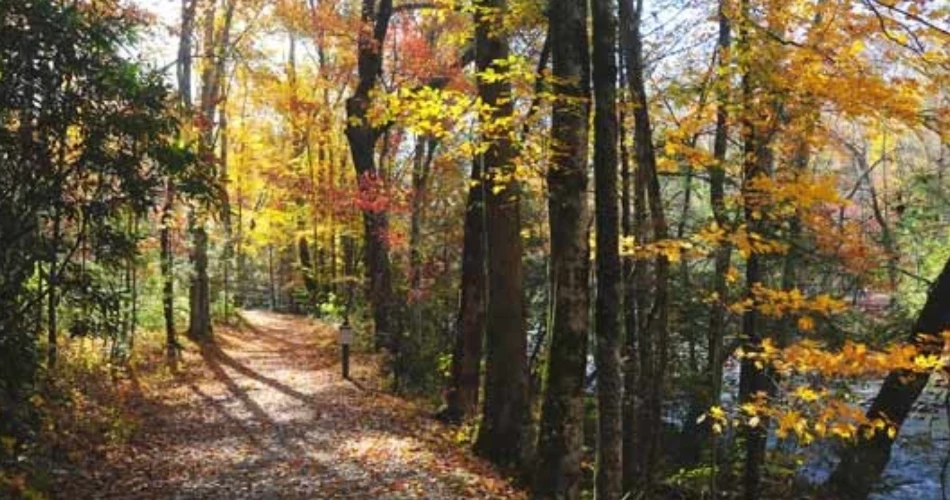
A good Little River Road outing is less about mileage and more about leaving enough time to pull over, listen to the river, and continue when ready.
Give Foothills Parkway More Time Than the Map Suggests
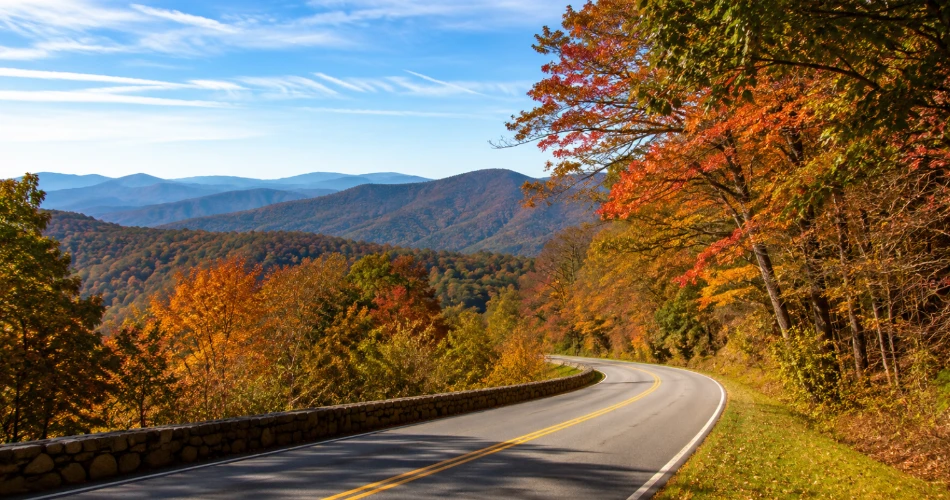
Foothills Parkway is one of the best choices for travelers who want broad mountain views without spending the entire drive inside a heavily forested corridor. The parkway is made up of separate completed sections, and only portions of the originally authorized 72-mile corridor are currently open. The National Park Service describes three open sections totaling 22.5 miles.
The Walland-to-Wears Valley section is particularly useful for a Gatlinburg vacation. It measures about 14.75 miles one way and rises to nearly 2,500 feet near Caylor Gap. Multiple overlooks face the Smokies and Wears Valley, making this the kind of road where a planned 30-minute drive can easily stretch much longer.
Farther west, the Chilhowee-to-Walland section covers 16.6 miles and includes numerous parking areas and scenic overlooks. The road follows the foothills rather than crossing the highest mountains, so the views often show the larger mountain wall from a distance.
For photographers, late-afternoon light can emphasize the layered ridges, while mornings may bring mist sitting low in the valleys.
Plan a Cades Cove Scenic Drive as a Half-Day Outing
Cades Cove is only an 11-mile loop, but treating it as an ordinary 11-mile drive is the quickest way to create a frustrating schedule. The one-way road circles a broad mountain valley containing historic churches, homesites, cemeteries, trails, open fields, and frequent opportunities for wildlife viewing. The National Park Service recommends allowing roughly two to four hours for the loop, with additional time needed for walks or longer stops.
Traffic is often part of the experience, particularly in summer, fall, and on weekends. Wildlife sightings can slow vehicles dramatically as visitors stop to watch deer, turkeys, bears, or other animals. Drivers should use designated pullouts rather than stopping in the travel lane.
The road is open from sunrise to sunset, but during the usual May-through-September season it is closed to motor vehicles on Wednesdays for vehicle-free use.
A Cades Cove scenic drive works best when nobody in the car is watching the clock too closely.
Stop for the Valley’s Historic Sites Instead of Only Watching for Wildlife
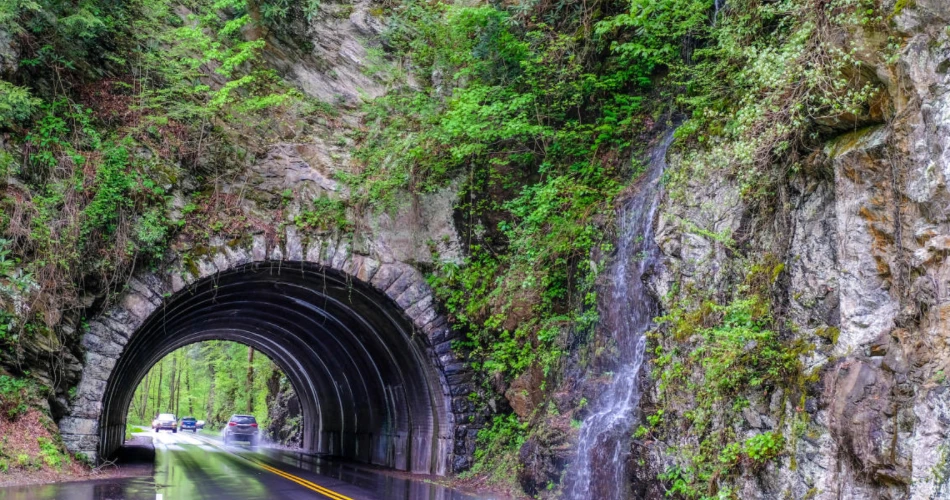
Wildlife gets much of the attention at Cades Cove, but the valley makes far more sense when visitors also stop at several of its historic buildings. Churches, cabins, farm structures, and cemeteries illustrate that Cades Cove was once an inhabited community rather than simply an open meadow created for sightseeing.
Leaving the vehicle occasionally also changes the pace of the loop. A five- or ten-minute stop beside a historic structure gives drivers a break from slow traffic and creates a better understanding of the landscape. The National Park Service specifically describes Cades Cove as an area containing historic homesites, churches, cemeteries, hiking access, and other traces of earlier settlement.
Visitors should still keep wildlife safety in mind. Animals should be observed from a proper distance, and traffic lanes should remain clear. The best strategy is simple: allow enough time that stopping feels like part of the plan instead of an interruption. That approach makes the loop noticeably more enjoyable on busy days.
Add Kuwohi Road When the Seasonal Route Is Open
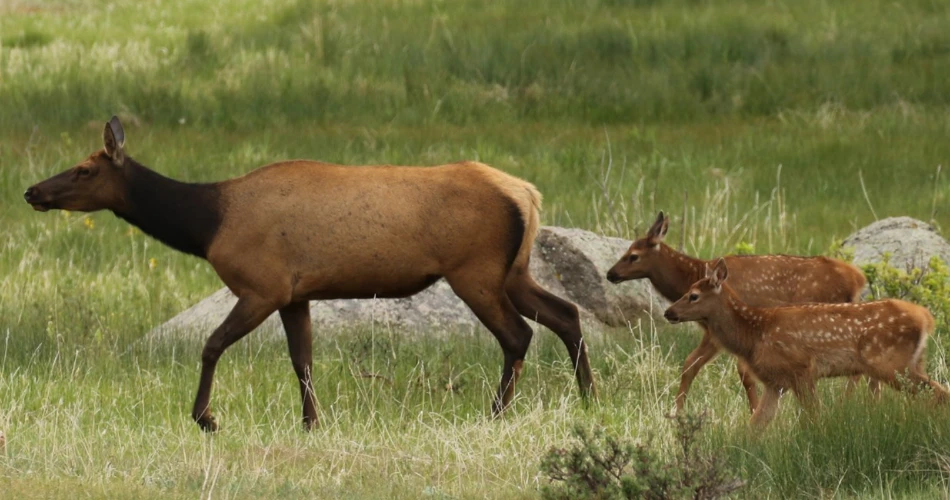
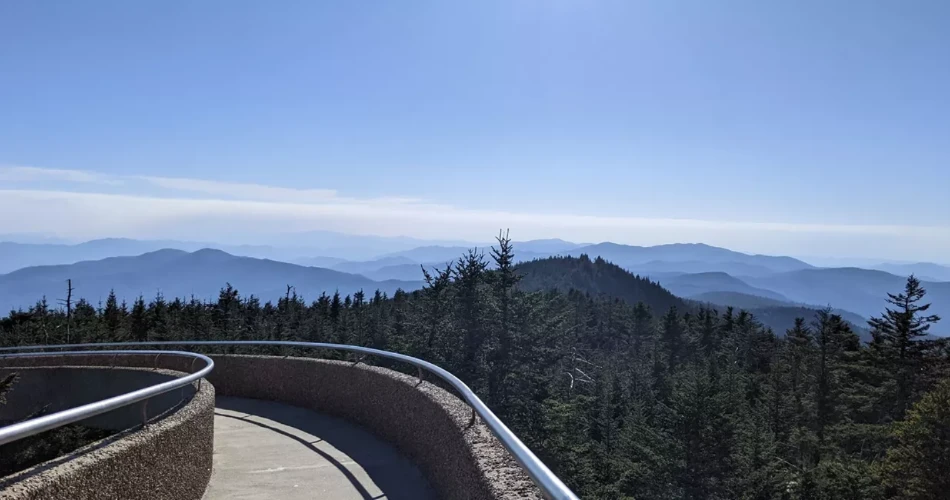
Travelers already driving Newfound Gap Road can extend the day by turning onto Kuwohi Road, formerly called Clingmans Dome Road. The paved road climbs from Newfound Gap toward the Kuwohi area, reaching some of the highest accessible terrain in Great Smoky Mountains National Park.
Unlike Newfound Gap Road, Kuwohi Road is seasonal. For the 2026 season, the National Park Service lists the road as scheduled from April 1 through November 29, although snow, ice, dangerous weather, or other conditions can still cause temporary closures.
The climb itself is worthwhile because the landscape changes as elevation increases. Higher sections pass through spruce-fir forest that feels noticeably different from the lower-elevation hardwood forests closer to Gatlinburg. Pullouts provide opportunities to stop for mountain views before reaching the upper parking area.
From there, visitors who want the full viewpoint experience can continue on foot toward the observation area. Drivers should expect cooler temperatures, stronger wind, fog, and rapidly changing conditions at this elevation. The park specifically recommends checking current conditions before traveling into the Newfound Gap and Kuwohi high country.
Know a Few Smokies Driving Rules Before Leaving Gatlinburg
Scenic roads around Gatlinburg are easy to enjoy, but they are not ordinary suburban drives. Mountain weather changes quickly, cell coverage can be unreliable in parts of the park, and services are limited once travelers leave town. Great Smoky Mountains National Park has no gas stations, so filling the tank in Gatlinburg, Townsend, or Cherokee before a longer outing avoids an unnecessary problem.
Parking also deserves attention. A parking tag is required when a vehicle is parked within the national park for more than 15 minutes. Several popular overlooks and trailheads can fill early, especially during weekends and fall color season.
A few practical habits make these drives much easier:
- Check current road closures and weather before leaving Gatlinburg.
- Use designated pullouts when stopping for photographs or wildlife.
- Let faster traffic pass when safe instead of creating a long line behind the vehicle.
- Carry water and an extra layer for high-elevation drives.
- Avoid planning several popular loops back-to-back during peak fall weekends.
October is particularly busy, and travel times inside the park can become considerably longer than expected.
Choose the Drive That Fits the Day
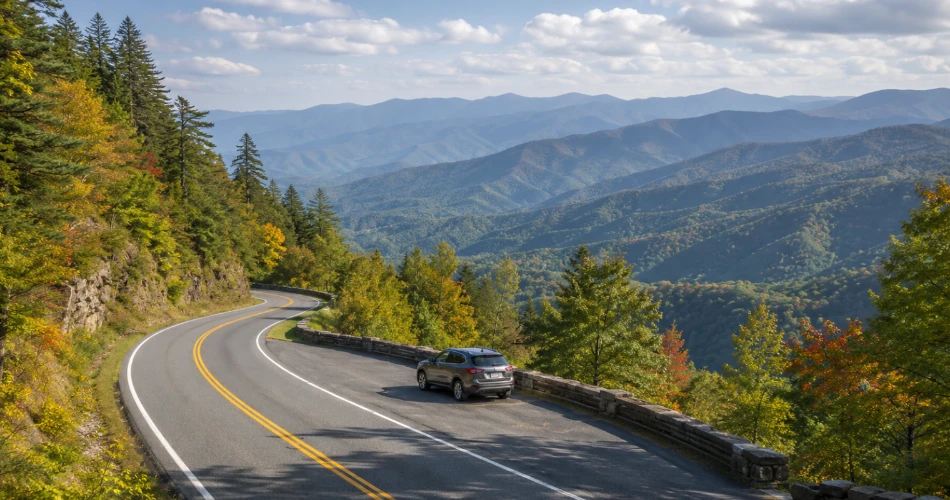
Not every Gatlinburg vacation needs the same scenic road. A clear morning with several free hours suits Newfound Gap Road and Kuwohi. Roaring Fork works better when travelers want a shorter outing close to town, with forest scenery and historic structures instead of distant panoramas. Little River Road feels especially relaxed when paired with a picnic or a riverside stop, while Foothills Parkway is the stronger choice when wide mountain views are the main goal.
Cades Cove deserves its own time block because traffic, wildlife, historic stops, and short walks can turn a relatively short loop into a half-day outing. That is not wasted time; slowing down is part of what makes the route work.
The most memorable Gatlinburg scenic drives usually happen when the schedule leaves room for an unexpected overlook, changing weather, a bear-related traffic delay, or ten quiet minutes beside a river. Instead of seeing the car as transportation between activities, travelers can make one of these roads the activity itself—and see a much broader side of the Smokies in the process.
Next post A Relaxing Road Trip Through the Smoky Mountains
Previous Post Where to Go When You Want a Break From Gatlinburg
About Author