English

 Home
Home Hotels
  Car Rental
 Rewards
 Travel Guide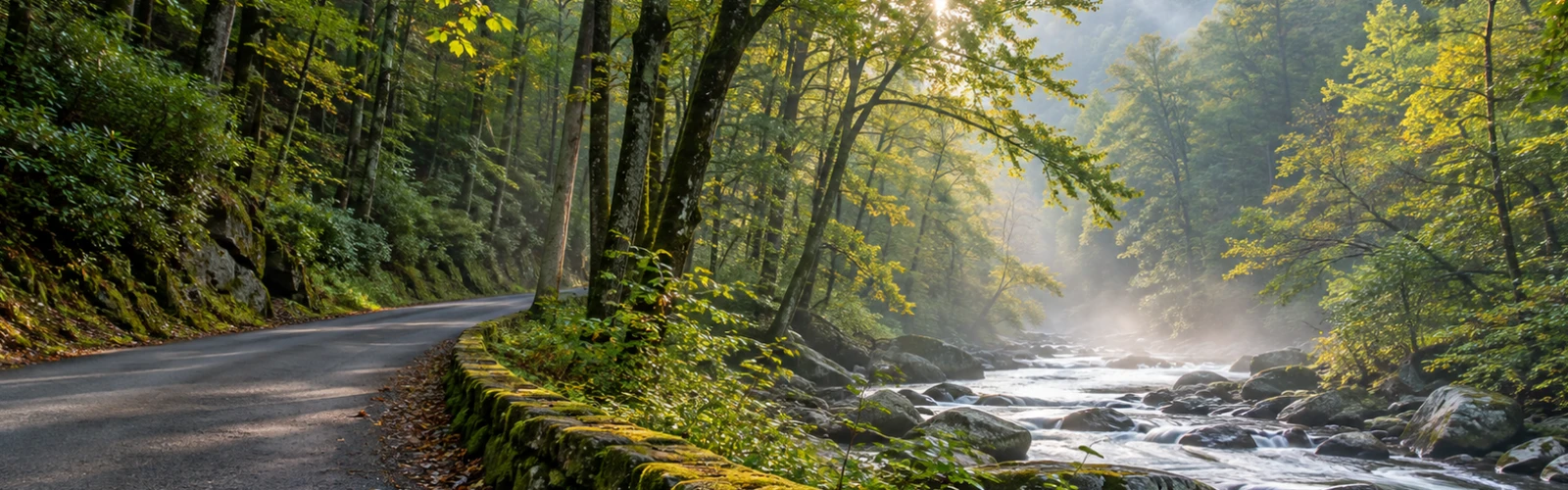
Where to Go When You Want a Less Crowded Gatlinburg Day

Gatlinburg can feel like two very different places depending on where the day begins. One version starts on the Parkway, moves from one busy attraction to another, and spends more time looking for parking than anyone expected. The other version heads away from the center of town, follows water into the woods, stops at places that do not require a strict schedule, and comes back only when the day is nearly over. That second version is often the better answer for anyone planning a less crowded Gatlinburg day.
That does not mean finding an empty Great Smoky Mountains National Park. Gatlinburg is one of the principal gateways to a heavily visited national park, and even quieter areas can become busy during fall color weekends, summer holidays, and good-weather Saturdays. The practical goal is not solitude. It is choosing places where the pace naturally spreads out: Greenbrier, Cosby, the Great Smoky Arts and Crafts Community, Metcalf Bottoms, the Gatlinburg Trail, and a few stretches beside the river where there is no need to stand in a line.
A good quiet Gatlinburg day also works better without a rigid checklist. Two or three substantial stops, a picnic or slow lunch, and room for an unplanned walk usually feel far better than trying to collect every well-known sight before dinner.
Start East of Town in Greenbrier Before the Day Builds
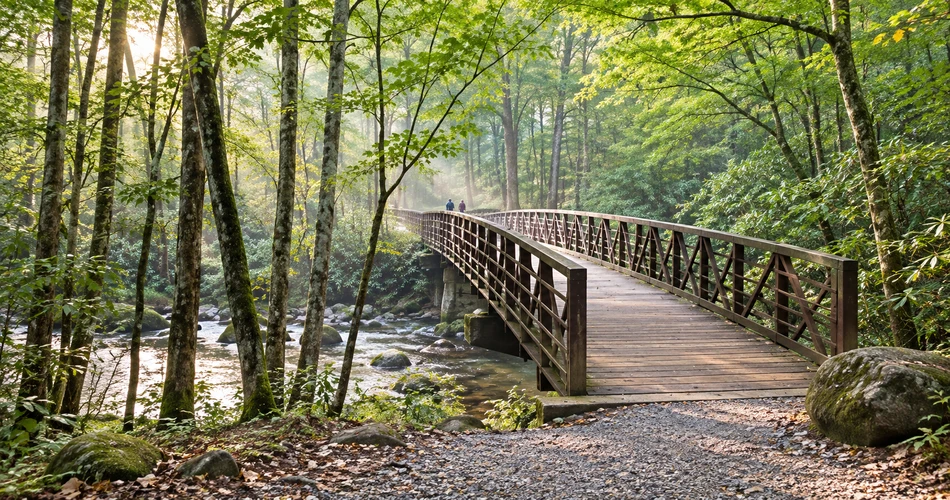
Greenbrier makes sense early because the shift happens quickly. Instead of staying in Gatlinburg’s commercial center, the route heads east toward a heavily wooded section of Great Smoky Mountains National Park. The National Park Service describes Greenbrier as a forested cove about 20 minutes east of Gatlinburg, with a partially paved entrance road following the river toward a picnic area and trailheads. It is known for streams, wildflowers, waterfalls, cemeteries, and traces of earlier mountain settlement.
The good part is that nothing demands immediate attention. A visitor can drive slowly, stop beside the water where parking is permitted, or make the picnic area the first real break of the morning. Greenbrier Picnic Area has only 12 sites, is open year-round from sunrise to sunset, and has vault toilets but no available water, so drinks should already be in the car.
This is where a less crowded Gatlinburg day begins to feel different. There is no reason to rush toward a landmark merely because it appears on every itinerary. Greenbrier works when the stream, forest, and changing light are allowed to be the point. On wet mornings especially, rocks, moss, rhododendron, and moving water give this side of the park the dense Appalachian character visitors often hope to find.
Keep Going to Cosby When Quiet Matters More Than Convenience
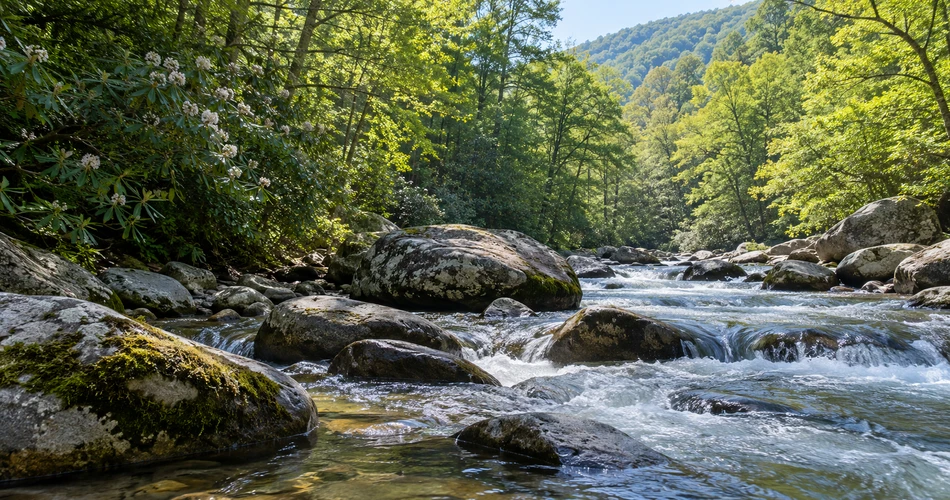
Cosby asks for more driving, which is precisely why it can be useful on a day built around space rather than convenience. The National Park Service itself calls Cosby a less-traveled area on the northeastern edge of the park. Cosby Creek runs through a broad hardwood cove, while trails, a picnic area, old-growth forest, historic cemeteries, and seasonal wildflowers give visitors several reasons to stay rather than simply turn around. Sugarlands Visitor Center is approximately 45 minutes away by road.
For a relaxed visit, the short Cosby Nature Trail is a better fit than automatically turning the morning into a demanding hike. NPS planning information describes it as a short loop around Cosby Creek and notes that the spacious picnic area is rarely full. Those wanting more distance can look toward trailheads for routes such as Gabes Mountain or Low Gap, but a quiet-day itinerary does not need to prove anything with mileage.
The Cosby Picnic Area has 35 sites and operates seasonally; for 2026, NPS lists its season from May 15 through October 25, while the hiker parking area remains open year-round.
The reward here is not a single dramatic viewpoint. It is the feeling of being under a tall tree canopy with a creek nearby and enough room to let lunch last longer than planned.
Let the Arts & Crafts Loop Take Care of Midday
A quieter Gatlinburg day does not have to stay inside the national park. The Great Smoky Arts and Crafts Community offers a useful midday change because the experience is spread across an eight-mile loop rather than concentrated into a few downtown blocks. Gatlinburg’s official visitor information describes the community as home to more than 100 artists and craftspeople, with studios and shops featuring pottery, woodcarving, paintings, baskets, leatherwork, jewelry, musical instruments and other handmade work. Its roots go back to 1937, when craftspeople began establishing studios in the Glades area.
This should not be treated like a shopping challenge in which every studio has to be visited. Two or three stops are enough. A working pottery studio can hold someone’s attention much longer than expected when clay is actually being thrown, trimmed, glazed or prepared for firing. A woodworker’s shop or gallery can do the same.
The loop can still receive plenty of visitors, particularly on event weekends, so it would be misleading to promise empty roads. What it does offer is physical spread and a slower rhythm than moving continuously through the central Parkway. A traveler can stop when something looks interesting and simply continue driving when it does not.
That flexibility is exactly what a quiet Gatlinburg day needs around lunchtime.

Make Metcalf Bottoms the Place to Stop, Not Just Pass
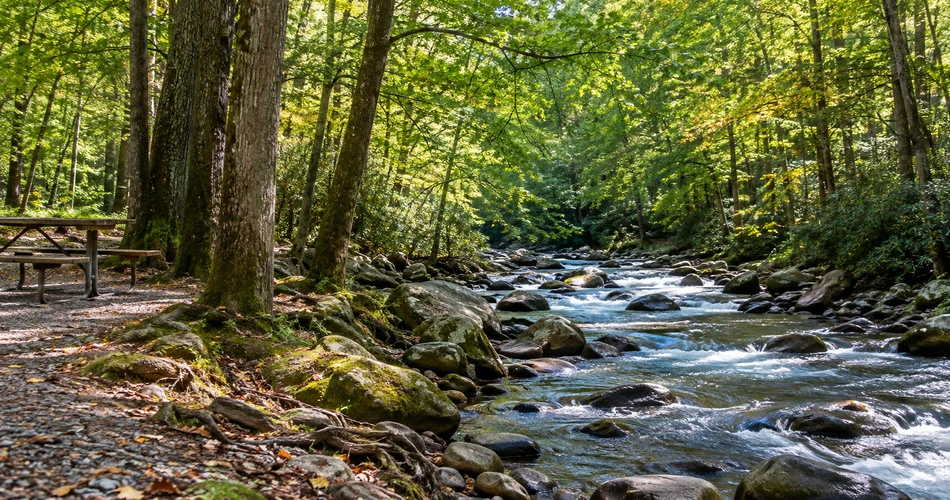
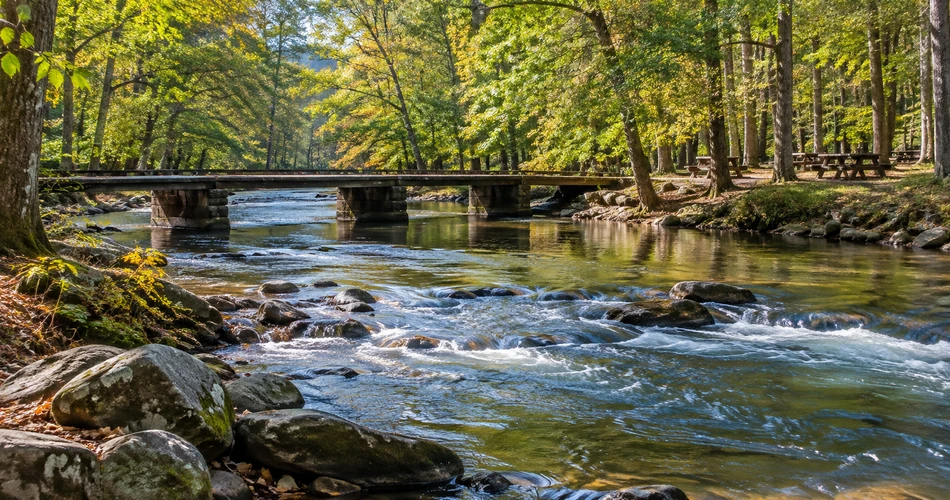
Metcalf Bottoms works best when it is treated as a destination rather than a roadside pause between better-known places. The picnic area sits beside the Little River and has 122 sites, making it considerably larger than Greenbrier’s picnic area. It is partially open year-round, while seasonal sections and the pavilion operate during the warmer part of the year. The area also includes restrooms, grills and access to nearby historic sites and trails.
The setting is the reason to stay. The Little River is wide enough here to open up the forest, and the combination of water, broad trees, picnic tables and the low bridge creates a scene that feels very different from a crowded trailhead parking lot. Families can spend time beside the river without building the entire afternoon around a long hike. Anyone fishing must have the appropriate Tennessee or North Carolina fishing license.
Metcalf Bottoms should not automatically be described as empty; its easy access makes it popular. Timing matters. Arriving outside the middle of a busy weekend afternoon can make a noticeable difference.
It also works well as the hinge point of the day. After Greenbrier, Cosby or the craft loop, this is where the schedule can slow again before continuing toward the historic Little Greenbrier area.
Walk Up to Little Greenbrier School for a Smaller Piece of History
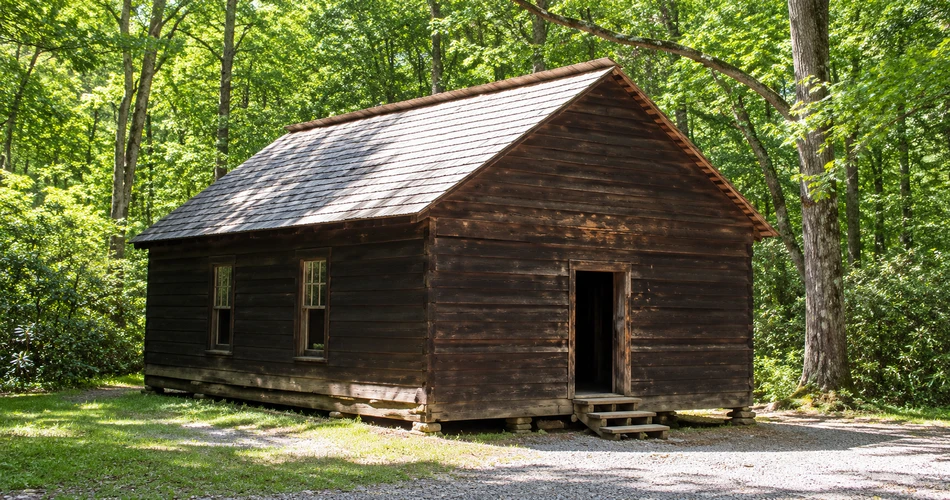
Little Greenbrier School is the kind of stop that can easily get lost beside the Smokies’ bigger names, and that is part of its appeal. The one-room schoolhouse was built in 1881 from tulip poplar logs and served not only as a school but also as a church and community gathering place. A cemetery stands nearby, making the site feel less like an isolated historic exhibit and more like part of a former mountain community.
During the road’s open season, visitors can drive Little Greenbrier Road and park near the building. The 2026 seasonal road schedule lists Little Greenbrier Road as open from April 3 through November 29, subject to conditions. Outside the road season, the school can still be reached on foot, including from the Metcalf Bottoms Trail.
A visitor does not need much interpretation to understand why the stop works. The scale tells the story: one modest log building, a wooded slope, graves nearby and a road that feels far removed from modern Gatlinburg.
It is also a useful reminder that the Smoky Mountains were home landscapes long before they became vacation scenery. Spending time here gives the day historical weight without requiring a museum-sized block of time.
Use the Gatlinburg Trail as the Easy Way Back Toward Town
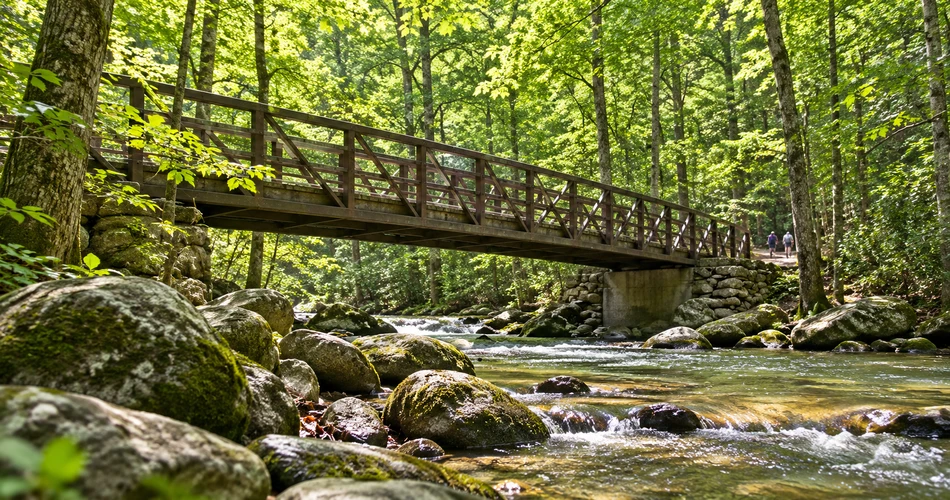
The Gatlinburg Trail works especially well late in the day because it connects the edge of Gatlinburg with the Sugarlands side of the national park rather than sending walkers deeper into the mountains. NPS accessibility information lists the trail at about two miles one way, allowing visitors to turn around whenever the walk has been long enough rather than committing to the full out-and-back distance.
The trail also has a different personality from many of the park’s steeper mountain routes. Parts of it run beside the West Prong of the Little Pigeon River, and a footbridge crosses the river along the route. Historic remnants and wooded stretches help keep the walk interesting without turning it into a summit effort.
One practical difference matters to pet owners: the Gatlinburg Trail and Oconaluftee River Trail are the only two park trails where pets are generally permitted, with pets required to remain leashed under park rules.
Late afternoon is the right mood for it. Instead of chasing another major attraction, a traveler can simply walk until the legs have had enough, listen to the river and turn back. That keeps the day moving without making it feel scheduled.
Save Downtown for the River Walk, Not the Main Rush
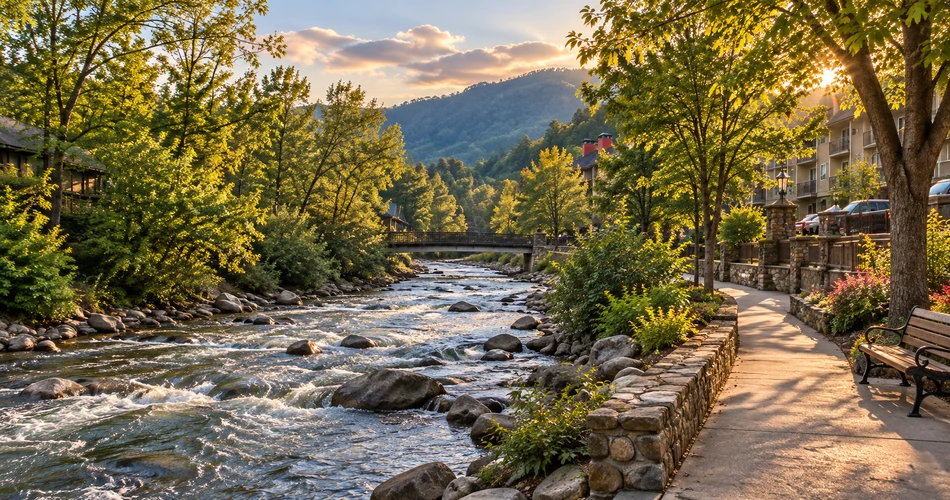
Avoiding crowds does not require avoiding Gatlinburg itself for the entire day. It simply helps to choose the part of town that matches the pace already established. Gatlinburg’s official visitor information specifically points to the River Walk as a quieter walking option, with the Little Pigeon River running alongside sections that include benches and gazebos.
That makes it a sensible late-day choice. The central Parkway is part of the Gatlinburg experience, but anyone who has already spent hours beside forest streams may find the sudden shift to traffic, signs, storefronts and lines a little abrupt. Walking beside the river eases that transition.
This is also one of those situations where a small change of timing matters more than another item on an itinerary. An evening stroll can be enough. There is no requirement to enter every attraction passed along the way or keep walking simply because the downtown strip continues.
The river is the thread connecting the two versions of the day: wild water inside the park earlier, then a more urban riverside walk near the end. That gives a less crowded Gatlinburg itinerary a sense of continuity rather than making it feel like a collection of unrelated stops.
Do Not Force Roaring Fork Into a Day Built Around Quiet
Roaring Fork Motor Nature Trail is beautiful, close to Gatlinburg and deservedly popular, but it is not automatically the right answer when the day’s main goal is avoiding congestion. The National Park Service specifically warns that parking demand in the area often exceeds capacity and recommends having an alternative destination ready. The road is also seasonal; the current 2026 schedule lists it from April 17 through November 29, weather and conditions permitting.
That does not make Roaring Fork a bad choice. It simply means expectations should match the day. The one-way motor trail passes dense forest, historic features and the roadside Place of a Thousand Drips, while nearby trailheads serve heavily used routes including Trillium Gap Trail.
On a quiet-day itinerary, Greenbrier or Cosby may fit better when Roaring Fork parking is already under pressure. If Roaring Fork is important, it makes more sense to give it its own early start on another day instead of squeezing it into an afternoon already designed around slower places.
That willingness to skip something popular is one of the simplest ways to make Gatlinburg feel less crowded.

A Few Timing Choices Matter More Than Finding a Secret Spot
There is no permanent “secret” corner of Gatlinburg that stays empty once enough people know about it. A smarter strategy is to use timing, distance and flexibility. Even Cosby, officially described as less traveled, can be busier during peak fall color. Metcalf Bottoms can fill with picnickers. Greenbrier can see strong traffic on beautiful weekends. A quieter day comes from adjusting before a crowded parking area turns into the main event.
Three habits make the biggest difference:
- Start with the farthest or most nature-focused stop. Downtown attractions do not need the same early-morning light or parking advantage as a forest road or trail.
- Keep one backup area ready. If a trailhead is full, moving on is better than circling or parking illegally.
- Check NPS conditions that morning. Roads, trails and facilities can close for maintenance, weather, construction or seasonal operations.
There is also one park rule every itinerary should account for. Great Smoky Mountains National Park has no entrance fee, but vehicles parked for more than 15 minutes require a parking tag. Current rates are $5 daily, $15 weekly and $40 annually, and purchasing a tag does not guarantee a parking space.
That small amount of preparation leaves much more room for spontaneity once the day starts.
Leave One Part of the Day Unplanned
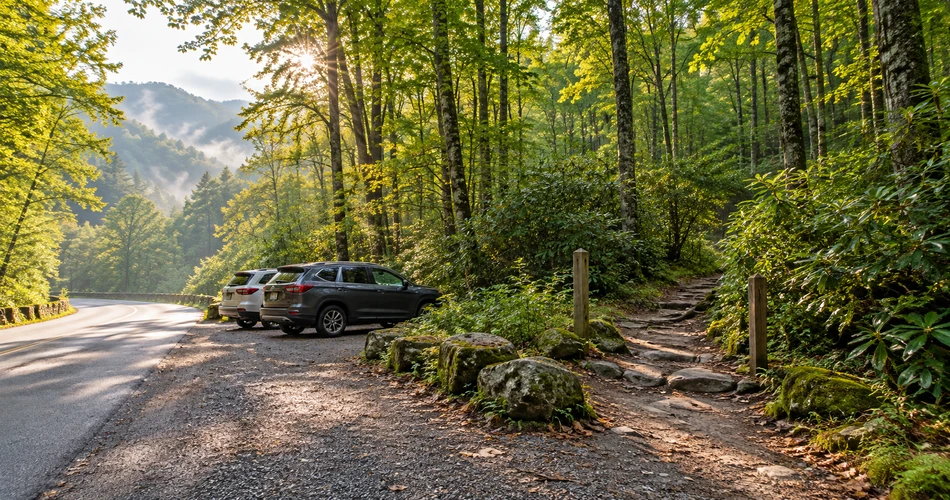
The best version of this route should never feel like a replacement checklist for the regular Gatlinburg checklist. Greenbrier does not need to lead automatically to Cosby. Cosby does not require a full hike. The Arts & Crafts loop does not need eight miles of stops. Metcalf Bottoms can be lunch and nothing more. The Gatlinburg Trail can be a 30-minute walk instead of four miles out and back.
That flexibility is what keeps the day from becoming another race.
The most useful plan is to choose two anchors before leaving: perhaps Greenbrier in the morning and the Great Smoky Arts and Crafts Community after lunch, or Cosby first and the River Walk toward evening. Everything between them can depend on weather, energy and how busy the roads actually feel.
Great Smoky Mountains National Park conditions can change quickly, and NPS advises visitors to check road, trail and facility status before heading out. Primary roads may remain open much of the year, while secondary roads operate on seasonal schedules or close temporarily because of weather and maintenance.
A quiet Gatlinburg day is therefore less about finding an unknown place than making room for the places that deserve more than ten minutes. When the final stop lasts longer than planned and nobody feels behind schedule, the day has probably gone exactly right.
Next post The Places Near Gatlinburg That Make a Detour Worth It
Previous Post The Gatlinburg Places That Are Worth a Second Look
About Author