English

 Home
Home Hotels
  Car Rental
 Rewards
 Travel Guide
Best Road Trip From Gatlinburg: Stops Worth Making

Gatlinburg is a convenient place to start a road trip because several very different landscapes and towns sit within an easy drive of the city. One direction leads deeper into Great Smoky Mountains National Park, another heads toward the entertainment and attractions of Pigeon Forge, while roads through Townsend and Cherokee offer a slower, more scenic experience. Travelers can also extend the drive into North Carolina toward Asheville or head west toward Knoxville for a change of scenery and a taste of city life. The best road trip from Gatlinburg is not necessarily the one with the most miles. It is the one that leaves enough time to pull over, walk around, take photographs, have a meal, or simply enjoy a mountain view without constantly watching the clock.
Pigeon Forge for a Lively First Stop
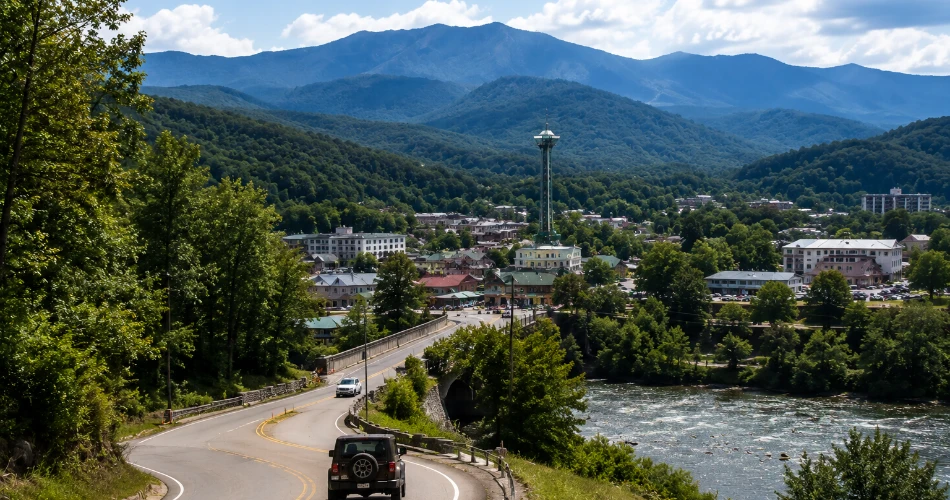
For travelers who want their road trip to begin with plenty of activity, Pigeon Forge is an easy addition to a Gatlinburg itinerary. The drive changes the atmosphere quickly. Instead of mountain roads and forest, visitors encounter a busy tourism district filled with restaurants, theaters, attractions, shopping, and family entertainment. That contrast makes Pigeon Forge a useful stop for travelers who are mixing outdoor scenery with more traditional vacation activities.
The town works particularly well for families because a short stop can easily turn into several hours. Visitors can choose a live show, spend time at an attraction, browse shops, or simply stop for lunch before continuing the drive. The area is also practical for road trippers because there are plenty of places to take a break rather than trying to cover the entire journey without stopping.
One of the best approaches is to decide beforehand whether Pigeon Forge is a quick break or a major part of the day. Travelers who want photographs and a meal may only need a couple of hours, while families planning an attraction or show should allow considerably more time.
- Good choice for families and first-time visitors
- Plenty of food and entertainment options
- Easy place to divide a longer driving day
- Works well as a morning or afternoon stop
For a road trip from Gatlinburg, Pigeon Forge is best treated as a change of pace rather than simply another town to drive through. It gives the journey a lively beginning before the roads become quieter again.

Foothills Parkway and Townsend for a Quieter Mountain Drive
Travelers looking for a more relaxed section of the journey can head toward Townsend and include the Foothills Parkway when road conditions and the planned route allow. This part of the trip feels noticeably different from the busy Gatlinburg and Pigeon Forge corridor. The road becomes the attraction itself, with mountain scenery, overlooks, wooded slopes, and opportunities to stop without feeling rushed.
Townsend is often a good choice for travelers who prefer a smaller community atmosphere. It sits along the quieter western side of the Great Smoky Mountains and provides access to areas of the national park without the same commercial feel found in the larger resort towns. The Little River area is particularly appealing for a slow stop, especially when the weather is comfortable enough to get out of the car and spend some time beside the water.
The main advantage of this route is flexibility. A traveler does not need to plan an entire day around one attraction. Instead, the drive can include several short stops, a picnic, photographs, and a walk before continuing toward another destination.
The scenery also changes with the season. Spring brings fresh greenery, summer provides dense forest, autumn adds strong foliage color, and winter can open up views that are less visible when the trees are full.
For anyone planning scenic drives near Gatlinburg, Townsend is a particularly useful choice because the journey feels more like a mountain road trip than a simple transfer between two towns.

Cades Cove for Wildlife, History, and a Classic Smoky Mountains Drive
Cades Cove is one of the strongest choices for travelers who want the driving experience itself to be a major part of the trip. The area is surrounded by mountains and is reached through an 11-mile, one-way loop road. The route passes historic structures, open valley views, forested sections, and areas where wildlife may be visible. The National Park Service recommends allowing at least two to four hours for the loop, with additional time if visitors plan to hike.
Taking the Cades Cove Loop Slowly
The biggest mistake is treating Cades Cove as a road that should be completed quickly. The road is designed for sightseeing, so travelers should expect frequent stops and slower traffic, particularly during summer, autumn, and weekends. Paved pullouts should be used when stopping so traffic can continue moving safely.
The loop is also a good place to combine driving with short walks. Historic buildings and churches provide a glimpse into the communities that once occupied the valley, while the surrounding mountains make almost every section photogenic.
Planning Around Vehicle-Free Wednesdays
Travelers should check the current schedule before setting out. Cades Cove Loop Road is generally open from sunrise to sunset but is closed to motor vehicles on Wednesdays from May through September, making those days particularly suitable for visitors who want to experience the roadway by bicycle or on foot.
The Cades Cove Visitor Center is roughly halfway around the loop and includes exhibits about Southern Mountain life, historic structures, restrooms, and seasonal ranger activities.
Cades Cove fits naturally into a Smoky Mountains road trip, but it deserves more time than a quick roadside stop. Travelers who leave room in their schedule are far more likely to enjoy the valley instead of feeling pressured to keep moving.

Cherokee and the North Carolina Side of the Smokies
Driving from Gatlinburg toward Cherokee provides one of the most rewarding changes in scenery on the eastern side of the Smokies. The route passes through Great Smoky Mountains National Park before reaching Cherokee, North Carolina, a community with strong connections to the Eastern Band of Cherokee Indians and the cultural history of the region.
The drive is especially appealing to travelers who enjoy mountain roads rather than straight highway miles. Newfound Gap Road, which follows U.S. 441 through the park, crosses the mountains and provides numerous opportunities to stop at overlooks and viewpoints. Weather can change quickly at higher elevations, so checking road conditions before leaving Gatlinburg is important. The National Park Service notes that primary park roads, including Newfound Gap Road, are generally open year-round when weather permits.

Oconaluftee Visitor Center
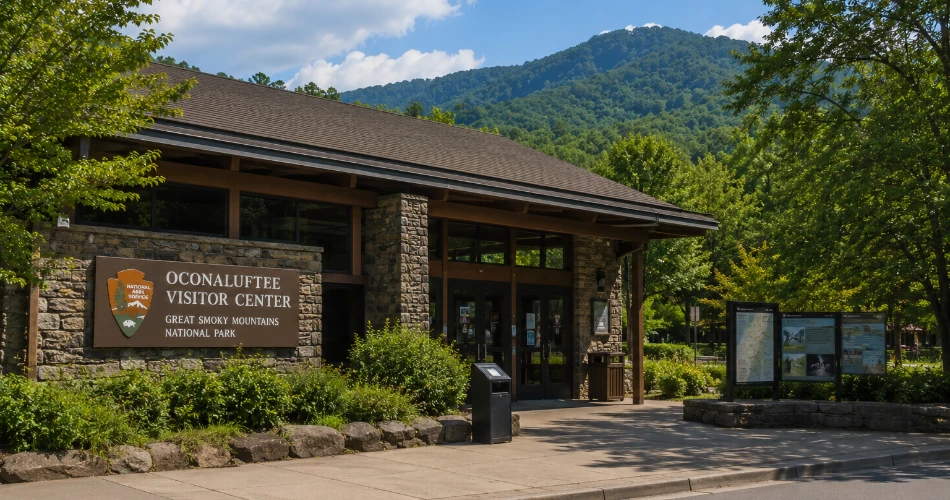
Oconaluftee Visitor Center is an excellent first stop after crossing into the North Carolina side of Great Smoky Mountains National Park. It is located on Newfound Gap Road (U.S. 441), about two miles north of Cherokee, and serves as the main visitor center for the park's South District. Travelers can stop here for maps, current road and trail information, ranger assistance, restrooms, drinking water, and exhibits about the area's natural and cultural history. The visitor center also has a park bookstore and seasonal ranger-led programs.
One of the biggest reasons to allow extra time here is the Mountain Farm Museum, located directly behind the visitor center. This open-air historic site contains a collection of Appalachian farm buildings, including a farmhouse, barn, smokehouse, applehouse, corn crib, springhouse, and other structures. Many of the buildings date from the late 19th and early 20th centuries and were relocated from different parts of the park to preserve examples of historic mountain life.
The surrounding Oconaluftee Valley is also one of the better places on the North Carolina side to look for elk. It is home to one of the park's two main elk herds, and the National Park Service identifies Oconaluftee as one of the notable areas for elk viewing. Early morning and late evening are generally the most productive times because elk are more active during those periods.
The visitor center is open year-round, although its hours change seasonally. The National Park Service currently lists regular hours of 9 a.m. to 5 p.m., with shorter winter hours from December through February.
For a road trip from Gatlinburg, this is a worthwhile stop for spending 30 minutes to an hour, or longer if the Mountain Farm Museum and surrounding area are included. It gives travelers a chance to stretch their legs while adding some history and wildlife viewing to what could otherwise be just a scenic drive through the mountains.
Mingus Mill
Mingus Mill is a historic gristmill located about half a mile north of the Oconaluftee Visitor Center along U.S. 441. Built in 1886, the mill remains on its original site and is notable for using a water-powered turbine instead of the traditional water wheel. Water from Mingus Creek was directed through a system that powered the machinery used to process crops such as corn and wheat. The turbine design was relatively advanced for the Smokies at the time and allowed the mill to operate efficiently with the available water supply.
The mill also gives visitors a better understanding of how communities in the Smoky Mountains supported themselves before the area became a national park. Local farmers could bring crops to the mill to be processed into products such as cornmeal and flour. The surrounding Oconaluftee Valley was once home to established mountain communities, so Mingus Mill is part of a much larger story about farming, trade, and everyday life in the region.
One important detail for current visitors: the interior of Mingus Mill is temporarily closed for preservation and rehabilitation work. Visitors can still view the mill from the outside, but access to the interior and regular milling demonstrations are currently unavailable. The National Park Service recommends checking current conditions before planning a visit because the closure may change.
Even with the current closure, Mingus Mill is worth mentioning on a road trip from Gatlinburg because it is only a short distance from Oconaluftee Visitor Center and adds a historical dimension to the drive. Travelers interested in the Smokies' past can combine the stop with the Mountain Farm Museum, which provides additional examples of historic mountain buildings and agricultural life.

Cherokee and the Mountain Culture
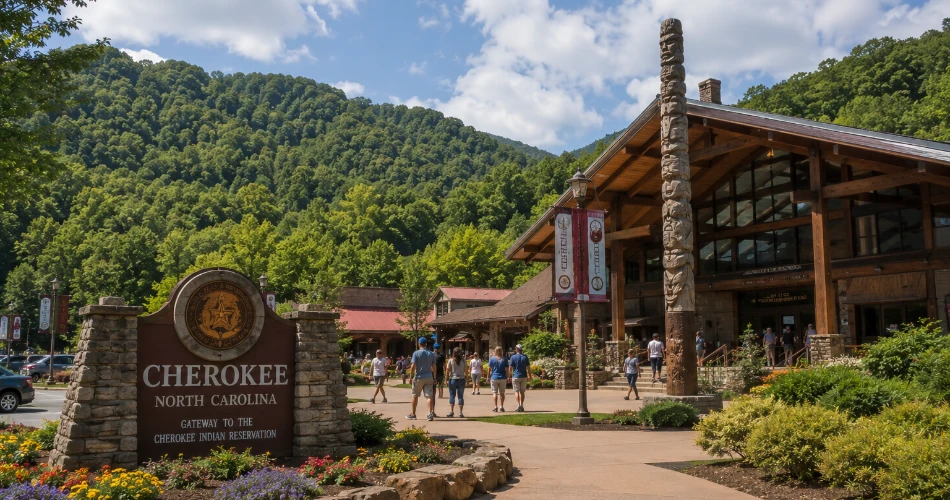
Cherokee is worth treating as a destination in its own right rather than simply the place where the drive from Gatlinburg ends. The community is located within the Qualla Boundary, the sovereign territory of the Eastern Band of Cherokee Indians, and has a long connection with the mountains of Western North Carolina. The Eastern Band has more than 15,000 enrolled members and is the only federally recognized Native American tribe in North Carolina. The Qualla Boundary covers about 56,600 acres, with Cherokee serving as its main community and cultural center.
For travelers interested in history, the Museum of the Cherokee People is an excellent place to begin. Founded in 1948, it is one of the oldest continuously operating tribal museums in the United States. Its exhibitions cover Cherokee history, culture, art, and the experiences of the Eastern Band of Cherokee Indians. Depending on the schedule, visitors may also encounter demonstrations and educational programs involving traditional basket weaving, finger-weaving, storytelling, and other cultural practices.
The Oconaluftee Indian Village offers a different experience. Rather than a conventional museum, it is an outdoor living-history attraction that presents aspects of an 18th-century Cherokee community. Guided visits include historical buildings, demonstrations of traditional crafts, Cherokee dancing, and cultural presentations. A typical visit takes around one to two hours, making it practical for travelers who want to add a cultural attraction without spending an entire day in one location.
Art is another important part of a visit to Cherokee. Qualla Arts and Crafts Mutual has been operating as a cooperative since 1946 and represents hundreds of Cherokee artisans. Visitors can find traditional work such as baskets, pottery, carvings, masks, jewelry, and beadwork, with many pieces made using techniques passed through generations.
Travelers can also slow down along the Oconaluftee River, where walking trails and riverside areas provide an easy break from driving. The Oconaluftee River Trail follows the river and connects the Cherokee area with the Mountain Farm Museum near the national park.
This combination of mountain scenery, wildlife, history, living culture, traditional art, and outdoor activities makes Gatlinburg to Cherokee much more than a scenic drive. It gives travelers an opportunity to understand the people and history connected to the landscape they have been driving through, while still leaving plenty of time to enjoy the mountains themselves.
Asheville via the Blue Ridge Parkway
For travelers willing to make the journey longer, Asheville provides a natural extension to a Gatlinburg road trip. The route is particularly appealing when the goal is to make the drive part of the vacation rather than simply reach the destination as quickly as possible. The Blue Ridge Parkway connects Great Smoky Mountains National Park near Cherokee with Shenandoah National Park in Virginia and stretches for 469 miles. Smaller sections can be driven as part of a longer journey, so travelers do not need to commit to the entire Parkway.
The road is known for overlooks, mountain scenery, hiking opportunities, and slower-paced driving. Instead of planning the journey around a strict arrival time, it makes more sense to choose a few viewpoints and allow extra time for photographs and short walks.
The Parkway also requires more preparation than an ordinary highway. Road closures can occur because of weather, construction, or maintenance, and the National Park Service recommends checking current road conditions before traveling. GPS systems may also be unreliable for navigating the Parkway itself because addresses are commonly referenced by milepost.
Once in Asheville, the atmosphere changes again. The city is a good place to finish a mountain drive with restaurants, galleries, arts, and a walk through its urban districts.
For travelers planning a Gatlinburg to Asheville journey, the biggest recommendation is simple: avoid squeezing the entire drive into a schedule that leaves no time for the Parkway. The scenery is the reason to take this route.

Knoxville for Food, History, and a City Break
A drive west from Gatlinburg can lead toward Knoxville, making the city a useful alternative for travelers who want to balance mountain scenery with urban attractions. Knoxville feels very different from the Smokies. After spending time among forests and mountain roads, visitors can walk through downtown streets, browse Market Square, visit cultural attractions, or stop for food.
One of the city's most recognizable landmarks is the Sunsphere, built for the 1982 World's Fair. Its observation deck provides 360-degree views across downtown Knoxville, World’s Fair Park, the Tennessee River, the University of Tennessee campus, and toward the Great Smoky Mountains.
A Short Downtown Stop
Market Square and the surrounding downtown area work well for travelers who want to park the car and walk for a while. The area offers shopping, restaurants, public spaces, and a more relaxed urban experience. Visit Knoxville also highlights downtown areas such as Market Square, the Old City, and Historic Gay Street as key places for visitors.
Knoxville is particularly useful when the weather is not ideal for a full day of outdoor sightseeing. A traveler can replace a long mountain hike with museums, food, shopping, or a city walk.
For a road trip from Gatlinburg, Knoxville makes sense when travelers want the journey to finish somewhere with a distinctly different personality. It is less about mountain overlooks and more about seeing how East Tennessee's outdoor culture connects with its city life.

Simple Ways to Plan the Best Gatlinburg Road Trip Stops
The best itinerary depends heavily on how much time is available. A traveler with only one day should not attempt to combine every destination listed above. Cades Cove alone can take two to four hours, while a Parkway drive toward Asheville deserves generous time for stops.
A better approach is to choose stops according to the kind of road trip being planned.
For scenery: Choose Cades Cove, Townsend, or the Blue Ridge Parkway.
For family entertainment: Combine Gatlinburg with Pigeon Forge.
For history and culture: Choose Cades Cove and Cherokee.
For a longer scenic journey: Drive toward Cherokee and continue along an appropriate section of the Blue Ridge Parkway toward Asheville.
For a city-focused ending: Head toward Knoxville.
Before leaving, travelers should also check current park alerts and road conditions. Great Smoky Mountains National Park remains open throughout the year, but individual roads, facilities, and historic sites can have seasonal schedules or temporary closures.
A few practical habits can make the drive much easier:
- Keep the fuel tank reasonably full before entering long mountain sections.
- Carry water and snacks, particularly when spending several hours in the park.
- Allow extra time during fall foliage season and busy weekends.
- Use designated pullouts instead of stopping in traffic lanes.
- Check weather and road closures on the morning of the drive.
- Avoid planning too many major attractions in one day.
A good road trip from Gatlinburg should leave some room for unexpected stops. A viewpoint that looks interesting, a quiet stretch beside the river, or a historic building can easily become one of the most memorable parts of the journey.

Choosing the Right Route for the Season
The time of year can significantly change how a Gatlinburg road trip feels. Autumn is especially popular because the mountains can display strong foliage colors, but that popularity also means heavier traffic on many scenic roads. Travelers visiting during this period should start early and avoid building an itinerary that depends on arriving at every stop at an exact time.
Spring brings fresh vegetation and comfortable conditions for many outdoor activities, while summer generally offers longer daylight hours but can bring heavier traffic and warmer temperatures at lower elevations. Winter can create a completely different landscape, with clearer views in some areas but a greater possibility of snow and ice at higher elevations.
The National Park Service advises visitors to check current road conditions because weather can affect mountain roads even when conditions appear fine in lower areas. Clear weather in Gatlinburg does not necessarily mean the higher elevations will have the same conditions.
For that reason, travelers should choose the route based not only on what they want to see but also on what the day's conditions allow. A flexible itinerary makes it easier to switch from a high-elevation drive to a lower route when necessary.
The strongest trips usually have one main destination and several smaller stops around it. That approach keeps the drive enjoyable and leaves enough time to appreciate the places between Gatlinburg and the final destination.
Next post Places to Visit Near Gatlinburg When You Have a Car
Previous Post A Scenic Day Trip From Gatlinburg Without Going Too Far
About Author