English

 Home
Home Hotels
  Car Rental
 Rewards
 Travel Guide
Small Mountain Towns Worth Visiting Near Gatlinburg

Gatlinburg has enough attractions, restaurants, trails, and mountain views to fill a vacation without much trouble. Still, travelers who never venture beyond the Parkway miss another side of the Smokies. A short road trip can lead to river valleys, historic mountain communities, quiet park entrances, Cherokee cultural sites, waterfall trails, and downtown streets where the pace feels noticeably different.
Some of the best small mountain towns near Gatlinburg are not destinations built around a packed attraction schedule. That is precisely the point. Townsend makes it easy to spend an afternoon beside the Little River. Cosby provides access to a less-traveled corner of Great Smoky Mountains National Park. Pittman Center still holds onto the landscape and history of Emerts Cove. Across the state line, Cherokee, Bryson City, and Maggie Valley bring their own character to the mountains of western North Carolina.
For travelers with a car and a little flexibility, these Gatlinburg day trips can turn one Smokies vacation into several very different mountain experiences.
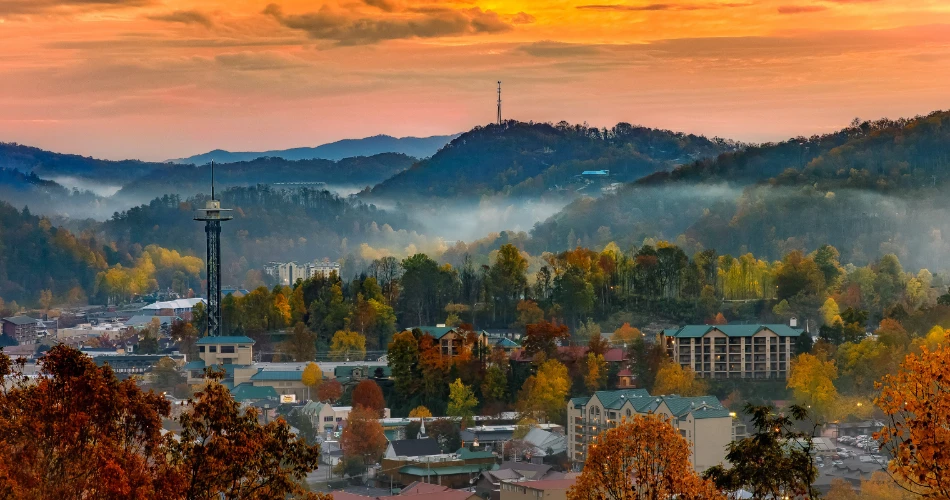
Townsend, Tennessee: A Quieter Gateway to the Smokies
Townsend is one of the most practical towns near Gatlinburg for visitors who want mountain scenery without replacing one busy sightseeing schedule with another. Located on the Tennessee side of Great Smoky Mountains National Park, the community sits along the Little River and provides convenient access toward Cades Cove and the western side of the park.
The town works especially well on a slower day. Travelers can visit the Great Smoky Mountains Heritage Center for regional history, follow part of the Townsend River Walk and Arboretum, or simply spend time beside the river. The area is also home to the Little River Railroad and Lumber Company Museum, which tells part of the story of logging and rail transportation in the Smokies.
One of Townsend's most unusual stops is Tuckaleechee Caverns. Its guided underground route includes a large chamber and Silver Falls, a 210-foot subterranean waterfall. The attraction operates seasonally, so checking current dates before making the drive is sensible.
Townsend also makes a convenient base for reaching Cades Cove, where the national park's 11-mile one-way loop passes historic structures, mountain scenery, and wildlife habitat. It is the kind of town where an ambitious itinerary has a funny habit of turning into an afternoon beside the river—and few people seem terribly upset about it.
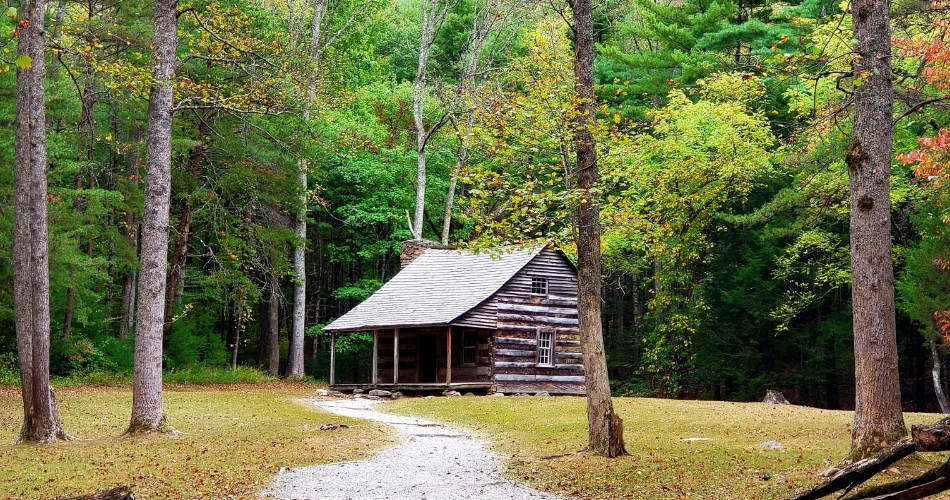
Pittman Center, Tennessee: Mountain Heritage Minutes From Gatlinburg
Pittman Center is much closer to Gatlinburg than many travelers realize, yet the atmosphere changes quickly once the commercial center is left behind. The small community lies near Great Smoky Mountains National Park and has made preservation of its mountain setting and heritage an important part of its identity. The town itself highlights fishing, hiking, birdwatching, wildlife viewing, a covered bridge, and its historic surroundings as reasons to spend time here.
One of the best areas to see that history is Emerts Cove. Frederic Emert, a Revolutionary War veteran, settled in the valley with his family in 1784, and the landscape still carries the Emerts Cove name. The Glenn Cardwell Heritage Museum presents photographs, artifacts, documents, books, and stories connected with Pittman Center's mountain communities.
This is not the place for travelers expecting blocks of souvenir shops and a long checklist of attractions. Pittman Center is better treated as a scenic detour where the landscape is part of the reason for coming.
A simple visit might include:
- Crossing or photographing the covered bridge
- Driving through the Emerts Cove area
- Spending time beside the Middle Prong of the Little Pigeon River
- Pairing the trip with a nearby hike or scenic drive
Among the small towns in the Smokies, Pittman Center is particularly useful for visitors who want a quieter afternoon without traveling far from Gatlinburg.
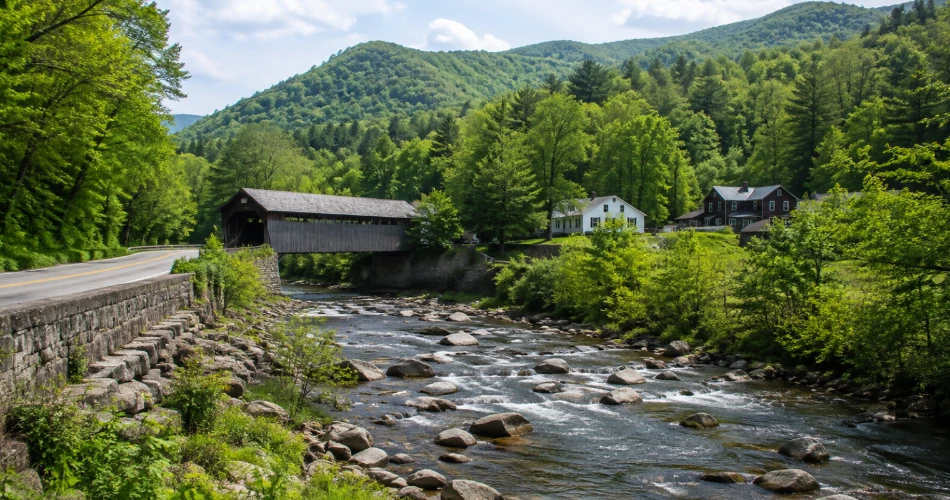
Cosby, Tennessee: For Trails, Forests, and Fewer Crowds
Cosby proves that a mountain-town day trip does not need a polished downtown district to be worth the drive. The community sits beside the northeastern part of Great Smoky Mountains National Park, and its biggest advantage is access to a section of the park that receives less traffic than many areas around Gatlinburg.
The National Park Service describes the Cosby area as a less-traveled part of the Smokies known for Cosby Creek, hardwood forest, spring wildflowers, autumn color, historic cemeteries, and old-growth woodland. Several hiking trails begin in or around the recreation area, including routes toward Hen Wallow Falls, Low Gap, and Mount Cammerer.
Travelers who are not planning a long hike can still enjoy the setting. The seasonal Cosby Picnic Area contains picnic sites near hiking and fishing opportunities, while the surrounding forest makes a pleasant change from Gatlinburg's busier streets.
Cosby is one of those Smoky Mountain towns best approached without expecting a traditional sightseeing checklist. A pair of hiking shoes, drinking water, and enough time to sit beside the creek may provide a better day than trying to squeeze in six different stops.
Visitors planning park activities should also remember that weather can change quickly in the mountains and facilities in the Cosby area may operate seasonally. Checking current National Park Service conditions before leaving Gatlinburg can prevent an inconvenient surprise at the end of a winding mountain road.
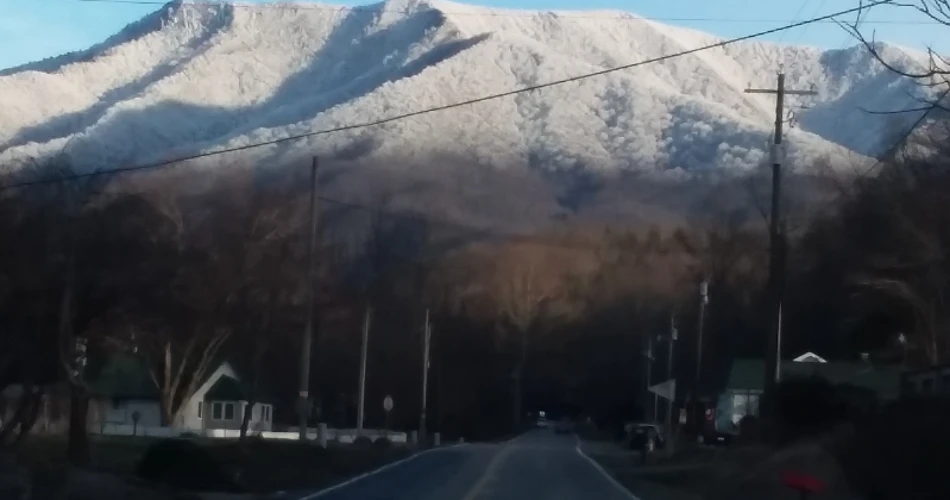
Cherokee, North Carolina: Culture and Mountain Scenery in the Same Trip
The drive from Gatlinburg toward Cherokee crosses the Smokies on Newfound Gap Road, making the journey an important part of the day rather than merely transportation between two places. Cherokee lies within the Qualla Boundary, the sovereign territory of the Eastern Band of Cherokee Indians, and visitors should approach it as a living community rather than simply another tourist town beside the national park.
The Museum of the Cherokee People is one of the most valuable stops for travelers interested in understanding the region beyond its scenery. Founded in 1948, the museum presents Cherokee history, living culture, art, contemporary perspectives, and changing exhibitions. Cultural specialists also participate in selected programs involving traditions such as basketry, finger weaving, and oral history.
Another option is the Oconaluftee Indian Village, an outdoor living-history experience interpreting 18th-century Cherokee life through reconstructed buildings, craft demonstrations, guided interpretation, and cultural presentations. Its schedule varies seasonally.
Near the national park entrance, travelers can also visit the Oconaluftee area. The Mountain Farm Museum contains historic Appalachian farm buildings, and elk are often seen in this section of the park. Wildlife must be given plenty of space; a long camera lens is considerably smarter than trying to earn an elk's attention.
For Gatlinburg day trips that combine landscape, history, and a distinctly different cultural setting, Cherokee deserves much more than a quick fuel stop before driving back across the mountain.
Bryson City, North Carolina: A Walkable Downtown Beside Outdoor Country
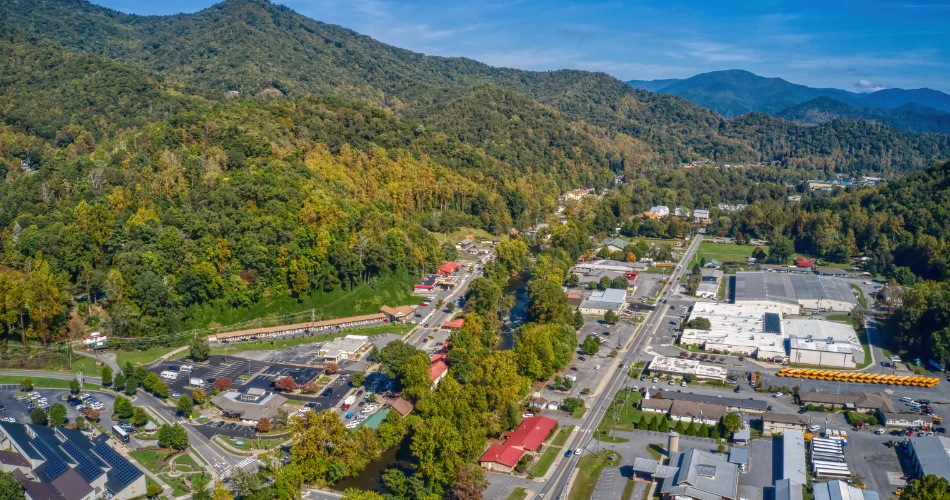
Bryson City has enough shops, restaurants, and activity to feel like a destination, but its compact scale still gives it the personality travelers usually hope to find in a mountain town. The surrounding Swain County landscape places rivers, trails, waterfalls, and Great Smoky Mountains National Park close to downtown, making it one of the most versatile small mountain towns near Gatlinburg for a longer day trip.
One of the area's major outdoor stops is Deep Creek, a section of Great Smoky Mountains National Park just outside town. The Deep Creek trail network provides access to Tom Branch Falls, Indian Creek Falls, and Juney Whank Falls. Tubing is also a popular warm-weather activity on designated stretches of the creek, with rental businesses operating outside the park.
Bryson City's other well-known attraction is its railroad heritage. The town serves as a departure point for passenger excursions through the western North Carolina mountains, giving travelers an alternative to spending another full day behind the wheel.
The best way to enjoy Bryson City is not necessarily to rush directly from one attraction to another. Walking downtown before or after an outdoor excursion provides time for independent shops, local food, and the simple pleasure of being somewhere where the mountain ridges remain visible beyond the streets.
This is also a good choice when a group cannot agree on what counts as a proper vacation day. Hikers can head toward waterfalls, less active travelers can wander downtown, and train enthusiasts already know exactly where they are going.
Maggie Valley, North Carolina: A Mountain Road-Trip Classic
Maggie Valley stretches through a broad mountain valley west of Asheville and close to both Great Smoky Mountains National Park and the Blue Ridge Parkway. Its roadside layout is different from Bryson City's compact downtown, but that makes Maggie Valley especially convenient for travelers interested in scenic driving, motorcycles, seasonal activities, and easy access to western North Carolina mountain roads.
The town is closely associated with Wheels Through Time, a transportation museum devoted to historic American motorcycles and automobiles. Its collection includes more than 300 rare machines, and the museum is located about five miles from the Blue Ridge Parkway. The attraction operates seasonally, so visitors should confirm the current schedule before building an entire day around it.
Maggie Valley is also useful as a starting point for scenic drives. The Blue Ridge Parkway is nearby, and the surrounding area provides access to hiking, fishing, cycling, mountain scenery, and seasonal winter recreation.
Travelers should resist treating the Parkway like a normal highway, however. Its viewpoints encourage frequent stops, and mountain weather can reduce visibility quickly. Sections may also close because of weather, road maintenance, or other conditions.
Among these Smoky Mountain towns, Maggie Valley works particularly well for travelers who enjoy the road-trip portion of the day as much as the destination. The drive is not dead time here. It is part of the itinerary.
How to Choose the Right Mountain Town for the Day
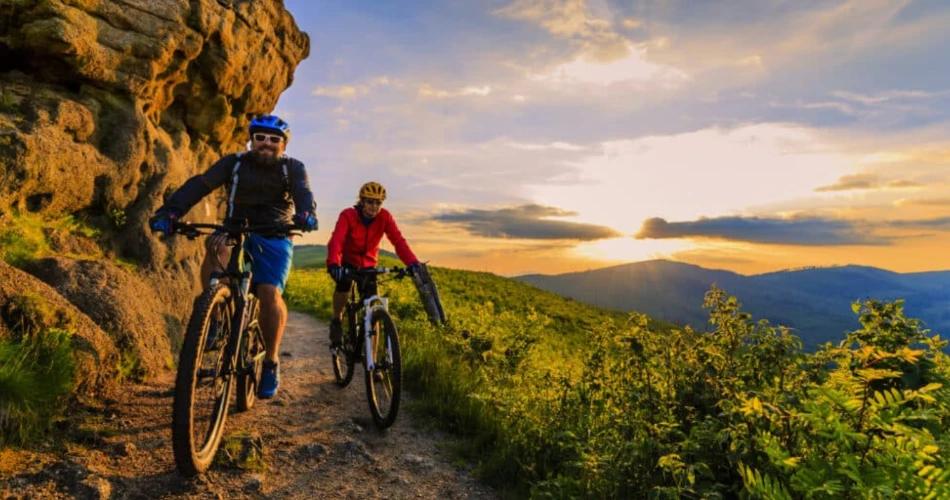
The best town depends less on which place receives the loudest recommendation and more on what kind of day travelers actually want. Someone hoping to hike should not plan the same outing as a visitor interested mainly in regional history, and a family looking for a relaxed river afternoon may not need to drive all the way into western North Carolina.
For an easy decision, the towns can be matched to a few basic travel styles:
- For a relaxed river-and-history day: Townsend
- For a short quiet detour from Gatlinburg: Pittman Center
- For hiking and a less-traveled park entrance: Cosby
- For Cherokee history and culture: Cherokee
- For waterfalls plus a walkable town: Bryson City
- For scenic roads and transportation history: Maggie Valley
Travel time should not be judged by mileage alone in the Smokies. Mountain roads are slower than straight highways, wildlife can appear near the roadway, and scenic overlooks have a way of turning a five-minute stop into half an hour.
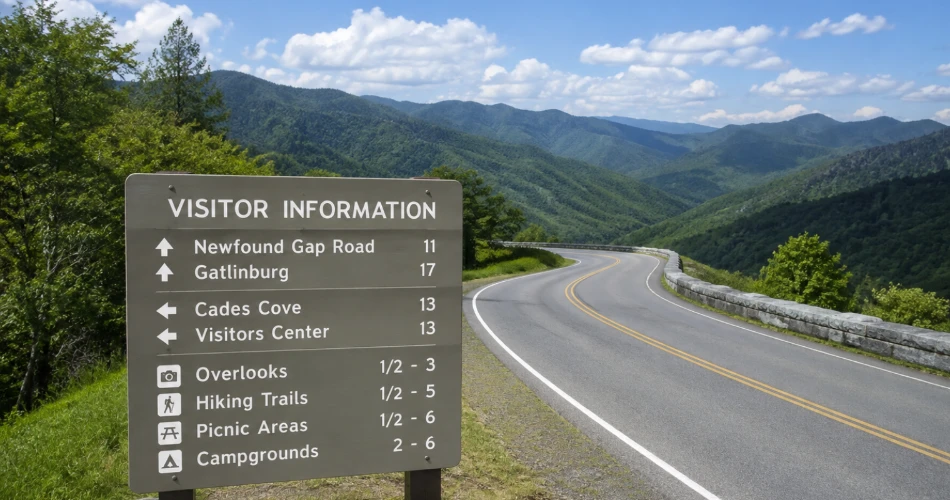
Trips crossing Great Smoky Mountains National Park should also be planned around current road conditions. Newfound Gap Road connects Gatlinburg with the North Carolina side, but severe weather or temporary closures can affect mountain routes.
Parking regulations are another detail worth checking. Great Smoky Mountains National Park requires parking tags for vehicles parked for more than 15 minutes. Visitors driving through without parking do not need one, but hikers and sightseers leaving vehicles at trailheads or other park parking areas generally do. Current conditions and regulations should be checked before departure rather than from a trailhead with unreliable cell service.
When These Smoky Mountain Towns Are at Their Best
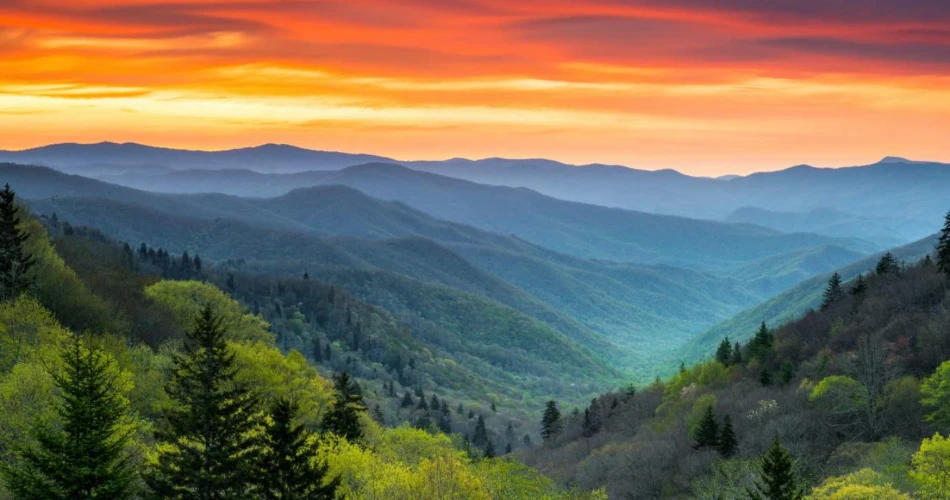
There is no single perfect season for visiting the towns near Gatlinburg, because each time of year changes the experience. Spring brings wildflowers, flowing streams, and fresh foliage to areas such as Cosby. Summer suits river activities, tubing, longer daylight hours, and family day trips, although afternoons can be warm and popular park areas become busy.
Autumn receives the most attention, with good reason. Forested ridges around Townsend, Cherokee, Bryson City, and Maggie Valley can develop striking fall color. The trade-off is traffic. Visitors traveling during peak foliage periods should allow extra driving time and avoid assuming that a short mileage estimate means a quick trip.
Winter creates a much quieter version of the region. Bare trees open views that disappear behind leaves in summer, and some communities feel pleasantly unhurried. However, higher-elevation roads can close because of snow, ice, or unsafe conditions, while attractions and park facilities may operate reduced or seasonal schedules.
Early morning is usually the most useful departure time regardless of season. It leaves room for delays, scenic stops, lunch, and an unplanned roadside pause without requiring a rushed drive back to Gatlinburg after dark.
Good mountain travel also requires a little humility. The weather, road, or wildlife may rewrite the schedule. In the Smokies, that is not necessarily a ruined itinerary. Sometimes it is simply the mountains editing the day's plans.
Give the Smaller Side of the Smokies a Day of Its Own
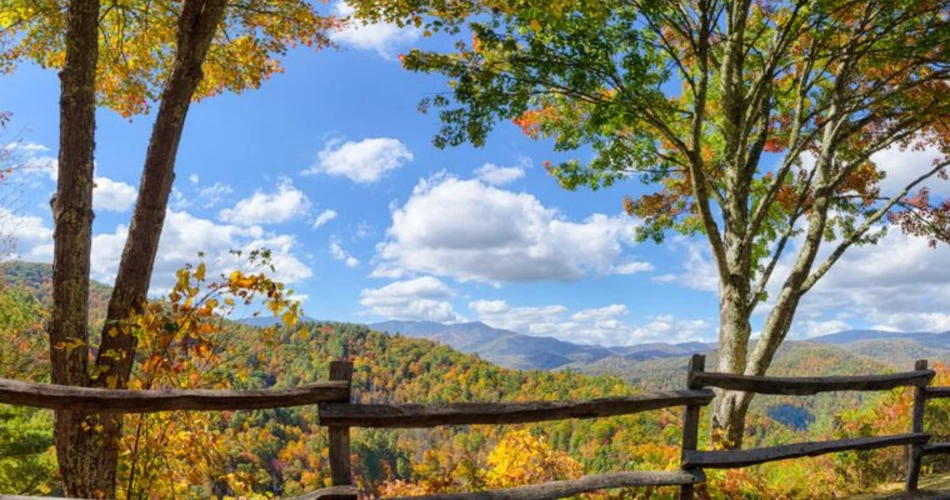
Gatlinburg may be the starting point, but it does not need to be the boundary of a Smoky Mountains vacation. Townsend offers river scenery and Appalachian history. Pittman Center keeps visitors close to Gatlinburg while providing a quieter look at local mountain heritage. Cosby opens the door to hardwood forests and less-traveled trails, while Cherokee adds an essential cultural dimension to a trip across the mountains. Bryson City combines an easygoing downtown with waterfalls and outdoor recreation, and Maggie Valley rewards travelers who consider the drive itself part of the fun.
These small mountain towns near Gatlinburg are different enough that visiting several does not feel like repeating the same day with a new town sign. Some are best suited to hiking boots. Others call for museums, scenic roads, riverside breaks, or a slow walk through downtown.
There is no need to cram all of them into one vacation. In fact, doing so would defeat much of their appeal. Picking one town, leaving Gatlinburg reasonably early, and giving the road enough time to become part of the day usually works better.
The Smokies have plenty of famous stops. Their smaller communities show travelers what happens when the schedule gets shorter, the road gets quieter, and nobody is in quite such a hurry to reach the next attraction.
Next post Where to Drive From Gatlinburg for Better Mountain Views
Previous Post Day Trips From Gatlinburg for a Change of Scenery
About Author