English

 Home
Home Hotels
  Car Rental
 Rewards
 Travel Guide
Day Trips From Gatlinburg for a Change of Scenery

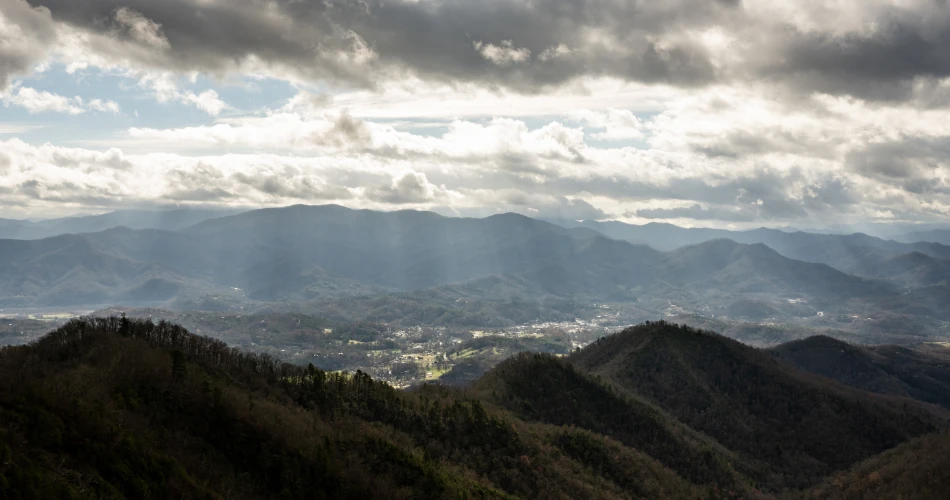
Gatlinburg can fill a vacation without much effort, but spending every day on the same few downtown blocks would be a shame when so much of the southern Appalachians sits within driving distance. Some of the best day trips from Gatlinburg lead through mountain gaps, river valleys, historic communities, and neighboring North Carolina towns that feel noticeably different from the busy Parkway.
A traveler can spend one day watching wildlife in Cades Cove, another learning about Cherokee history on the Qualla Boundary, and another riding through western North Carolina by train. There are also caves, waterfalls, quiet stretches of highway, historic farm buildings, and enough mountain overlooks to make anyone's camera roll slightly ridiculous.
Driving times around the Smokies should always be treated as estimates rather than promises. Curving roads, construction, wildlife, leaf-season traffic, and mountain weather can all slow a trip. Travelers who start early, leave some breathing room in the schedule, and resist the urge to cram five destinations into six hours generally have a much better day.

Spend a Slow Day in Cades Cove
Cades Cove works especially well for travelers who want one of the classic Smoky Mountains day trips without giving up the landscape that brought them to Gatlinburg in the first place. Instead of downtown sidewalks and attraction signs, the day revolves around a broad mountain valley, open fields, historic structures, hiking trails, and the occasional traffic jam caused by a bear minding its own business.
The centerpiece is the 11-mile, one-way Cades Cove Loop Road. It passes historic churches, cabins, barns, cemeteries, and former homesites connected with the families who lived in the valley before the national park was established. The National Park Service recommends allowing at least two to four hours simply to drive the loop and see its main features, and busy summer and fall days can take longer.
Wildlife is another reason visitors come. White-tailed deer, turkeys, and black bears may be seen in the area, but animals should be viewed from a safe distance rather than approached for a photograph.
A practical Cades Cove day trip can include:
- An early drive around the loop before peak traffic builds.
- Stops at historic churches, cabins, and designated pullouts.
- Time at the Cades Cove Visitor Center and Cable Mill area.
- A picnic or short walk before heading back toward Gatlinburg.
One important 2026 detail is worth checking before setting out: Cades Cove Loop Road is closed to motor vehicles on Wednesdays from May 6 through September 30 for vehicle-free days, giving cyclists and pedestrians use of the roadway.

Take the Quieter Route to Townsend, Tennessee
Townsend makes a useful counterpoint to Gatlinburg because the pace changes almost immediately. The community sits near another entrance to Great Smoky Mountains National Park, with the Little River running through the area and fewer large-scale attractions competing for attention. It is the sort of day trip where the schedule can remain pleasantly loose: drive, stop near the river, eat lunch, learn a little local history, and continue toward the mountains if everyone still has energy.
One worthwhile stop is the Little River Railroad and Lumber Company Museum. It tells the story of the railroad and logging operations that shaped this part of the Smokies before the national park era. The museum preserves photographs, tools, railroad material, and historic equipment, including Shay locomotive No. 2147. The organization notes that the museum operates seasonally, while its outdoor exhibits remain accessible outside regular museum hours.
Another option is Tuckaleechee Caverns, where travelers can swap mountain overlooks for an underground setting. The cavern attraction operates seasonally, so same-day opening hours are worth checking before making it the centerpiece of a trip.
Townsend also pairs naturally with Cades Cove. Travelers who do not want a packed itinerary can visit the cove first, then stop in Townsend for a slower afternoon rather than rushing back toward Gatlinburg. It is a simple change of scenery, but that is exactly the point.
Cross the Mountains for a Cherokee, NC Day Trip
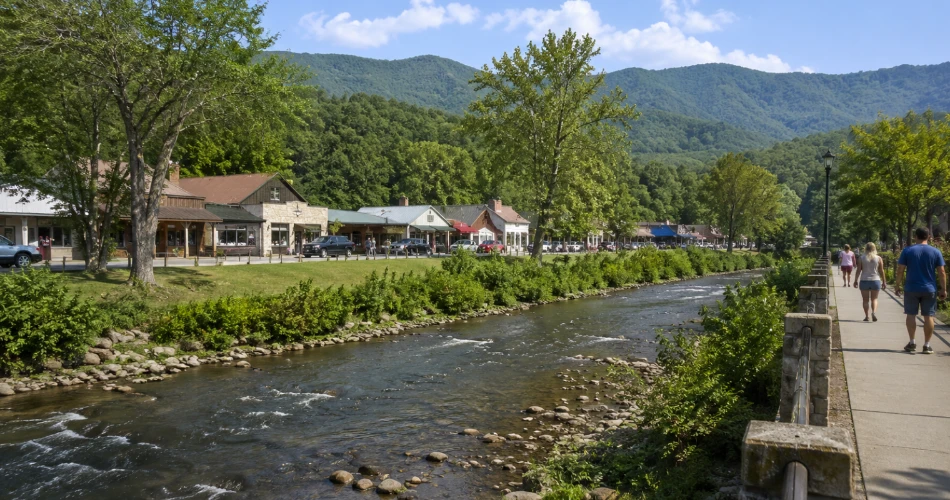
A Cherokee NC day trip feels much farther removed from Gatlinburg than the mileage alone suggests. The route crosses the Smokies on Newfound Gap Road before descending toward the Qualla Boundary, the sovereign land of the Eastern Band of Cherokee Indians. The landscape is reason enough to make the drive, but Cherokee deserves time as a destination rather than being treated simply as the town on the other side of the park.
The Museum of the Cherokee People is an excellent place to begin. Established in 1948, it is one of the country's longest-operating tribal museums and presents Cherokee history, material culture, art, and contemporary stories through exhibitions and programs. Crucially, it presents that story from a Cherokee institution on Cherokee land rather than treating the community as something that exists only in the past.
As of August 2026, the museum is generally open daily from 9 a.m. to 5 p.m., with the final ticket sold at 4 p.m., although holiday closures apply.
Travelers can combine the museum with the nearby Oconaluftee area of Great Smoky Mountains National Park. That makes this one of the most varied day trips from Gatlinburg: mountain driving in the morning, cultural history during the middle of the day, and riverside or historic farm scenery before heading back across the mountains.
Add Oconaluftee and the Mountain Farm Museum
Just north of Cherokee, Oconaluftee provides an easy second half to the day without requiring another long drive. The Oconaluftee Visitor Center stands along Newfound Gap Road about two miles north of Cherokee and includes exhibits on the cultural history of the Smokies, park information, restrooms, and access to the adjacent Mountain Farm Museum.
The farm museum is not one reconstructed house placed behind a fence for decoration. It is a collection of historic log buildings brought together from different parts of the park. Visitors can walk past a farmhouse, barn, smokehouse, corn crib, applehouse, and other structures while getting a clearer sense of everyday mountain life generations ago. Seasonal ranger programs can add demonstrations and interpretation; in summer 2026, scheduled “Down on the Farm” programs include activities such as blacksmithing, fence making, and hearth cooking on selected days.
The Oconaluftee valley is also home to one of the park's principal elk herds. Seeing elk should never become a reason to walk toward them, block traffic, or step into a field for a closer photo. A long lens and some patience are much better travel companions.
One current note matters: Mingus Mill, another nearby historic site, is temporarily closed for preservation and rehabilitation work as of August 2026.
Make Bryson City a Full-Day North Carolina Escape
Bryson City is far enough from Gatlinburg that it deserves an early departure, but the extra road time pays off with a completely different type of mountain day. The small western North Carolina town sits near the Tuckasegee River and provides access to rail excursions, shops, restaurants, and the Deep Creek area of Great Smoky Mountains National Park.
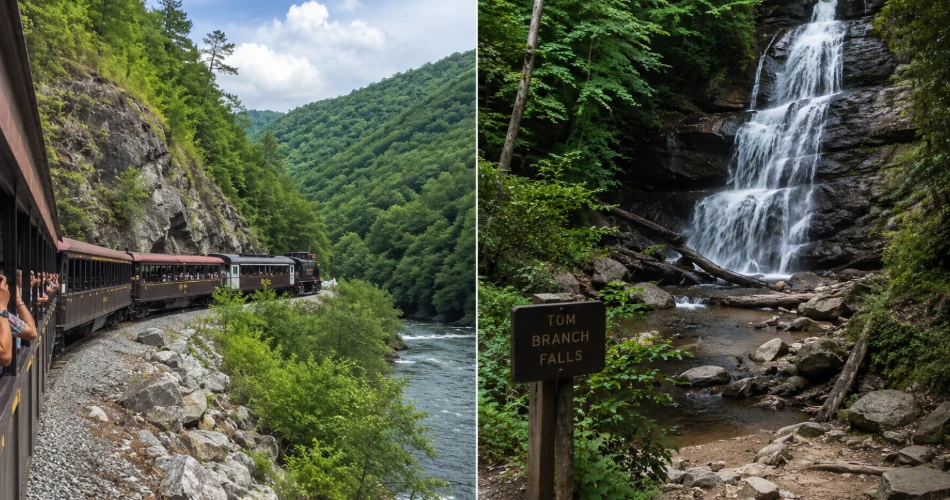
A Bryson City day trip works best when the traveler chooses one main activity instead of trying to conquer the entire region before dinner. The obvious centerpiece is a ride on the Great Smoky Mountains Railroad. Its regular excursions depart from Bryson City and travel through western North Carolina scenery, turning the transportation itself into the attraction.
The railroad's Nantahala Gorge Excursion is listed as a roughly 4½-hour round trip covering 44 miles, running alongside areas including Fontana Lake and the Nantahala River, with a layover in the gorge. The Tuckasegee River Excursion travels through countryside toward Dillsboro and includes time there before returning to Bryson City. Schedules vary by date, and special-event services are offered during parts of the year, so advance planning matters.
Travelers who prefer hiking over rails can make Deep Creek the main event instead. Either way, Bryson City is better treated as a real destination than as one more hurried stop added to a long checklist.
Choose Between a Train Ride and a Waterfall Day
The choice between a train excursion and an outdoor day changes the entire rhythm of Bryson City. A rail trip is the easier option for travelers who want to sit down, watch western North Carolina pass the windows, and give the driver of the group several hours when no one asks, “Are we there yet?” The Nantahala Gorge and Tuckasegee River routes each offer different scenery, so checking the day's excursion calendar before leaving Gatlinburg is essential.
For hikers, the Deep Creek area offers a more active alternative and keeps the day focused on waterfalls, creeks, and forest rather than downtown sightseeing. It is particularly useful for a group that has already spent several days driving scenic roads and wants to get out of the car.
Trying to fit a multi-hour train journey and a substantial hike into the same Gatlinburg day trip usually turns leisure into scheduling mathematics. Pick the experience that matters more and leave enough time for Bryson City's streets and riverfront surroundings afterward.
This approach also makes the return drive easier. Mountain roads feel considerably longer after dark, especially to visitors unfamiliar with the curves, so a sensible turnaround time belongs in the itinerary from the beginning.
Follow Newfound Gap Road and Kuwohi for a High-Elevation Day
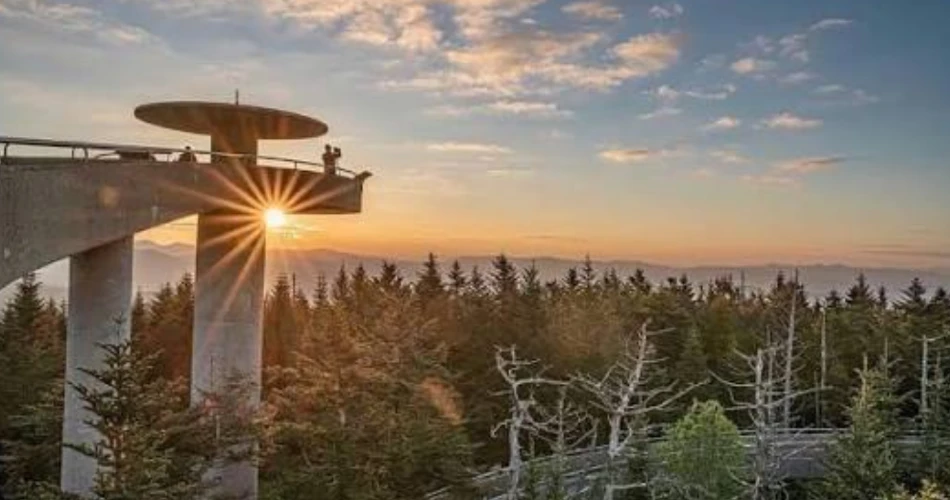
Not every day trip needs another town at the end of it. One of the best scenic drives from Gatlinburg heads directly through Great Smoky Mountains National Park on Newfound Gap Road, climbing from the Tennessee side toward the Tennessee–North Carolina state line before continuing toward Kuwohi.
Newfound Gap gives travelers a chance to watch the forest change with elevation rather than seeing the mountains only from downtown. Conditions can differ sharply between lower elevations and the high ridges; sunshine in Gatlinburg does not guarantee clear skies near the top. The National Park Service specifically cautions visitors that mountain weather can vary considerably with elevation.
From Newfound Gap, Kuwohi Road branches toward the highest peak in Great Smoky Mountains National Park. Formerly known as Clingmans Dome Road, the seven-mile road leads to the visitor center and overlook area. The peak is the highest point in the Smokies.
For 2026, Kuwohi Road is scheduled to operate from April 1 through November 29, weather permitting. Snow, ice, or hazardous conditions can still cause temporary closures.
The result is an easy-to-customize trip: spend several hours at overlooks and high-elevation stops, continue into Cherokee, or simply turn around when the mountains have delivered enough scenery for one day.
Drive the Foothills Parkway When the Road Matters More Than the Destination
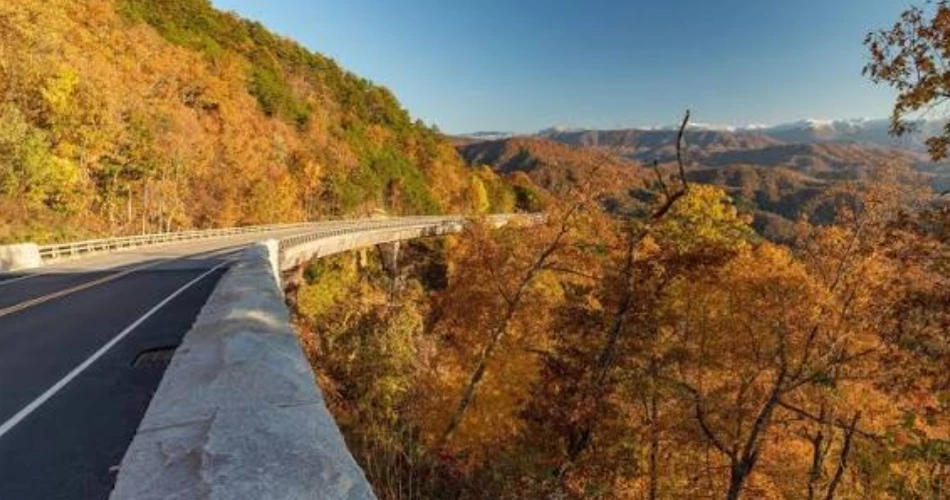
Some day trips are built around a museum or waterfall. A Foothills Parkway outing is built around the drive itself, which makes it a good option after several days of tightly scheduled Gatlinburg attractions.
The National Park Service identifies several completed Foothills Parkway sections near the Smokies, including a 14.75-mile stretch from Walland to Wears Valley and a 16.6-mile section from Chilhowee to Walland. Another 5.6-mile portion runs between Cosby and Interstate 40. These stretches give travelers broad mountain views without requiring a long hike or a fixed admission time.
The Walland–Wears Valley route works particularly well when combined with Townsend. Instead of driving straight to one attraction and returning the same way, visitors can build a loose loop around overlooks, quiet road sections, lunch, and a few spontaneous stops.
This is a day for travelers who enjoy pulling over when the mountains look good rather than consulting a minute-by-minute itinerary. Sunrise and late-afternoon light can be beautiful, but mountain weather changes quickly and visibility is not guaranteed.
A scenic drive from Gatlinburg also benefits from a few basic preparations: start with enough fuel, download directions before losing signal, bring water, and check current park road conditions. Those details are not glamorous, but neither is realizing the navigation app has stopped loading halfway through the mountains.
Pick the Right Day Trip for the Season
The best destination outside Gatlinburg changes with the calendar. Summer allows the widest range of activities, but it also brings heavier traffic, warm afternoons at lower elevations, and busy roads around popular park areas. An early departure becomes more valuable than an ambitious itinerary.
Autumn adds fall color and cooler hiking weather, along with some of the year's heaviest traffic. Cades Cove, Newfound Gap Road, and other scenic routes can move slowly during peak foliage periods. Building extra drive time into a Cades Cove day trip is far more realistic than assuming map-app estimates will survive October traffic untouched.
Winter is quieter, but travelers need to pay closer attention to high-elevation weather and seasonal roads. Newfound Gap Road is a primary road and generally remains open year-round, weather permitting, while secondary roads such as Kuwohi Road close seasonally.
Spring brings reopening roads, changing weather, wildflowers, and increasing activity across the park. It is also a good season for Townsend and Cherokee before peak summer crowds arrive.
For almost any season, a few habits help:
- Check national park road and trail conditions on the morning of the trip.
- Start earlier for Cades Cove, Cherokee, and Bryson City.
- Keep food, water, and a light layer in the vehicle.
- Avoid packing distant destinations into the same day simply because they look close on a map.
The Smokies reward travelers who leave room for the unexpected.
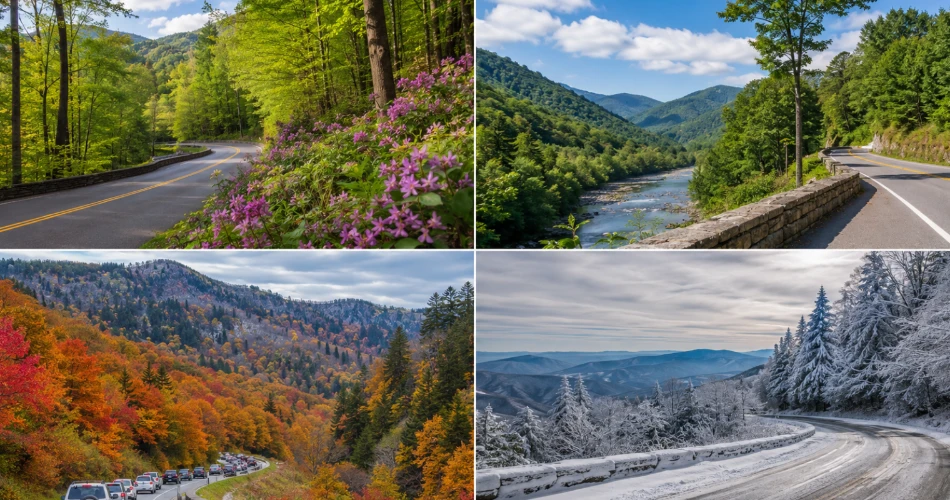
Give Gatlinburg a Day Off
A trip based in Gatlinburg does not need to remain inside Gatlinburg every morning, afternoon, and evening. In fact, leaving town for a day often makes returning to its bright Parkway, restaurants, and evening attractions feel more enjoyable.
For history and wildlife, Cades Cove remains hard to beat. Townsend suits travelers who want riverside scenery and a quieter small-town pace. Cherokee adds an important cultural dimension through the Museum of the Cherokee People and the neighboring Oconaluftee area. Bryson City earns a full day for its railroad excursions and outdoor access, while Newfound Gap, Kuwohi, and the Foothills Parkway prove that sometimes a winding mountain road is enough of a destination on its own.
The smartest day trips from Gatlinburg are not necessarily the ones that cover the most miles. They are the ones that create a noticeable change of pace. One day may mean historic cabins and open fields; another may involve Cherokee history, a waterfall trail, or several hours watching mountains roll past a train window.
That variety is one of the great advantages of staying near the Smokies. Gatlinburg provides the busy base, while Tennessee valleys, North Carolina mountain towns, historic landscapes, and scenic roads are waiting just beyond it. Leave early, check current conditions, choose one area rather than six, and give the road enough time to become part of the trip.
Next post Small Mountain Towns Worth Visiting Near Gatlinburg
Previous Post A Relaxing Road Trip Through the Smoky Mountains
About Author