English

 Home
Home Hotels
  Car Rental
 Rewards
 Travel Guide
A Gatlinburg Day Built Around Good Stops, Not a Checklist Worthwhile

A good Gatlinburg itinerary does not need to account for every hour. In fact, the town often works better when it does not. Gatlinburg sits in an unusual position where a traveler can walk beside a mountain stream in Great Smoky Mountains National Park in the morning, follow a narrow forest road past old Appalachian farm buildings before lunch, and be looking over downtown from a mountaintop by late afternoon. Trying to squeeze every possible attraction into that day usually misses what makes the place enjoyable.
A better Gatlinburg day trip can be built around four or five stops that are actually worth lingering over. Sugarlands provides an easy transition from town into the national park. Roaring Fork slows the pace even further. Downtown offers food, a riverside walk, and places to sit instead of another drive. Later, one elevated attraction can provide the big view without requiring a tour of every ticket window on the Parkway.
That approach also leaves room for weather, traffic, full parking areas, a trail that takes longer than expected, or a view good enough to delay the next stop. Those are not disruptions to the day. Around Gatlinburg, they are often the reason the day becomes memorable.

Start at Sugarlands Before Gatlinburg Gets Fully Awake
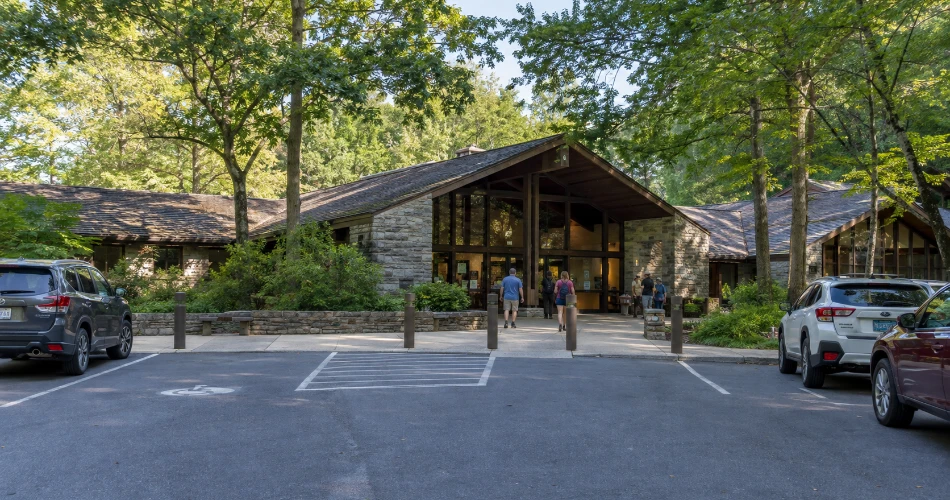
Sugarlands Visitor Center is a useful first stop because it gives the morning some direction without immediately committing the traveler to a major hike. It sits just south of Gatlinburg near the junction of Newfound Gap Road and Fighting Creek Gap Road and serves as the northern gateway to Great Smoky Mountains National Park. Inside are natural-history exhibits, park information, maps, a bookstore, and rangers who can provide current conditions.
The smart move is not to spend the whole morning indoors. Sugarlands works best as a jumping-off point. A traveler can check trail or road conditions, use the restrooms, sort out the day's parking tag, and then get outside while the air is still cool.
For visitors wanting the easiest possible walk, the nearby Sugarlands Valley Nature Trail is a paved half-mile loop through hardwood forest beside the West Prong of the Little Pigeon River. It is currently the park's only trail meeting ADA accessibility standards.
That is the kind of opening a relaxed day needs: enough movement to feel as though the mountains have begun, but not enough mileage to make everything afterward feel like recovery
Take the Short Walk to Cataract Falls
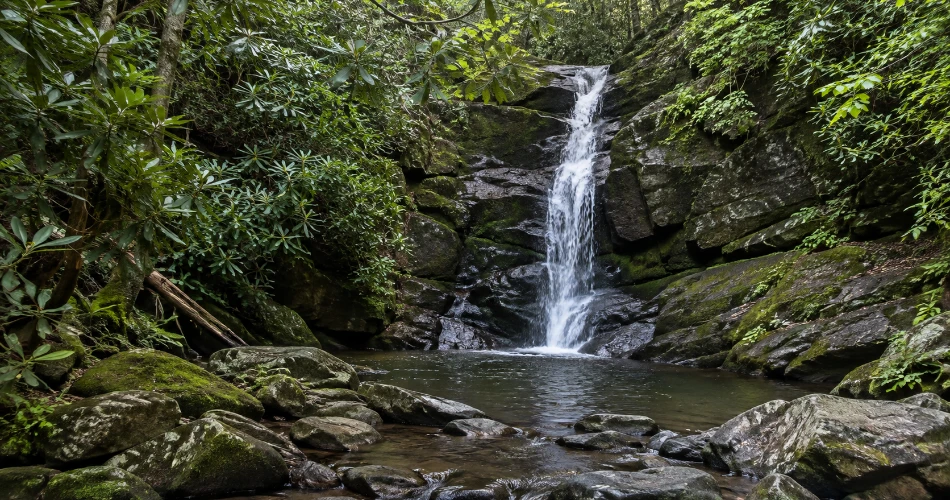
Cataract Falls is particularly well suited to this kind of day because it gives visitors a real forest walk and a waterfall without requiring half a day on the trail. The route begins from the Sugarlands Visitor Center area and covers roughly 0.7 mile round trip. It follows Fighting Creek through woodland before reaching the narrow waterfall, which drops about 40 feet and tends to look more impressive following substantial rainfall.
The pleasure is as much in the approach as the waterfall. Trees crowd close to the trail, a footbridge crosses the creek, and the sound of water gradually replaces the road noise around the visitor center. It feels properly wooded despite being remarkably close to Gatlinburg.
This is also a place where resisting the urge to “get the shot” matters. The National Park Service warns visitors against climbing around the falls because people have been seriously injured there. The sensible viewpoint is from the bottom rather than the slick rocks beside the cascade.
Once back at the car, the day has already included a national park stop, a forest walk, and a waterfall. Nothing needs to be hurried.
Let Roaring Fork Be the Part of the Day That Runs Slowly
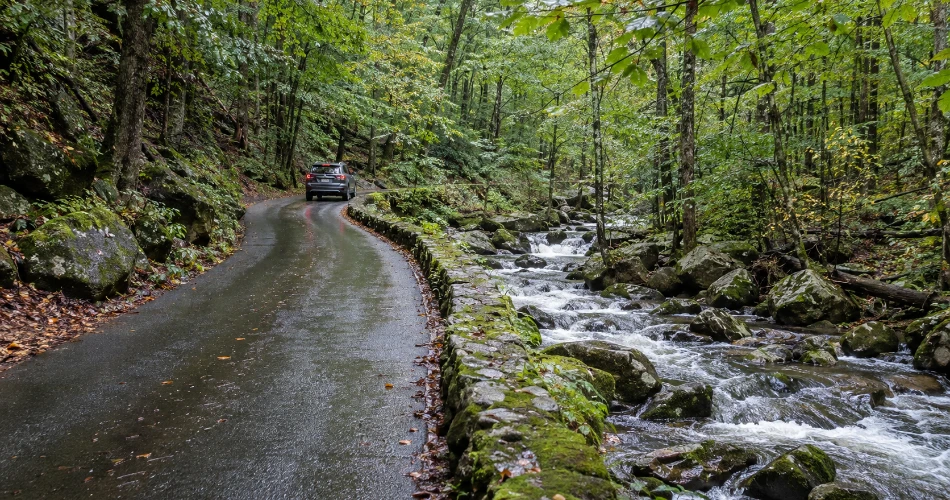
Roaring Fork Motor Nature Trail is only 5.5 miles long, but measuring it by mileage misses the point. This narrow one-way road winds through thick forest beside rushing water, historic structures, trailheads, and small pull-offs. The National Park Service specifically describes it as a route meant for slowing down, and that is exactly how it fits this Gatlinburg itinerary.
The road begins beyond the Cherokee Orchard area above downtown. Before entering the motor trail itself, travelers pass the Noah “Bud” Ogle farmstead, one of the most worthwhile places to get out of the vehicle. The self-guided area preserves part of the mountain settlement story rather than presenting the Smokies as wilderness untouched by people. Farther along the route are access points for trails including Trillium Gap, while streams repeatedly appear beside and below the road.
Near the latter part of the loop, Place of a Thousand Drips spills across a rock face. After rain, multiple thin cascades spread over the stone; during drier conditions, the scene can be much subtler. It can be viewed from the road or nearby pull-off.
Roaring Fork is seasonally closed, and buses, trailers, and motor homes are not allowed on the motor nature trail, so current road status should always be checked before building the day around it.
Stop at the Noah “Bud” Ogle Farmstead Instead of Driving Straight Past
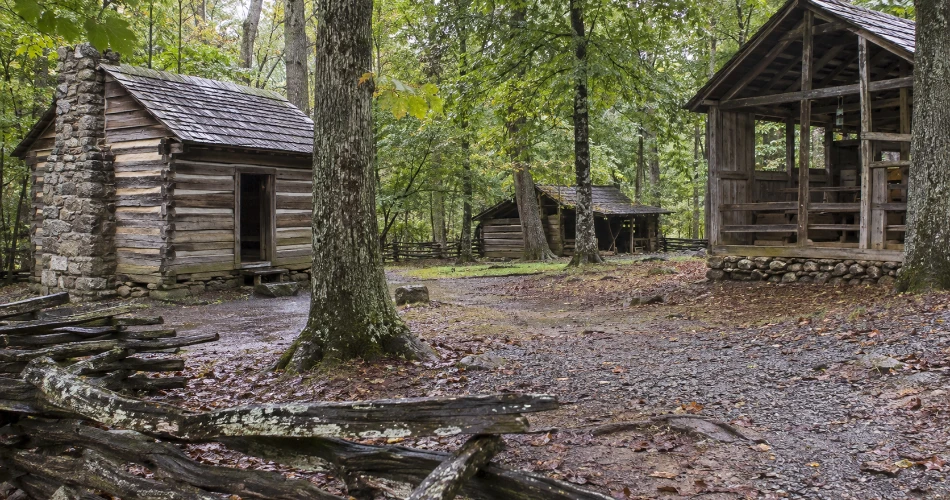
The Noah “Bud” Ogle farmstead is the sort of place a checklist traveler can accidentally reduce to a five-minute photo stop. Giving it more time changes the experience. The historic farmstead sits before the entrance to the Roaring Fork Motor Nature Trail, surrounded by hardwood forest that has reclaimed much of the landscape once worked by mountain families. The National Park Service recommends its self-guided nature trail as a way to see the farmstead before continuing toward Roaring Fork.
Walking around the structures puts the later drive into context. The old buildings are not decorative cabins installed for visitors; they represent a period when families lived, farmed, and depended on the same streams and slopes that now seem almost entirely wild. That relationship between settlement and forest is part of what makes the Roaring Fork area more interesting than a scenic drive alone.
No elaborate activity is required here. Visitors can step out, look closely at the construction, listen to the creek and forest, and continue when they are ready. Ten quiet minutes can easily become thirty, which is precisely why a less rigid Gatlinburg day trip works so well.
Come Back to Downtown and Give the Car a Rest
After a few hours among trees and mountain streams, downtown Gatlinburg feels livelier without necessarily feeling like a complete change of subject. The mistake is returning from Roaring Fork and immediately driving from one Gatlinburg attraction to another. Parking once and walking for a while makes the middle of the day much easier.
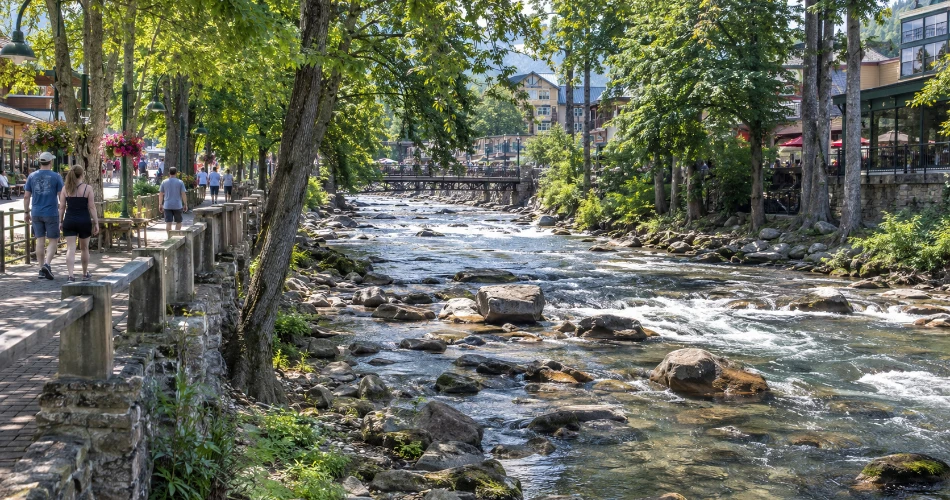
The Parkway is compact enough for visitors to cover plenty of ground on foot, but the Little Pigeon River provides the better break when sidewalks begin to feel busy. Sections of the river run directly through town, where water moves over rocks beneath trees only a short distance from the heavier pedestrian traffic. A traveler can pick up lunch, find a quieter river-facing stretch, and spend some time without trying to “do” anything.
Gatlinburg's trolley system is also useful when the walking distance becomes longer than expected. The city currently operates the trolley without a fare, with service running daily year-round, although hours differ by season and route.
The middle of the day does not need another headline attraction. Sometimes lunch, a river walk, and forty minutes without a parking search are the stops that keep the rest of the day enjoyable.
Pick One Big View Instead of Chasing Every Attraction
Gatlinburg makes it very easy to spend an afternoon going from ticketed attraction to ticketed attraction. A better approach is to choose one place that provides the kind of view the group actually wants and give it enough time.
The Gatlinburg SkyPark is the stronger choice for travelers who want the ride and mountain setting to be part of the experience. Its SkyBridge stretches almost 700 feet across the valley, and a 30-foot glass section sits around the middle of the span. The bridge is reached from the mountaintop SkyPark complex above downtown.
The Gatlinburg Space Needle works differently. It is a 407-foot observation tower right in downtown, reached by glass elevators, with a 360-degree observation deck overlooking both Gatlinburg and the surrounding Smokies.
For a checklist-free day, there is little reason to rush through both. A simple choice works better:
- SkyPark: best when a mountaintop setting, chairlift ride, and extended outdoor time matter.
- Space Needle: best when the goal is a straightforward high view without giving up much of the afternoon.
- Cloudy day: save the major viewpoint for later if improving weather is expected rather than paying simply because it appears on an itinerary.
One good overlook enjoyed slowly is worth more than three rushed observation decks.

Give Anakeesta the Late Afternoon Only if the Day Still Has Energy
Anakeesta is best treated as a substantial stop rather than something squeezed between two other attractions. In 2026, the attraction added the Crystal Express, an all-glass gondola that opened May 22. The ride climbs more than 600 feet from its Parkway station to the summit in roughly four minutes.
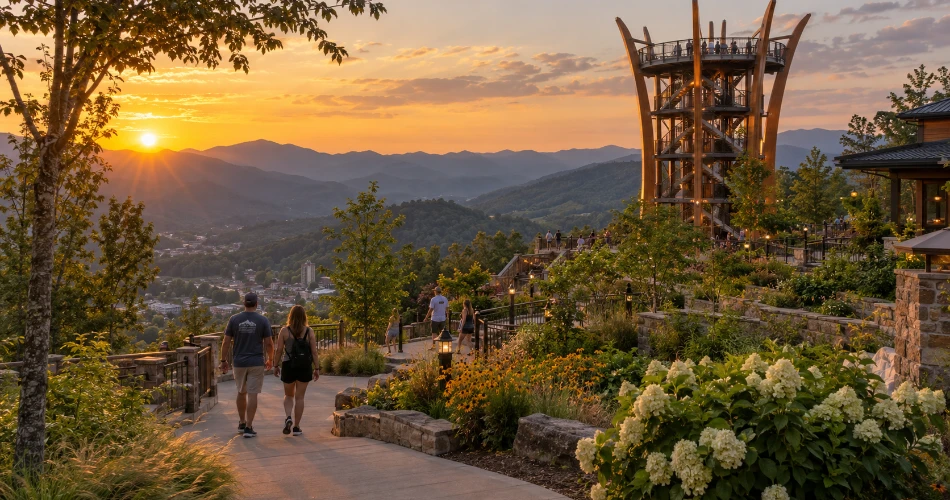
Once at the top, the experience becomes less about completing individual rides and more about wandering between viewpoints, gardens, elevated walkways, and activity areas. Vista Gardens offers a slower section of the mountaintop, while AnaVista Tower provides another broad Smokies panorama. The Treetop Skywalk is useful when the group still wants some movement without committing to a conventional hiking trail.
That is why late afternoon can suit Anakeesta particularly well. Temperatures can ease, the light becomes more flattering across the ridges, and visitors can decide how much energy remains instead of arriving with an ambitious list.
However, the stop should remain optional. If Roaring Fork has taken longer than expected or everyone is happier lingering beside the river downtown, nothing has gone wrong. There are enough things to do in Gatlinburg that saving one for another visit is often the better decision.
Keep the Schedule Loose, but Get the Practical Details Right
A flexible day still needs a small amount of preparation. Great Smoky Mountains National Park does not charge an entrance fee, but a parking tag is required for vehicles parked inside the park for more than 15 minutes. Tags are available in daily, weekly, and annual formats, and Sugarlands Visitor Center is one of the places where they can be purchased. Having a tag does not guarantee a parking space.
Roaring Fork presents a second planning issue: parking around popular trailheads can fill, and the motor trail itself closes during part of the year. The National Park Service advises checking seasonal road status and having another destination in mind when parking demand is high.
A few simple habits prevent most of the frustrating parts of a Gatlinburg itinerary:
- Start the national park portion earlier than the downtown portion.
- Check NPS road, trail, and temporary closure information that morning.
- Wear walking shoes even if no serious hike is planned.
- Carry water and a light rain layer; mountain weather can alter the day quickly.
- Pair one major natural outing with one major paid attraction rather than stacking several of each.
The best plan is therefore not “no plan.” It is a short plan with enough empty space to survive reality.

Leave Enough Room for the Stop Nobody Planned
The strongest version of this day probably will not unfold exactly as written. Cataract Falls may be especially lively after rain and keep visitors around longer. Roaring Fork might move slowly because every curve seems to reveal another stream or historic building. Downtown may feel better in the evening than expected. Clouds might clear over the Smokies just as everyone considers skipping the final viewpoint.
That is the advantage of building a day around good stops instead of a checklist.
Sugarlands provides an easy first taste of the Great Smoky Mountains. Roaring Fork adds the historic landscape and one of the most rewarding scenic drives near Gatlinburg. Downtown supplies food, walking, river views, and an easy change of pace. A single mountaintop attraction can then carry the afternoon into sunset without requiring another five reservations.
Visitors who return to Gatlinburg rarely remember whether they completed nine attractions instead of seven. They remember the stream beside the road, the morning forest after rain, an unexpected view between buildings, or the moment the mountains finally emerged from low clouds.
A Gatlinburg day feels worthwhile when it still contains room for those moments. The itinerary should point travelers toward them, then know when to get out of the way.
Next post What to See When You’ve Already Done the Usual Gatlinburg Stops
Previous Post The Places Around Gatlinburg That Make the Drive Worthwhile
About Author