English


 Home
 Hotels
 Car Rental
 Rewards
 Travel Guide
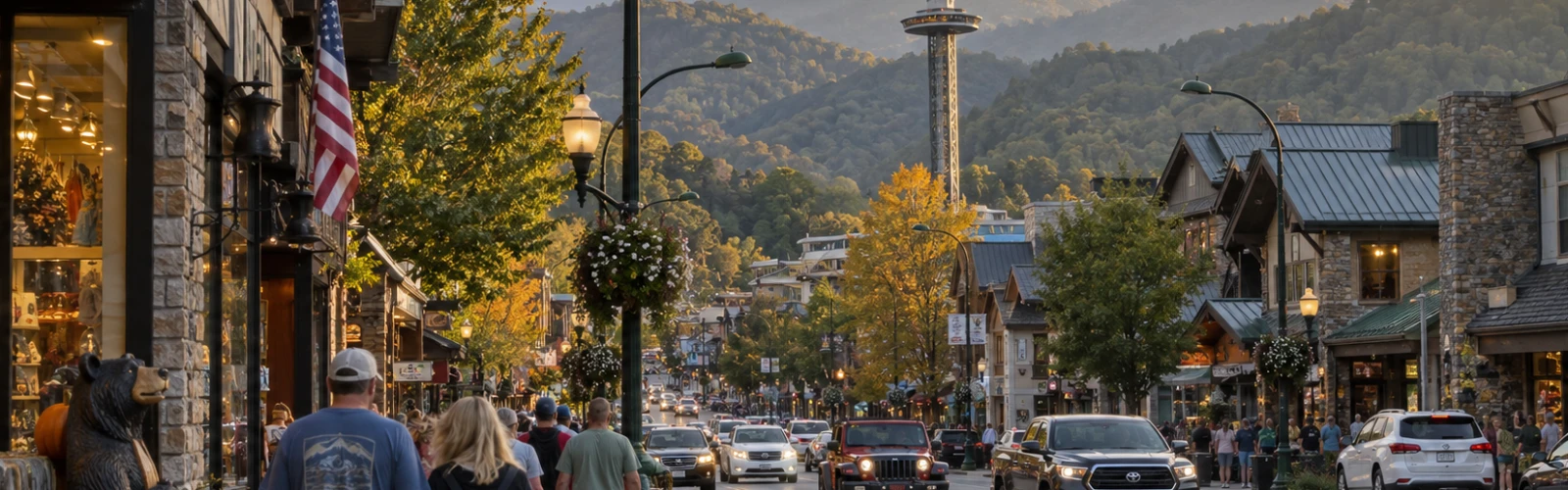
The Gatlinburg Stops I’d Make Time for Again

A first visit to Gatlinburg usually comes with a long list. There are chairlifts to ride, trails to walk, shops to browse, mountain roads to drive, and enough attractions along the Parkway to make an afternoon disappear before anyone notices. A return visit feels different. Once the pressure to see everything is gone, the places worth repeating become much easier to recognize.
The best Gatlinburg attractions are not always the ones requiring the longest visit or the most complicated plan. Some work because they show the town from a completely different angle. Others earn a repeat stop because the experience changes with the weather, season, time of day, or simply the traveler's pace. A waterfall after rain does not look quite like the same waterfall in late summer. A mountain overlook beneath clear skies feels different from one wrapped in moving clouds. Even downtown Gatlinburg becomes more enjoyable when nobody is treating the Parkway like a racecourse.
For travelers looking for things to do in Gatlinburg on a second trip, this is the kind of list that makes sense: fewer stops, more time at each one, and enough flexibility to abandon the schedule when the mountains are having a particularly good day.
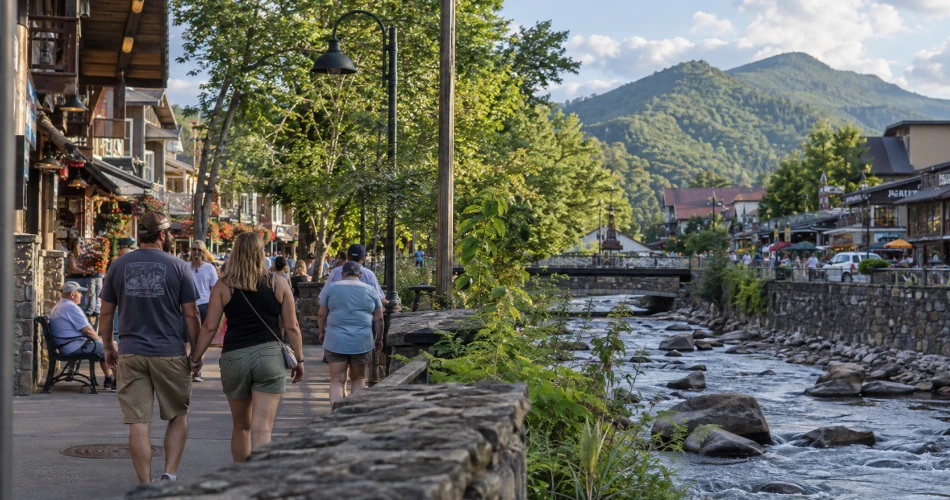
Start at Sugarlands Before Downtown Gets Busy
Sugarlands Visitor Center is one of those places that becomes more useful with every return trip. It sits about two miles south of Gatlinburg on Newfound Gap Road, close enough that visitors can move from downtown sidewalks to national-park forest in minutes. Rangers, maps, natural-history exhibits, restrooms, and current park information make it a practical first stop rather than somewhere to visit only when plans go wrong.
The short walk to Cataract Falls is the reason this area deserves more than a quick map pickup. The approximately 0.7-mile forest walk begins near the visitor center and reaches a roughly 40-foot waterfall. It is not a giant backcountry cascade, which is exactly why it works so well in a Gatlinburg sightseeing day. The path gives travelers rhododendron, creek sounds, shade, and a real sense of entering Great Smoky Mountains National Park without requiring half a day.
Returning visitors can also consider the paved half-mile Sugarlands Valley Nature Trail or start along the Gatlinburg Trail when more walking sounds appealing. Anyone parking in the national park for more than 15 minutes needs a valid physical parking tag, so that detail is worth sorting out before the walk begins.
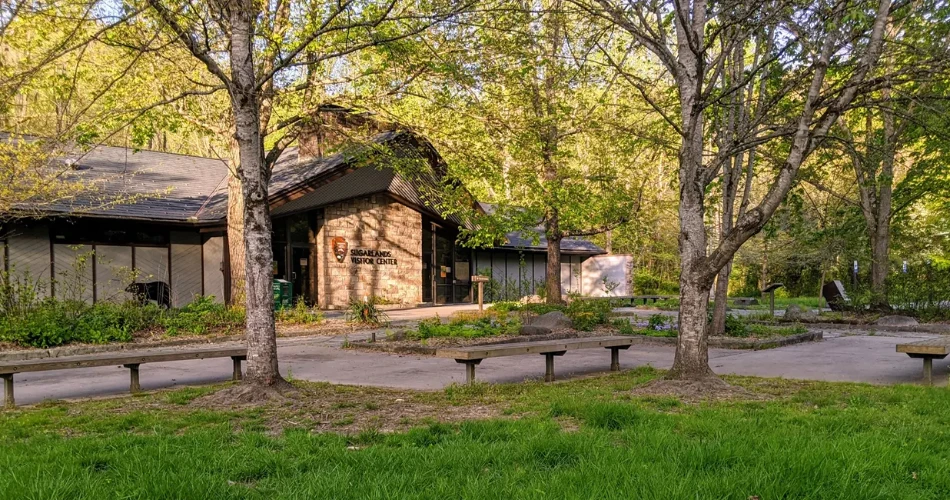
Two Downtown Stops That Still Earn Their Time
Downtown Gatlinburg is easy to dismiss on a repeat visit because its busiest attractions are impossible to miss the first time. That would be a mistake. A few places work better once travelers stop trying to move quickly between them. They become places to spend time rather than boxes to check.
For an indoor stop, the aquarium continues to stand out because it is substantial enough to justify a dedicated visit and works especially well when weather interferes with mountain plans. For something completely different, The Village provides a compact courtyard where walking slowly is the whole point. They are close enough to fit into the same part of a downtown Gatlinburg day, but they should not be rushed together.
A practical way to handle this part of town is to park once or use the free trolley rather than repeatedly moving the car. Gatlinburg's trolley system operates daily, charges no fare, and connects downtown with other parts of town; all routes stop at the Mass Transit Center beside the aquarium. Seasonal operating hours vary.
Ripley’s Aquarium of the Smokies Is Better When Nobody Rushes It
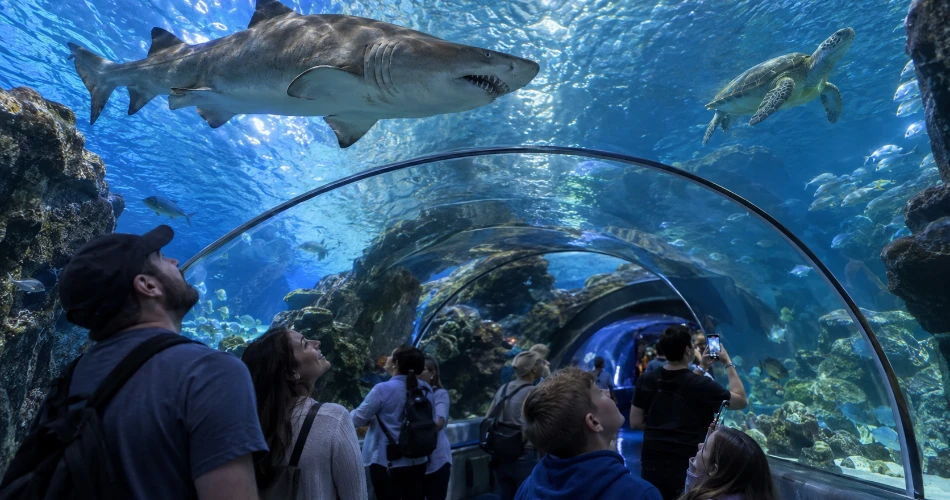
The aquarium is the kind of Gatlinburg attraction that can feel completely different when visitors stop moving from tank to tank as quickly as possible. Shark Lagoon is still the section most likely to slow people down. A moving glidepath carries visitors through the underwater tunnel while sand tiger sharks, other shark species, sawfish, green sea turtles, tarpon, moray eels, and schooling fish move overhead and alongside the glass.
The better strategy is to give the larger animals time to circle back rather than treating one pass through the tunnel as enough. Penguin Playhouse is another place worth lingering. Its indoor-outdoor habitat houses African penguins, while viewing tunnels allow visitors to see them from above and below the water.
Daily programming can also change the experience. Dive shows, animal feedings, and penguin activities appear on the aquarium's current schedule, so checking what is happening before arriving can make the visit more interesting than simply walking a fixed route through the galleries.
The Village Is Still Worth Walking Through Slowly
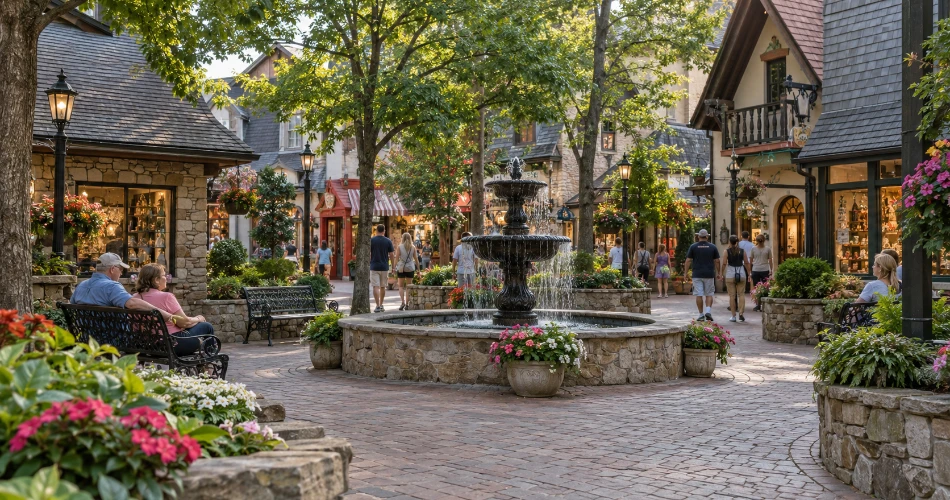
The Village is not a stop that needs an itinerary. Its appeal comes from entering through the Parkway side and temporarily losing the feeling of being on Gatlinburg's main tourist street. The compact shopping area uses brick paths, stonework, landscaping, fountains, old-style architectural details, and small storefronts to create an intentionally European-inspired setting. The complex contains 27 shops, eateries, and attractions rather than one large indoor retail space.
On a return visit, there is no reason to browse every store. A coffee, a pastry, a look through a gallery, or ten quiet minutes beside the fountain may be enough. That is precisely why the stop remains useful. It breaks up a long stretch of downtown Gatlinburg without demanding another ticket, ride, reservation, or major chunk of the afternoon.
Store hours can vary by merchant and season, so travelers going specifically for one business should check that shop rather than assuming every door opens and closes at the same time.
Take the SkyLift for the View, Not Just the Bridge
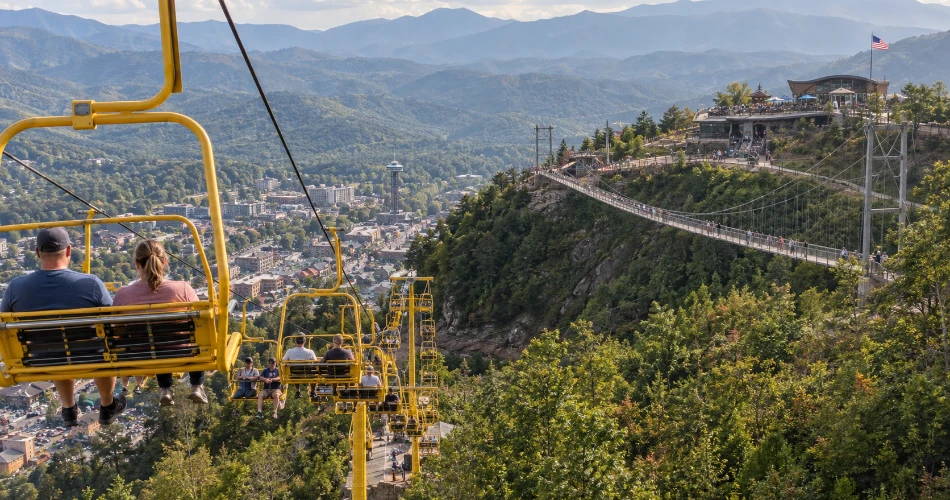
Gatlinburg SkyPark is often reduced to a single photograph of the SkyBridge, but the repeat-worthy part begins before anyone steps onto it. The yellow SkyLift climbs from the Parkway toward Crockett Summit with downtown gradually falling away beneath the chairs. Travelers who spend the ride looking back rather than at their phones get one of the clearest illustrations of how tightly Gatlinburg sits between steep forested slopes.
At the top, the SkyBridge stretches roughly 680 feet across the valley and includes transparent sections that turn an ordinary walk into something considerably less ordinary for anyone uncomfortable with heights. It can be crossed at an individual pace rather than as a timed attraction.
The reason to return, though, is light and weather. Clear afternoons reveal layer after layer of ridges, while late-day visits can soften the entire view. Travelers should check weather conditions because mountain operations can be affected by bad weather.
The best approach is simple:
- Allow enough time to sit at the top instead of immediately riding back down.
- Choose clearer weather when distant Smoky Mountain views matter most.
- Avoid stacking another fixed-time attraction immediately afterward.
Give Anakeesta More Than a Quick Ride Up
Anakeesta works best when it is treated as a half-day mountain stop rather than transportation to one viewpoint. The mountaintop park rises more than 600 feet above downtown Gatlinburg, and its strongest feature is the ability to move between gardens, wooded walkways, observation points, and casual places to sit without constantly returning to street traffic.
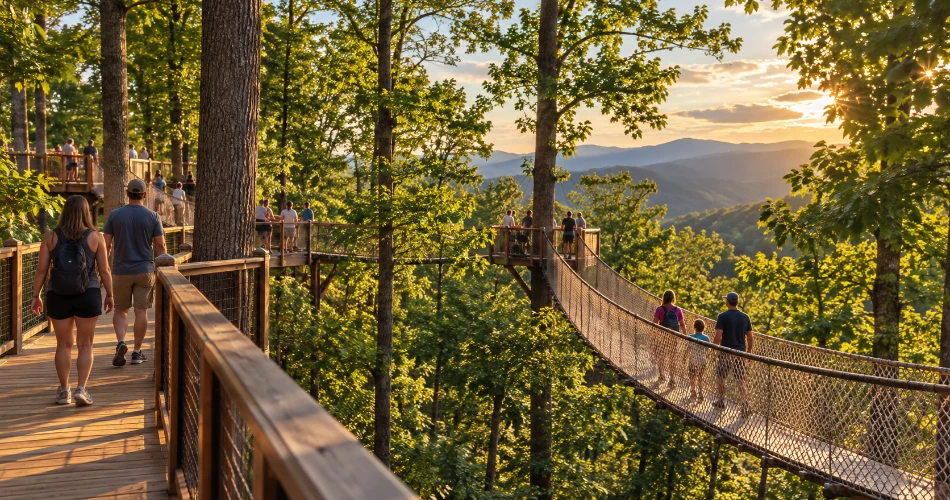
The Treetop Skywalk is an obvious repeat attraction because it puts visitors among the forest canopy rather than simply above it. Anakeesta lists more than 1,000 feet of walkway across 16 hanging bridges, with sections elevated roughly 50 to 60 feet above the ground. AnaVista Tower provides the broader panorama, including marked mountain peaks and 360-degree views from the top.
The experience has also changed in 2026. The upgraded Treetop Skywalk, reworked Firefly Village, and the newer high-capacity lift system have opened as part of the park's current expansion.
Returning visitors do not need to chase every ride. Vista Gardens, a slow walk through the canopy, and a long mountain-view break can justify the trip on their own.
Save an Afternoon for the Arts & Crafts Community
The Great Smoky Arts & Crafts Community deserves its own afternoon because trying to squeeze it between downtown attractions misses the point. The community follows an eight-mile loop in the Glades and Buckhorn Road area and brings together more than 80 artists and craftspeople working in media that include pottery, woodworking, painting, leather, glass, textiles, jewelry, and metalwork.
This is one of the few things to do in Gatlinburg where the experience improves when very little is scheduled. A traveler might stop because a pottery sign looks interesting, watch an artisan at work, then spend considerably longer than expected discussing glaze, carving, or how a particular piece was made. The next studio may be completely different.
The loop also gives returning visitors a reason to leave the Parkway without immediately entering the national park. Traffic feels different, buildings become more spread out, and individual studios have room to breathe.
The Yellow Route of the Gatlinburg Trolley serves the Arts & Crafts Community during specified parts of the year, but its schedule varies seasonally, so anyone relying on it should check the current timetable first.

Make Newfound Gap and Kuwohi a Weather-Dependent Plan
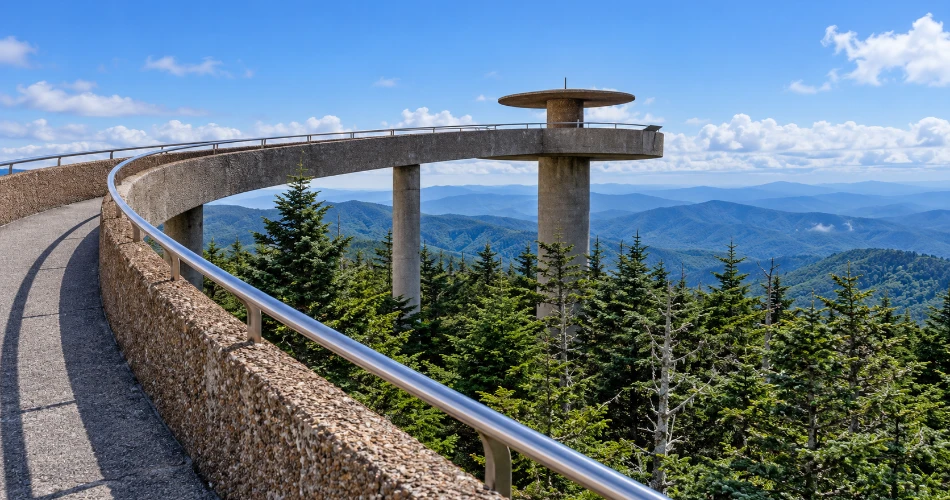
Some Gatlinburg attractions work regardless of clouds. The high country is not one of them, and that is part of its appeal. Newfound Gap Road climbs away from Gatlinburg through changing forest zones toward the state-line ridge, where views depend heavily on cloud level, visibility, and mountain weather. The road is generally open year-round, weather permitting.
From Newfound Gap, Kuwohi Road continues seven miles toward the park's highest peak. Kuwohi, formerly known as Clingmans Dome, is the tallest point in Great Smoky Mountains National Park. The visitor center and observation-tower area sit at the end of the seasonal road, which is scheduled to operate from April 1 through November 29 in 2026, subject to hazardous-weather closures.
Parking demand can exceed capacity at busy times, and the National Park Service specifically recommends having an alternative destination in mind.
That makes this one stop travelers should not force. When the forecast is clear, it can become the day's main outing. When clouds close in, Sugarlands, a lower-elevation trail, or downtown Gatlinburg may be a better use of time.
End the Day Back on the Parkway
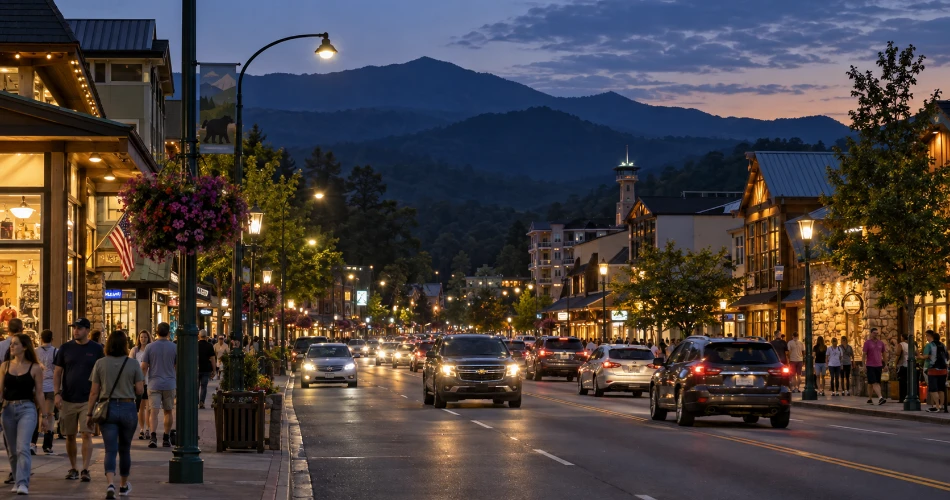
The Parkway becomes easier to appreciate after spending part of the day away from it. In late afternoon and early evening, the hard midday light fades, storefronts begin to glow, and the forested ridges behind downtown turn progressively darker. It is an ideal time for a final walk without another major attraction attached to it.
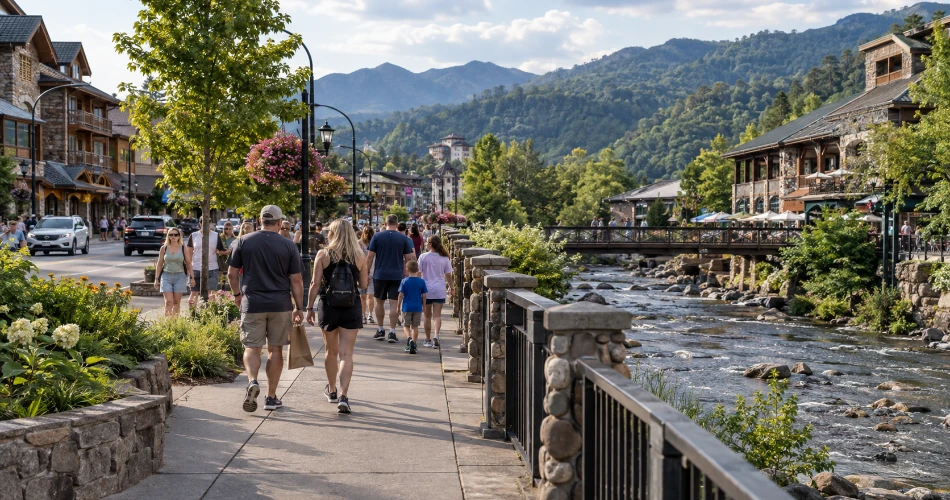
This is where downtown Gatlinburg works best for repeat visitors. Someone might stop for dessert, sit near the Little Pigeon River, revisit The Village, or simply walk a few blocks and watch the town change from daytime sightseeing to evening activity. There is no need to fill the final hour with a ticketed experience.
Travelers who parked farther from the center can also use the free trolley rather than returning to the car immediately. Service operates throughout the year, although schedules differ by season and route.
A little unplanned time also leaves room for weather to shape the evening. If the sky stays clear, one last elevated view may be tempting. If rain moves in, downtown still has plenty happening under cover.
The Kind of Gatlinburg Day Worth Repeating
A return trip to Gatlinburg does not need a longer list than the first one. It usually needs a shorter one. The places worth making time for again are the stops that allow the town and mountains to feel different from one hour to the next: a wooded trail behind Sugarlands, sharks moving over a glass tunnel, a quiet fountain courtyard, a chairlift rising above the rooftops, or an artisan turning clay while the afternoon slips away.
That mix is what keeps Gatlinburg sightseeing from becoming repetitive. Great Smoky Mountains National Park can take the morning, downtown Gatlinburg can fill a rainy afternoon, and a mountaintop attraction can be saved for the clearest stretch of weather. Travelers do not have to choose between nature and the busy side of town; the two sit close enough to share the same day.
The practical part is equally simple. Check park alerts, secure a parking tag when needed, watch the weather before committing to high-elevation plans, and leave enough empty space in the schedule for one stop to run long. Gatlinburg is often better when that happens.
Next post Where to Go in Gatlinburg When You Need a Change of Pace
Previous Post What a Few Days in Gatlinburg Can Look Like
About Author