English

 Home
Home Hotels
  Car Rental
 Rewards
 Travel Guide
What to See Around Gatlinburg When You Want Something Different

Gatlinburg becomes much more interesting once a traveler stops treating the Parkway as the center of every day. The big viewpoints, mountain attractions, and popular waterfall trails have their place, but returning visitors often reach a point where they want something less obvious. That is when the roads east of town, old park communities, working studios, quiet river valleys, and overlooked historic sites start making sense.
Some of the best things to do around Gatlinburg require no complicated itinerary. A morning can be spent watching a potter work in the Arts and Crafts Community, walking beside a river at Elkmont, or following an old road into Greenbrier. Another day can lead across the mountains toward Oconaluftee or away from the busiest park roads toward Cosby. Even a scenic drive feels different when the destination is not a ticketed attraction.
Great Smoky Mountains National Park covers more than 522,000 acres across Tennessee and North Carolina, which explains why visitors who repeatedly follow the same two or three roads see only a fraction of it. These quieter stops provide a better sense of how broad the Gatlinburg area really is.
The Arts and Crafts Community Is Worth More Than a Quick Drive Through
The Arts and Crafts Community is one of the easiest ways to make a Gatlinburg day feel different without traveling far. From downtown, the community begins roughly three miles east along Highway 321 and follows an eight-mile loop using Glades Road, Buckhorn Road, and the East Parkway. The local artisan organization describes more than 80 participating artists and craftspeople, with work ranging from pottery and woodworking to glass, leather, textiles, jewelry, painting, and traditional crafts.
The mistake is treating the loop like a scenic drive that can be finished without stopping. Its character is inside the studios. Visitors may see shelves of freshly fired mugs, woodworkers shaping practical pieces, painters working in small galleries, or potters throwing clay on a wheel. Some members also offer hands-on workshops, although schedules differ by studio.
A better visit leaves two or three hours open and chooses a few crafts that genuinely interest the traveler. There is no need to visit every shop. The pleasure comes from slowing down, talking with working makers when they are available, and seeing Gatlinburg as a place where Appalachian craft traditions continue alongside its tourism industry.

Greenbrier Shows How Quiet the Smokies Can Feel Close to Town
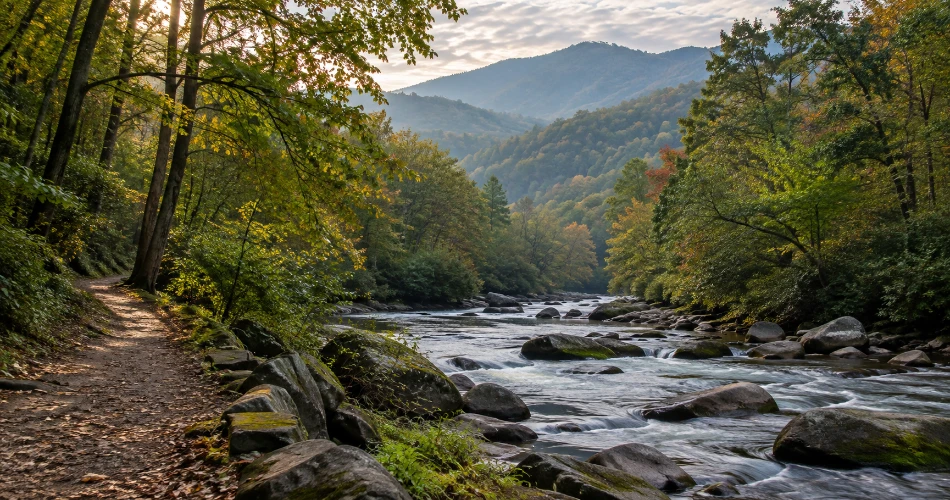
Greenbrier is useful for travelers who want forest and moving water without building the entire day around one famous viewpoint. The area lies east of Gatlinburg, and Porters Creek Trail begins within this part of Great Smoky Mountains National Park. The National Park Service specifically notes Porters Creek as an excellent spring wildflower walk, with strong displays typically appearing from late March through April along roughly the first 1.5 miles.
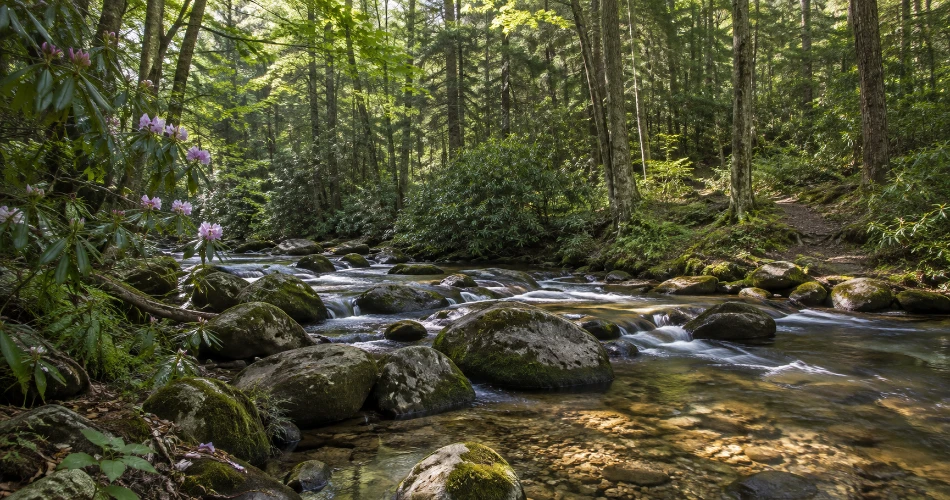
The appeal lasts well beyond wildflower season. Porters Creek follows an old road through a rich hardwood forest where moss-covered stones, stream sounds, old walls, and dense vegetation give the walk more atmosphere than spectacle. This is a trail where turning around early does not feel like missing the point. A traveler who only wants an hour outside can simply walk until the forest settles into its rhythm and then retrace the route.
Greenbrier also works well because it does not demand a full-day commitment. It can be paired naturally with the eastern side of Gatlinburg or the Arts and Crafts Community. As with every park stop, current road and trail conditions should be checked before leaving town, particularly after storms or periods of maintenance.
Elkmont Is Where a Forest Walk Starts Telling a Human Story
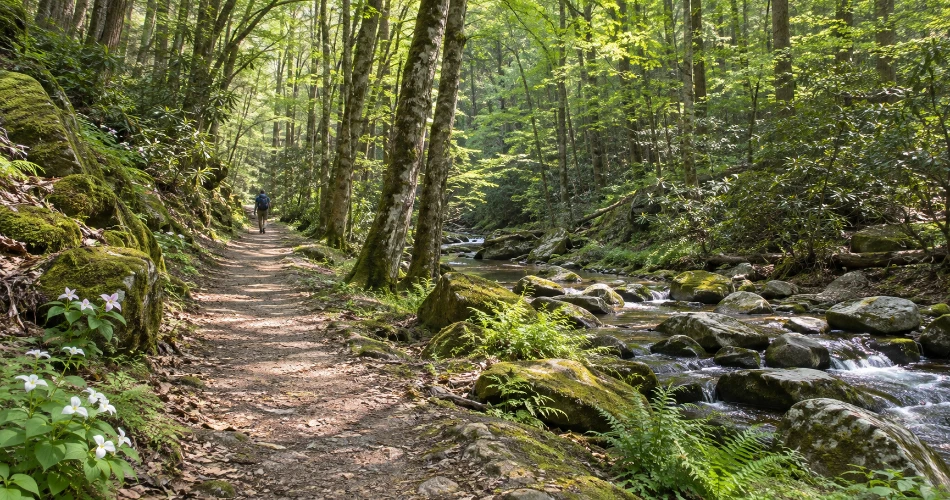
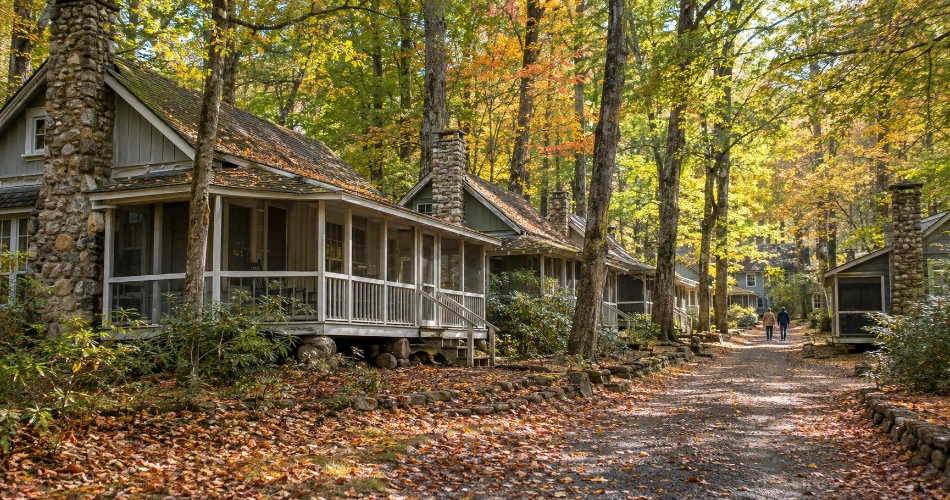
Elkmont feels different because the landscape makes more sense once its human history is noticed. Visitors encounter the remains and preserved structures of a former mountain resort community, including the Daisytown area, before reaching some of the park's most pleasant riverside walking. The National Park Service's Little River Trail follows what was once a railroad bed and passes historic traces such as old stone chimneys and foundations associated with the former community.
The complete Little River Trail is 12.4 miles round trip, but there is little reason for a casual visitor to treat that figure as a target. Its broad opening section has relatively gentle terrain and follows the Little River, making a shorter out-and-back walk one of the most adaptable Gatlinburg hiking trails for travelers who want scenery without turning the outing into an endurance test. Spring visitors can also find good wildflower viewing along the first two miles.
Time should be left for Daisytown rather than driving straight to the trailhead. Seeing preserved cottages among tall trees makes the transition from early tourism community to national park especially tangible.
Metcalf Bottoms Leads to a Small Piece of Mountain History
Metcalf Bottoms is easy to overlook because its first impression is simply a peaceful picnic area beside the Little River. Staying longer reveals one of the more satisfying combinations of scenery and cultural history on the Tennessee side of the park.
From Metcalf Bottoms, visitors can walk toward Little Greenbrier School. The National Park Service identifies the one-room log building as an 1881 structure made from tulip poplar logs that served as both a school and a gathering place for the surrounding community. It can be reached by road during appropriate seasons or by hiking the Metcalf Bottoms Trail.
Travelers willing to continue can follow Little Brier Gap Trail toward the Walker Sisters homestead. The NPS describes the schoolhouse as roughly a half-mile walk from the Metcalf Bottoms area, followed by about another mile toward the Walker home.
This is not a place improved by rushing. The old school, cemetery, forest road, and homestead make more sense when visitors allow time to imagine the isolated farming community that existed before park boundaries changed life in these mountains.

Cosby Feels Like a Different National Park
Cosby is one of the strongest Gatlinburg hidden gems for visitors willing to drive farther east. The National Park Service calls it a less-traveled section on the northeastern edge of Great Smoky Mountains National Park and highlights Cosby Creek, hardwood forest, spring wildflowers, historic cemeteries, fall foliage, and old-growth forest. Sugarlands Visitor Center is about a 45-minute drive from the Cosby area, so this works better as a deliberate half-day outing than an accidental detour.
For a simple visit, there is no requirement to chase a major trail objective. A picnic near Cosby Creek and a forest walk can be enough. Hikers wanting something more substantial can use Gabes Mountain Trail to reach Hen Wallow Falls. The current NPS listing describes the waterfall as approximately 90 feet high and places it on a 4.3-mile round-trip hike through forest containing hemlock and rhododendron.
The final approach to the falls deserves care, particularly when rocks and roots are wet. Cosby's real advantage, though, is broader than one waterfall: the area feels removed from Gatlinburg's traffic pattern and gives repeat visitors another starting point for understanding the Smokies.
Foothills Parkway Is Better When Nobody Is Trying to Get Anywhere Fast
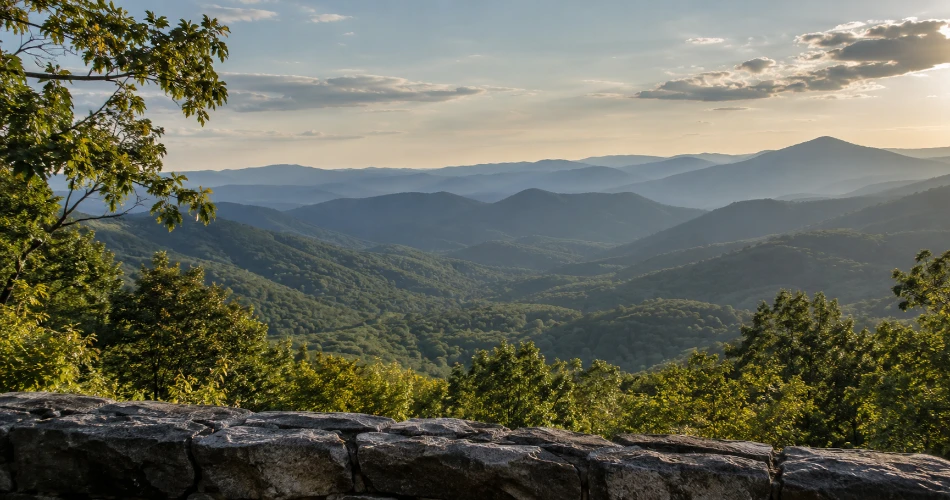
Among scenic drives near Gatlinburg, Foothills Parkway works particularly well for travelers who have already driven Newfound Gap Road or sat through a crowded loop elsewhere in the park. The National Park Service specifically recommends it as a less-crowded auto-touring alternative and notes that both the eastern and western sections provide broad views of the Smokies and surrounding landscape.
The drive should not be treated like a shortcut. Its whole purpose is to stop. Overlooks open toward long layers of ridges, and changing elevation continually alters how the mountains appear. Foothills Parkway East runs between the Cosby area and Interstate 40, while the western section includes the stretch between Wears Valley and Walland.
A good plan is refreshingly short:
- Pick one section instead of trying to cover everything.
- Stop at several legal overlooks rather than photographing from the roadside.
- Allow extra time around sunrise or late afternoon when ridgelines gain more depth.
Weather matters. Clouds can completely erase a distant view, but they can also create some of the most characteristic Smoky Mountain scenes.
Oconaluftee Makes the Trip Across the Mountains Feel Worthwhile
Crossing Newfound Gap Road into North Carolina changes the character of the day. Oconaluftee sits near Cherokee on the southern side of the national park and combines a broad river valley, cultural history, walking opportunities, and one of the park's main elk areas. That combination makes it a useful destination for someone who wants more than another overlook.
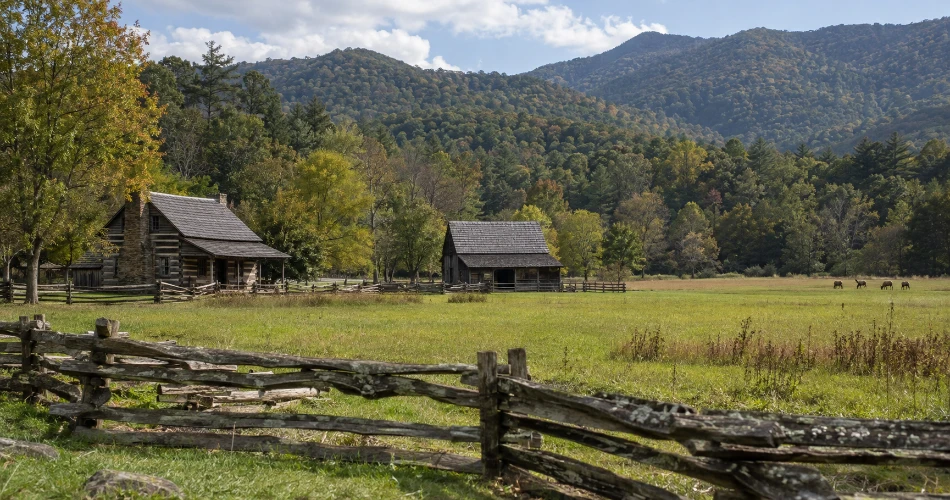
The Mountain Farm Museum beside the visitor center contains historic log structures including a farmhouse, barn, smokehouse, apple house, and corn crib. Instead of presenting mountain life through a single preserved cabin, the grouping helps visitors understand how several buildings functioned together on a working farm.
Wildlife should remain a bonus rather than the reason for approaching too closely. Elk use the Oconaluftee valley, but animals need distance and should never be crowded for photographs. A small, faraway group in a field is a much more realistic experience than the dramatic close encounters often presented online.
One current detail is worth knowing: Mingus Mill, another historic site near Oconaluftee, is presently listed by the NPS as temporarily closed for rehabilitation.
A Different Gatlinburg Day Works Better With Less on the Schedule
Trying to combine every location in this guide would defeat its purpose. These stops work because they give travelers time to notice small details: the sound of Porters Creek, hand-thrown pottery still sitting beside a kiln, old stonework beside Little River Trail, or the way distant ridges disappear into haze along Foothills Parkway.
A practical day usually needs one main area and one nearby secondary stop. Greenbrier pairs naturally with the Arts and Crafts Community. Elkmont can be combined with Metcalf Bottoms when neither is treated as a long hiking day. Cosby makes sense with Foothills Parkway East. Oconaluftee deserves its own cross-mountain outing, especially when Newfound Gap Road traffic or weather slows the drive.
Visitors entering Great Smoky Mountains National Park should also remember that there is no general park entrance fee, but a parking tag is required when a vehicle is parked for longer than 15 minutes.
Road, trail, and weather conditions should be checked on the day of the trip. In mountain country, a simple road closure can change the most carefully planned itinerary.
The Best Gatlinburg Days Usually Leave Room for a Detour
Gatlinburg does not run out of things to see after the obvious attractions have been checked off. It simply asks travelers to widen the radius. A few miles east brings working artists and Greenbrier's forest roads. Elkmont adds riverside walking and traces of early mountain tourism. Metcalf Bottoms connects an ordinary picnic stop to a schoolhouse and family history. Cosby opens another side of the national park almost entirely, while Foothills Parkway proves that a drive can be the day's main event rather than transportation between attractions.
That variety is what makes returning to Gatlinburg worthwhile. The town sits beside a national park large enough to support many completely different kinds of days, and the best ones do not always involve the most famous name on the map.
For a first-time visitor, one of these quieter stops can add balance between major attractions. For someone returning for the third or fourth trip, they can change the whole impression of the destination. The useful strategy is simple: choose fewer places, begin before the busiest part of the day when possible, and leave enough room for an unplanned road, trail, studio, or riverside stop to earn more time than expected.
Next post Where to Go When Downtown Gatlinburg Starts Feeling Too Busy
Previous Post The Gatlinburg Stops That Are Worth Getting Out of the Car For
About Author