English

 Home
Home Hotels
  Car Rental
 Rewards
 Travel Guide
Where to Go When Downtown Gatlinburg Starts Feeling Too Busy

There is usually a moment on a busy Gatlinburg day when the mood changes. The morning may begin pleasantly enough with coffee, a walk along the Parkway, and plenty of room to stop when something looks interesting. Then lunchtime approaches. Sidewalks fill. Cars stack up at traffic lights. Attraction entrances become small crowds of their own, and a simple decision about where to eat can suddenly involve a surprising amount of patience.
Experienced visitors learn not to fight that part of Gatlinburg.
The better move is often to leave downtown for a few hours.
That sounds more complicated than it is. Great Smoky Mountains National Park begins immediately beside town, and several worthwhile places require only a short change of direction rather than a full day of driving. A riverside trail connects Gatlinburg with Sugarlands. A narrow mountain road climbs into the forest above town. Greenbrier follows a rocky river east of Gatlinburg, while Cosby provides a much deeper break from the Parkway. Travelers who do not want hiking boots can head toward working pottery studios, galleries, and workshops in the Arts and Crafts Community instead.
These are not imaginary “secret spots.” Some become busy themselves, particularly on fall weekends. Great Smoky Mountains National Park is currently warning visitors that popular destinations can experience heavy traffic and limited parking during high-volume periods.
What makes these quiet places in Gatlinburg valuable is the contrast. They give the day somewhere else to go when downtown stops being enjoyable.
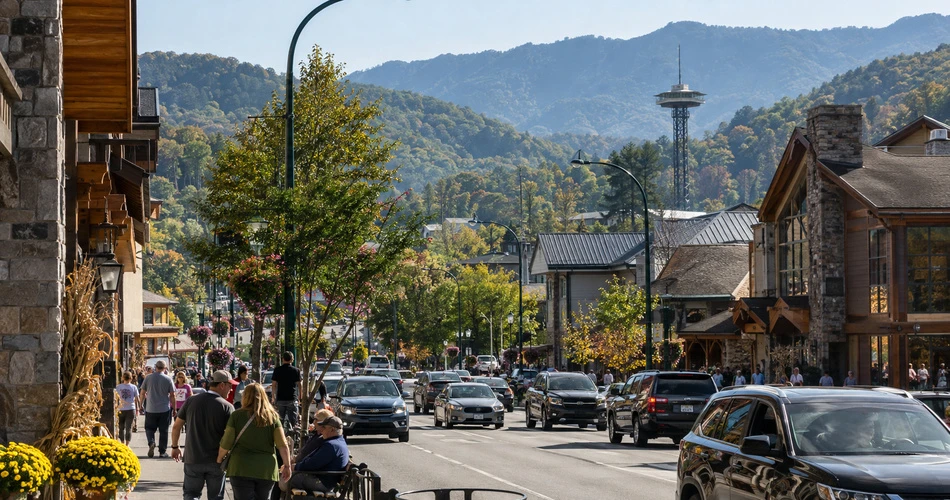
Walk the Gatlinburg Trail Before Reaching for the Car
The easiest escape is also one of the most overlooked because visitors often assume they need to drive deeper into the Smokies before the scenery changes. The Gatlinburg Trail proves otherwise.
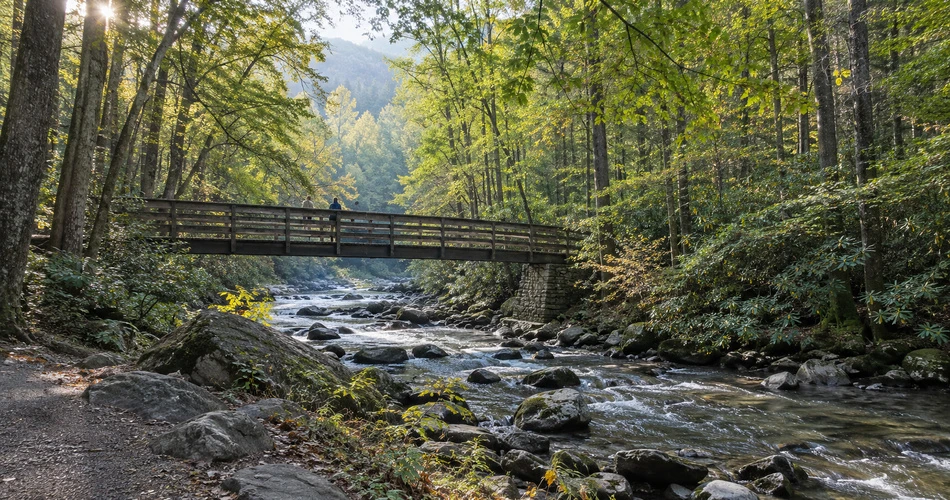
The trail connects the Gatlinburg side of the park with the Sugarlands area and runs for roughly two miles one way. Once the pavement and buildings begin dropping behind, the walk settles alongside the West Prong of the Little Pigeon River. There are wooded stretches, river views, old homesite remnants, and a pedestrian bridge that feels surprisingly removed from the Parkway considering how close town still is.
It is particularly good for a group that is not looking for a serious hike. Nobody has to complete the entire route. Walking until downtown noise has disappeared, lingering beside the river, and then turning around can make a perfectly good hour.
There is another useful distinction. The Gatlinburg Trail and Oconaluftee River Trail are the only two park trails where leashed pets are permitted, while bicycles are also allowed on the Gatlinburg Trail. The official park distance is 1.9 miles one way.
For travelers searching for things to do outside downtown Gatlinburg without surrendering half the day to driving, this should usually be the first option considered.
Sugarlands Is the Right Reset When Nobody Wants a Big Hike
Sugarlands sits only about two miles south of Gatlinburg on Newfound Gap Road, yet reaching it changes the rhythm of the day remarkably quickly. Storefronts disappear, mountains close in around the road, and the national park begins to feel like the main event rather than the backdrop behind town.
The visitor center makes a sensible first stop because this is where a group can check current trail and road conditions before committing to a longer outing. That matters in the Smokies. Weather, fallen trees, maintenance, seasonal road schedules, and temporary closures can change an otherwise straightforward plan. The park itself remains open year-round, but roads and individual facilities can be affected by conditions.
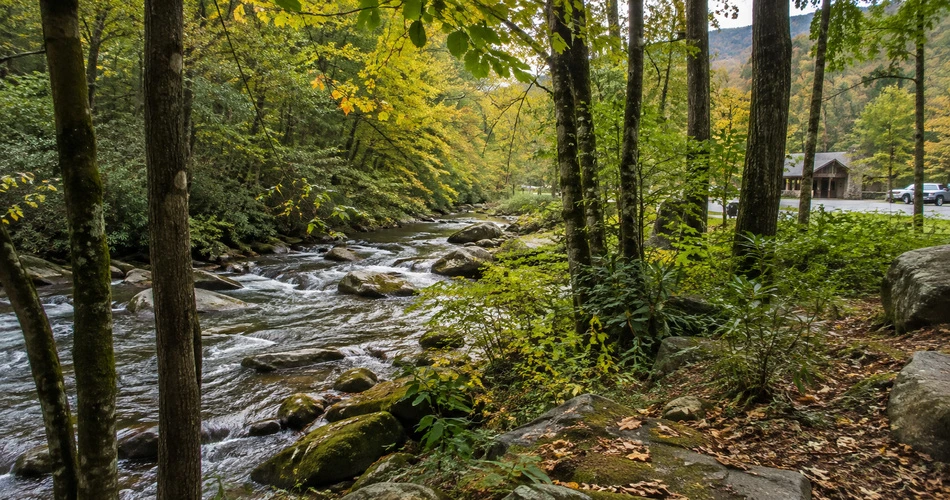
Sugarlands is particularly useful for mixed groups. One person may want a waterfall, another may only want twenty minutes under the trees, and somebody else may be perfectly happy sitting near the river. There is enough here to give everyone a taste of the park without turning the afternoon into a demanding hiking day.
It is not a hidden area, and parking can become busy. Its advantage is convenience rather than secrecy.
Cataract Falls Makes Sense When There Is Only an Hour to Spare
Cataract Falls is one of those stops that becomes more useful once expectations are set correctly. Nobody should drive to Sugarlands imagining a huge backcountry waterfall reached after an epic hike. That is not what this outing is.
Instead, the route offers a short forest walk from the Sugarlands area to a roughly 40-foot waterfall. The National Park Service lists the forested Cataract Falls route at about 0.7 mile and estimates roughly 30 minutes to an hour for the outing. The path follows Fighting Creek, crosses a footbridge, and passes tree-identification markers before reaching the falls.
That modest scale is exactly why it works on a crowded Gatlinburg afternoon. A family can leave the Parkway, spend some time among tulip poplars and streamside vegetation, see an actual Smokies waterfall, and still have plenty of day remaining.
Water volume changes with recent rainfall, so visitors should not expect identical conditions every time. More importantly, the waterfall is best enjoyed from the established viewing area rather than by scrambling around wet rock.
For first-time visitors with limited time, this is one of the easiest natural additions to a Gatlinburg itinerary.

The Sugarlands Valley Nature Trail Is Better for a Slow Half Hour
Not everyone escaping downtown wants another attraction disguised as exercise. Sometimes the best answer is simply a level path, moving water, shade, and enough time to walk without checking a phone every few minutes.
The Sugarlands Valley Nature Trail provides exactly that kind of stop. The National Park Service lists it as a paved, half-mile ADA-accessible loop. That makes it especially useful for families with different mobility levels or travelers who have already spent much of the day on their feet downtown.
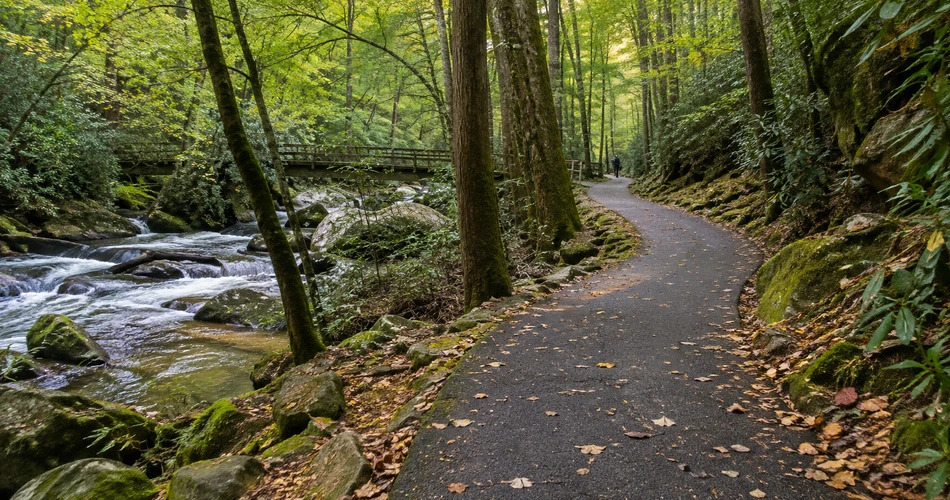
The scenery is deliberately subtle. There is no dramatic summit waiting at the end. Instead, the path moves through cove hardwood forest near the West Prong, where tree trunks, moss, changing leaves, creek sounds, and old traces of human settlement become the point of the walk.
That difference matters. Gatlinburg's busiest attractions constantly ask visitors to look at something. This trail gives them permission to stop doing that.
It also pairs naturally with Cataract Falls. Rather than racing toward another major attraction afterward, travelers can give Sugarlands an unhurried hour or two and let the park change the pace of the day properly.
Drive Roaring Fork for the Forest, Not for Speed
The Roaring Fork Motor Nature Trail begins close enough to downtown that it almost feels impossible for the surroundings to change this much this quickly.
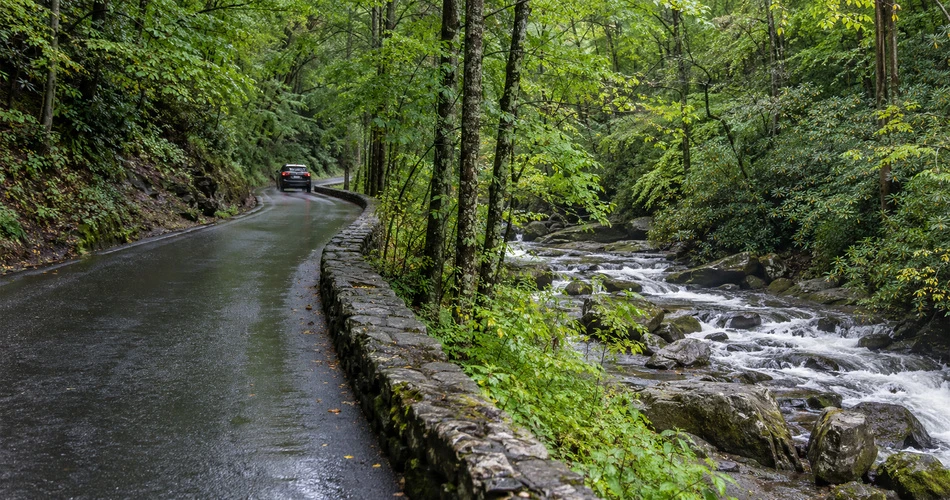
The route is a 5.5-mile one-way mountain road through thick forest above Gatlinburg. It passes rushing water, historic structures, trailheads, and sections where trees seem to close almost completely around the pavement. The road is narrow and deliberately slow. Anyone hoping to make good time has chosen the wrong drive.
That is precisely the attraction.
The Noah “Bud” Ogle homestead area appears on the approach, while farther along the route visitors can reach the Trillium Gap Trailhead for Grotto Falls. Near the later part of the drive, Place of a Thousand Drips spills over roadside rock and becomes particularly noticeable after wet weather. Parking near popular trailheads can be extremely limited; NPS specifically warns that demand often exceeds capacity.
There is also a seasonal limitation worth planning around. For 2026, Roaring Fork Motor Nature Trail is scheduled to remain open to vehicles from April 17 through November 29, weather permitting. The road is one-way and steep, and motorhomes, buses, vans longer than 25 feet, and vehicles towing trailers are prohibited.
Roaring Fork is not the place to promise solitude on an October weekend. It is still worth doing, but early morning or later afternoon makes far more sense than joining the middle-of-the-day traffic wave.
Greenbrier Is Where the River Starts Running the Day
When downtown feels genuinely exhausting rather than merely busy, Greenbrier Gatlinburg gives the afternoon more room.
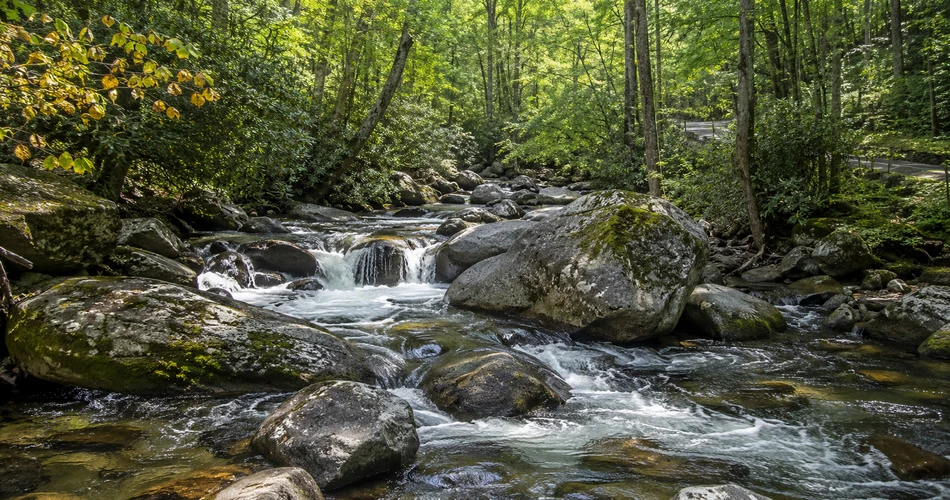
The road east of Gatlinburg eventually turns toward the Greenbrier section of Great Smoky Mountains National Park, where the setting becomes centered on water and forest instead of attractions. This part of the park follows the Middle Prong of the Little Pigeon River through a heavily wooded valley. The drive itself is part of the experience because the river keeps appearing between trees and through gaps beside the road.
Greenbrier works best for travelers willing to stop trying to “complete” the day.
A picnic beside the trees, an easy walk, or half an hour spent listening to water moving over boulders can be enough. The Greenbrier picnic area is currently listed among the park's year-round picnic areas, although temporary conditions can still affect access.
This is also where practical judgment matters. The National Park Service warns that large vehicles face restrictions on Greenbrier Road beyond the ranger station, so visitors should check current conditions and vehicle guidance rather than treating every park road like a normal highway.
Greenbrier is particularly good for returning visitors who have already done the biggest Gatlinburg attractions. It feels less like adding another stop and more like allowing the day to stretch out.
Spend an Afternoon With Makers Instead of Another Attraction Line
There are days when the problem is not downtown itself. The problem is that nobody in the group wants another hike.
That is where the Gatlinburg Arts and Crafts Community earns its place in this list.
The community dates to 1937 and follows an eight-mile loop through the Glades area. Gatlinburg's official tourism organization currently describes more than 100 artists and craftspeople associated with the area, with pottery, woodwork, painting, leatherwork, weaving, jewelry, and other forms represented.
The best way to experience it is not to treat the loop as another checklist. Picking three or four working studios and giving each some time produces a much better afternoon. A pottery shop makes more sense when visitors can see clay on the wheel, tools beside a workbench, shelves of finished mugs, and the person actually doing the work. The same applies to woodcarving, weaving, painting, or leatherwork.
It also gives returning travelers something downtown cannot quite provide: conversations with people making objects rather than selling another packaged attraction.
Some studios keep their own hours, so checking individual businesses before making a special trip is sensible.
For anyone wanting quiet places in Gatlinburg without disappearing into the forest, this may be the most underrated change of pace.

Go to Cosby When a Short Escape Is No Longer Enough
Cosby Tennessee requires more commitment, and that is exactly why it belongs here.
This is not the place to squeeze between lunch and an evening reservation downtown. Cosby sits in the northeastern part of Great Smoky Mountains National Park, far enough from central Gatlinburg that the drive itself separates the visitor from the busiest tourism corridor.
The reward is a different kind of Smokies day.
Cosby Creek runs through shaded forest, picnic areas offer an easy place to slow down, and trail access opens up options for travelers who want to spend several hours outside. This side of the park is particularly suited to people who have already seen the big-name Gatlinburg stops and now want the mountains to take over the schedule.
It should also be approached realistically. Cosby Campground operates seasonally, while park conditions, facilities, and roads should always be checked before departure.
Cosby makes the most sense when a visitor reaches the point where returning to another crowded downtown block simply does not sound appealing. There are no neon signs waiting around the bend and no need to rush from one attraction to another.
For a half-day reset, that absence becomes the attraction.
A Better Gatlinburg Day Is Often About Timing, Not Secret Places
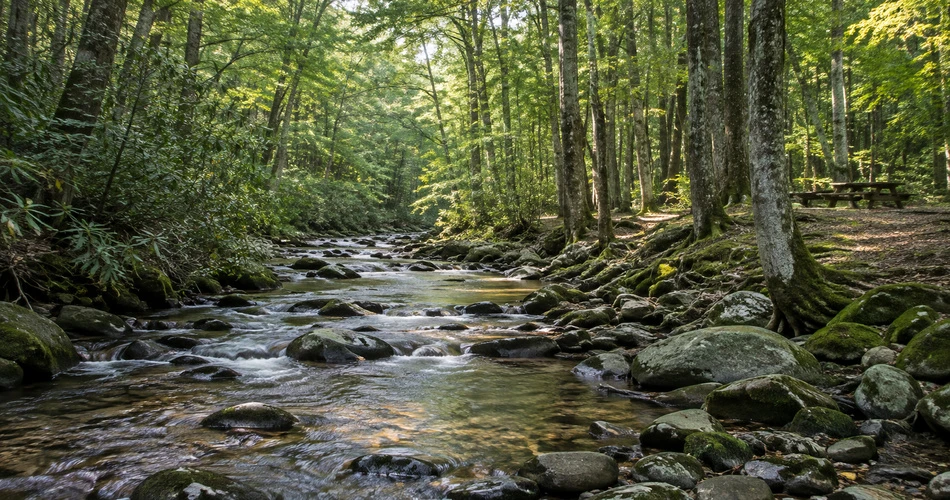
Travelers sometimes spend too much effort searching for an uncrowded place when changing the time of day would solve half the problem.
The National Park Service's 2026 traffic guidance makes that especially clear. Its congestion forecasting system warns that some days bring full parking areas across major destinations, and current fall guidance specifically advises starting earlier in the morning or later in the afternoon when popular areas are busy.
A sensible Gatlinburg rhythm looks less like a checklist and more like this:
- Use the Gatlinburg Trail when only an hour or two is available.
- Choose Sugarlands when the group wants easy nature without committing to a difficult hike.
- Drive Roaring Fork early or later in the day rather than assuming it will be quiet at noon.
- Save Greenbrier or Cosby for the moments when a real break from town sounds better than another attraction.
- Use the Arts and Crafts Community when the group wants a slower afternoon without spending it entirely outdoors.
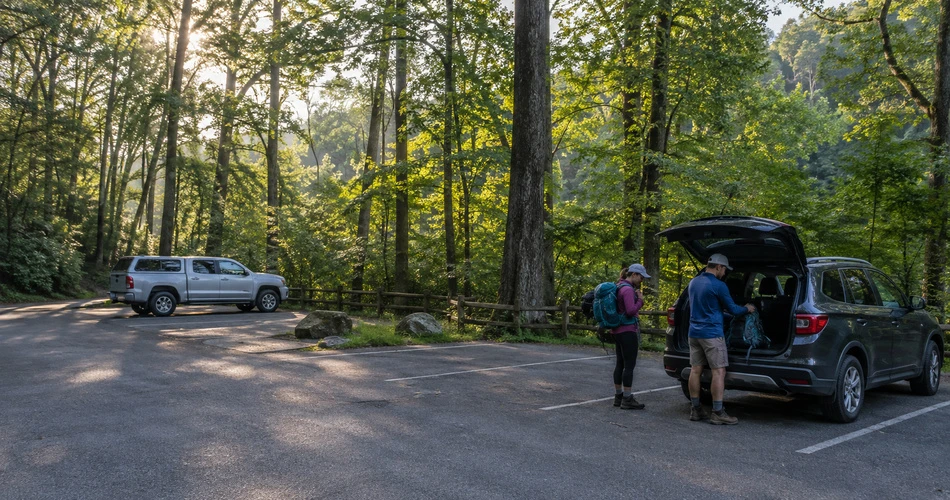
One practical detail should never be forgotten. Great Smoky Mountains National Park does not charge an entrance fee, but a parking tag is required for vehicles parked for more than 15 minutes. Purchasing a tag also does not guarantee a parking space.
Checking current park conditions before leaving Gatlinburg is one of the easiest ways to avoid turning a quiet escape into another traffic jam.
Come Back Downtown When It Feels Fun Again
Leaving downtown for a few hours is not an argument against downtown Gatlinburg. In fact, the break often makes the Parkway better.
After time beside the river in Greenbrier, an easy Sugarlands walk, or a slow afternoon watching a potter work in the Glades, the lights and energy of town can feel entertaining again instead of overwhelming. Dinner sounds better. An evening walk makes sense. The crowd becomes part of the atmosphere rather than something that has been endured since breakfast.
That balance is what first-time visitors sometimes miss.
Gatlinburg does not need to be experienced as either a busy attraction town or a gateway to the Great Smoky Mountains. It works best as both. The Gatlinburg Trail can fill one quiet hour. Cataract Falls and Sugarlands can take an easy morning. Roaring Fork Motor Nature Trail can become a slow forest drive. Greenbrier Gatlinburg can occupy an afternoon beside moving water, while Cosby Tennessee can take travelers far enough away to make the whole day feel different.
There is no prize for staying on the Parkway after everyone has stopped enjoying it.
When downtown gets too busy, the smarter move is simple: follow the river, take the forest road, watch somebody make something by hand, or drive far enough for the mountains to become the loudest part of the day.
Then come back when Gatlinburg feels fun again.
Next post The Mountain Stops Around Gatlinburg That Deserve More Time
Previous Post What to See Around Gatlinburg When You Want Something Different
About Author