English

 Home
Home Hotels
  Car Rental
 Rewards
 Travel Guide
The Places Around Gatlinburg That Are Worth Slowing Down For

Gatlinburg makes it unusually easy to move too fast. A visitor can leave downtown, reach the edge of Great Smoky Mountains National Park within minutes, stop at an overlook, photograph a waterfall, drive a mountain road, and be back among the Parkway crowds before lunch. That sounds efficient, but efficiency is not always the best way to understand this part of Tennessee.
Many of the most rewarding Gatlinburg scenic stops are not impressive because they contain a single famous landmark. They work because of the smaller details that become noticeable after the car is switched off: water moving over boulders, changing forest types as elevation increases, old stone foundations disappearing beneath moss, or a craftsperson shaping clay several feet from the shelf where the finished work is displayed.
That slower rhythm also makes practical sense. Parking at popular park destinations can fill, mountain weather can change quickly, and secondary roads can close seasonally or temporarily. Great Smoky Mountains National Park itself does not charge an entrance fee, but vehicles parked inside the park for more than 15 minutes generally require a parking tag. A tag does not guarantee a parking space, so flexible plans remain useful

Give Sugarlands More Than a Quick Visitor Center Stop
Sugarlands is only about two miles south of Gatlinburg on Newfound Gap Road, so it is often treated as little more than the place to pick up a map before heading farther into the mountains. That misses much of what makes the area useful. The visitor center has natural-history exhibits, park information, restrooms and staff who can help travelers adjust plans when weather, traffic or road conditions change. Just beyond the building, several Sugarlands trails make it possible to experience the forest without turning the morning into a major hiking commitment.
Cataract Falls is the obvious short walk. The route is roughly 0.7 mile round trip from the visitor center and follows Fighting Creek to a narrow waterfall about 40 feet high. The falls tend to look fuller after substantial rain, but the walk itself is worth taking slowly even when water levels are modest. The forest, bridges and creek are much of the experience. Travelers should remain at the bottom viewing area rather than climbing around the waterfall; the National Park Service specifically warns that people have been seriously injured there.
Nearby, Sugarlands Valley Nature Trail offers a different pace. The paved, half-mile loop passes forest, streamside scenery, historic stone chimneys and old rock walls, and it is the park's ADA-accessible trail.

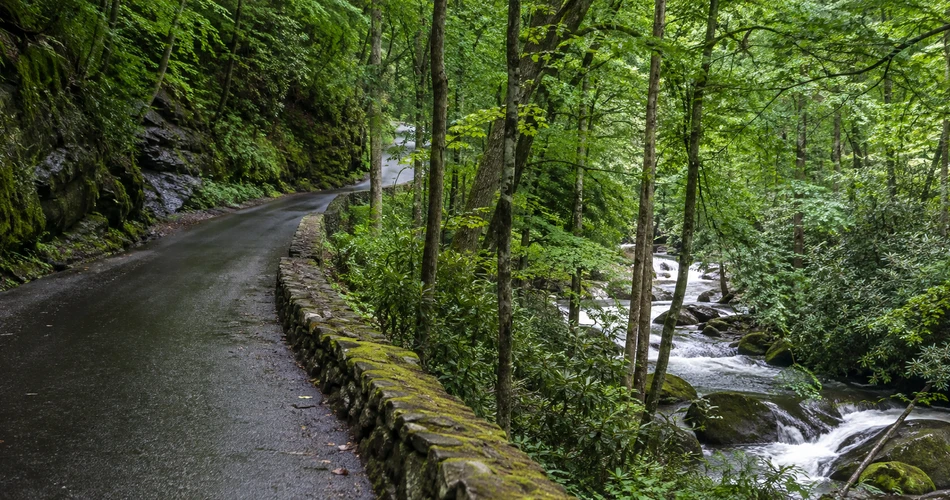
Let the Roaring Fork Drive Take Longer Than the Mileage Suggests
Five and a half miles does not sound like much of a drive. On the Roaring Fork Motor Nature Trail, that number is misleading. The narrow one-way road twists through thick forest beside fast mountain water and historic homesites, and the point is not to measure progress by miles. It is one of those roads where the surroundings make far more sense when a traveler uses the pull-offs and walks around rather than watching everything pass through the windshield.
Old cabins, forest, streams and the roadside Place of a Thousand Drips give the Roaring Fork drive variety without requiring a long hike. After wet weather, the sound of Roaring Fork itself can dominate parts of the route. Those willing to walk farther can use the area for trail access, including the route toward Grotto Falls, though parking at popular trailheads can be extremely limited. The park specifically recommends having an alternative destination when parking is full.
The motor trail is seasonal, and buses, trailers and motor homes are not permitted. Parking tags also cannot be purchased along this road, so anyone planning to stop needs to arrange one beforehand. Those practical details make an early start particularly useful.
This is one place where a hurried itinerary works against the landscape. An hour can become two without the traveler feeling that time was wasted.
Stop Along Newfound Gap Road Instead of Saving Everything for the Top
Newfound Gap Road is often treated as transportation between Gatlinburg and the high country, but it is one of the strongest arguments for not driving straight to a destination. Leaving Sugarlands, the road steadily climbs through changing forest communities toward the crest of the Smokies. The National Park Service uses an especially good comparison: traveling from the park's lower elevations to the highest country passes through ecological changes similar to traveling from Georgia to Maine.
That change is easy to miss when every overlook becomes a two-minute stop. On Newfound Gap Road, the better approach is to choose a few legal pull-offs rather than trying to photograph all of them. Clouds shift rapidly across ridges, valleys appear and disappear in haze, and the temperature can change noticeably with elevation.
Newfound Gap itself sits on the Tennessee-North Carolina divide and also provides access to the Appalachian Trail. Travelers should expect the parking area to be heavily used at popular times; NPS advises that parking demand at major high-elevation destinations can exceed capacity.
A slower drive also makes weather part of the experience rather than an inconvenience. A completely cloudless view is not required for the Smokies to look impressive. Mist moving through the ridges is part of what gives this landscape its character.
Give Kuwohi Time for the Weather to Change
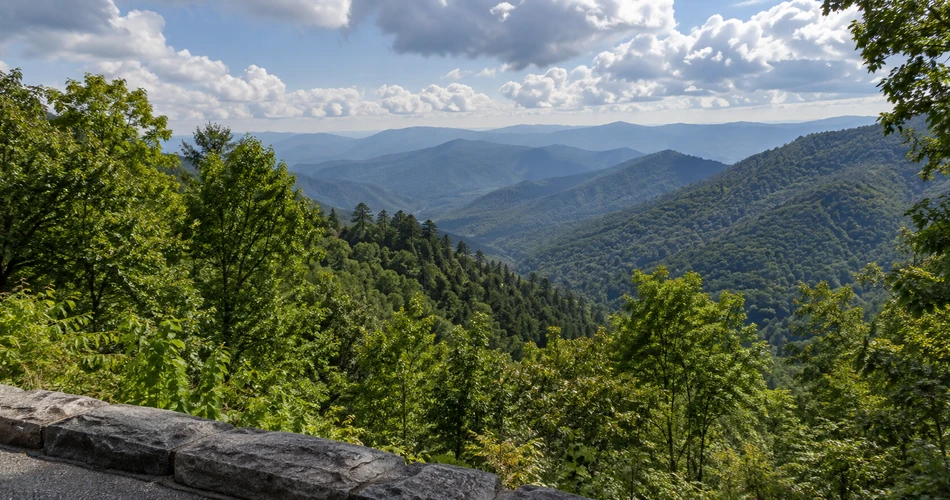
Reaching Kuwohi and immediately leaving because clouds cover the first view is one of the easiest ways to miss the character of the high Smokies. At 6,643 feet, Kuwohi is the highest point in Great Smoky Mountains National Park and the highest point in Tennessee. The observation tower is reached by a paved half-mile climb from the parking area, making the walk one mile round trip, but the pavement should not be mistaken for an effortless stroll. The grade is steep.
The payoff is the chance for broad Kuwohi views across surrounding mountain ridges when conditions cooperate. Weather is highly variable at this elevation, and NPS notes that temperatures can be roughly 10 to 20°F cooler than in surrounding lowlands. Clouds, wind and precipitation are common, even when Gatlinburg feels warm. A light layer can therefore make sense in summer as well as shoulder seasons.
Kuwohi Road itself is seasonal and may close because of snow, ice or other hazardous conditions, so current park alerts should be checked before leaving town.
The best visit is not necessarily the one with a perfect postcard sky. Waiting ten or fifteen minutes can reveal ridges that were completely hidden moments earlier. Watching that change is often more memorable than simply reaching the tower and heading back down.

Walk Into Elkmont Instead of Treating It as Another Trailhead
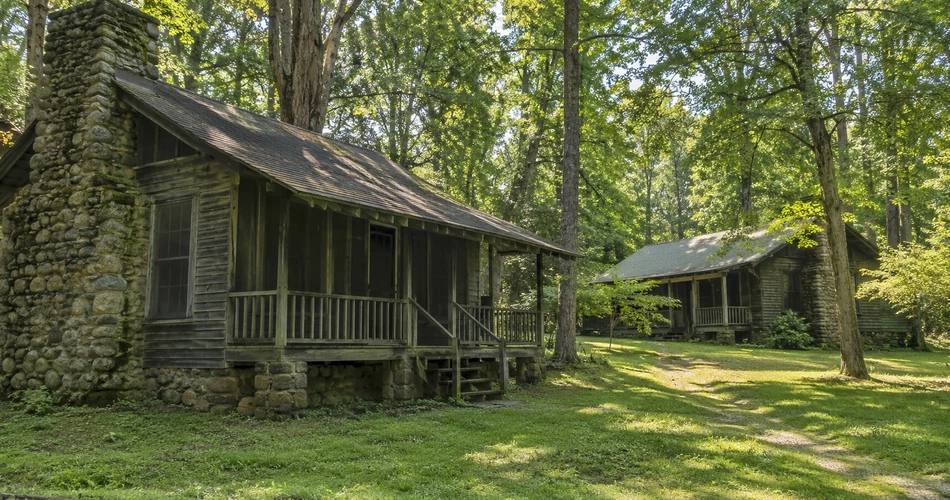
The Elkmont Historic District rewards anyone interested in seeing how human history and forest recovery overlap. Long before the national park existed, the area went through farming, large-scale logging and later resort development. The National Park Service now preserves 18 cabins associated with the Appalachian Club, while trails pass stone walls, old foundations and chimneys from structures that no longer stand.
It is tempting to arrive, photograph one historic building and move on. Walking changes the experience. The beginning of Little River Trail follows a former railroad bed and stays close to the river, with a wide trail and relatively little elevation gain in its early section. The complete trail is much longer, but a visitor does not need to complete a major hike to appreciate the setting. Even a partial out-and-back gives time to notice the old landscape beneath the present forest.
Daisy Town is especially effective when approached as a neighborhood rather than an attraction. The restored and preserved structures make more sense when travelers look at their spacing, the surrounding trees and the relationship to the river and old transport routes.
Elkmont also works well when Gatlinburg feels overly busy because its interest is quieter. There is no single dramatic reveal. The story unfolds gradually through buildings, foundations, water and woods.
Take the Gatlinburg Trail at Walking Speed
The Gatlinburg Trail is easy to overlook precisely because it begins so close to town. It runs for about two miles one way between Gatlinburg and the Sugarlands area, giving travelers a way to move from the edge of town into the park without immediately committing to a mountain climb. The route follows forest and river scenery and includes bridges and remnants connected with earlier settlement in the area. NPS accessibility information lists the trail at two miles one way.
It is also unusual within Great Smoky Mountains National Park because bicycles are permitted on this trail, and it is one of only two park trails where pets may accompany visitors, provided park rules are followed.
The real appeal, however, is how quickly the atmosphere changes. Downtown traffic can still be geographically close while the river and trees begin to dominate the experience. A traveler can walk for half an hour, turn around when ready and still have had a genuine taste of the park.
For visitors trying to balance mountain time with a day in Gatlinburg, this is one of the easiest Gatlinburg scenic stops to fit naturally into the schedule rather than treating it as another major excursion.

Spend Time With the People Behind Gatlinburg Arts and Crafts
Not every worthwhile slow stop needs to be inside the national park. The Great Smoky Arts & Crafts Community provides a different reason to leave the main Parkway. The historic arts district follows an eight-mile loop and includes more than 100 artists and craftspeople working across pottery, woodcarving, painting, basketry, leather, textiles and other media. Gatlinburg's official tourism organization traces the community's formal establishment to 1937.
The mistake is treating Gatlinburg arts and crafts as ordinary souvenir shopping. The more interesting visits are the ones where travelers spend time inside a working studio, notice the tools and unfinished pieces, and ask how an object was made. In a pottery studio, shelves of completed mugs and bowls tell only half the story; watching clay being thrown, trimmed or glazed makes the finished work far more meaningful.
Trying to stop everywhere along the eight-mile route quickly becomes exhausting. Choosing two or three studios that match a genuine interest works better. Pottery, woodwork and traditional fiber arts can each easily justify a longer visit.
This part of Gatlinburg also adds human context to the surrounding Great Smoky Mountains scenery. The landscape has influenced local artistic traditions for generations, and that relationship is easier to understand in a studio than from a gift-shop shelf.

Build a Day With Gaps Instead of Filling Every Hour
Slowing down around Gatlinburg does not require doing less research. It usually requires leaving more space between researched stops. Parking capacity, mountain weather and seasonal roads can change the pace of a day before the first hike begins. NPS specifically advises visitors to carry alternative plans because legal parking at popular areas may be unavailable, and its September 2026 fall-travel guidance warns that destinations including Kuwohi and Roaring Fork can become congested during busy periods.
A practical slow-travel day can follow three simple habits:
- Start one popular mountain area early, then let the rest of the schedule stay flexible rather than booking several tightly timed stops.
- Check official road, trail and weather status before entering the park, especially when using seasonal routes such as Roaring Fork Motor Nature Trail or Kuwohi Road.
- Carry the required parking tag before committing to trailheads where one cannot be purchased, along with water, comfortable walking shoes and an extra layer for higher elevations.
Most importantly, travelers should resist turning every viewpoint into a task. A streamside bench, an unexpected patch of autumn scenery, or fifteen quiet minutes beside an old cabin may end up being remembered longer than another rushed attraction squeezed into the afternoon.
Leave Enough Room for Gatlinburg to Feel Like the Mountains
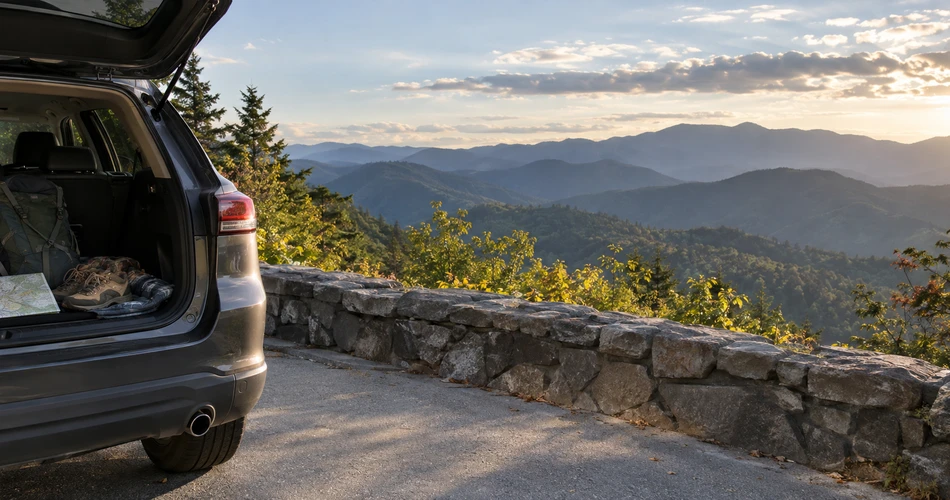
The places around Gatlinburg become more interesting when time stops being the main measurement of a successful day. Sugarlands works better when the visitor center leads to a creekside walk. Roaring Fork becomes more than a scenic road when historic homesites and rushing water are given time. Newfound Gap Road makes more sense when elevation and changing forest are noticed between the viewpoints. Kuwohi is worth waiting through moving clouds. Elkmont rewards walking past the first historic building, while the Gatlinburg Trail proves that quiet forest can begin surprisingly close to town.
Even the arts district follows the same pattern. The experience changes when a traveler watches something being made instead of simply purchasing the finished object.
That is the thread connecting the best Gatlinburg scenic stops: none of them need to be hurried to justify the visit. Great Smoky Mountains National Park is open year-round, but weather, seasonal roads and temporary closures remain part of mountain travel, so current conditions should always shape the day's plan.
A good Gatlinburg itinerary can still include major sights. It just needs enough blank space between them for the road, forest, river or mountain view to occasionally become the reason for stopping.
Next post A Gatlinburg Day Built Around Views, Walks, and Good Stops
Previous Post The Mountain Stops Around Gatlinburg That Deserve More Time
About Author