English


 Home
 Hotels
 Car Rental
 Rewards
 Travel Guide

A Morning in Gatlinburg Before the Town Gets Busy

Gatlinburg before breakfast is almost a different town. The Parkway is still recognizable, but the soundtrack changes. Delivery vehicles replace long lines of sightseeing traffic, sidewalks have room to breathe, and storefront lights are switching on rather than competing with the afternoon crowd. Forested ridges behind the buildings are easier to notice when there is less movement at street level.
That quieter window is worth using well. A Gatlinburg morning does not need a complicated itinerary or a 5 a.m. alarm. It works best when a visitor spends the first couple of hours walking rather than driving: a pass along the Parkway, a turn toward the river, perhaps part of the Gatlinburg Trail, and then a short trip to Sugarlands when the national park becomes the priority.
There is also no need to squeeze three major attractions into the morning. Many of the most satisfying things to do in Gatlinburg at this hour cost nothing and require little planning. The river is already moving, the trails are already open, and Great Smoky Mountains National Park does not need bright signs to make an impression.
An early start simply allows visitors to see the same town from a less hurried angle.
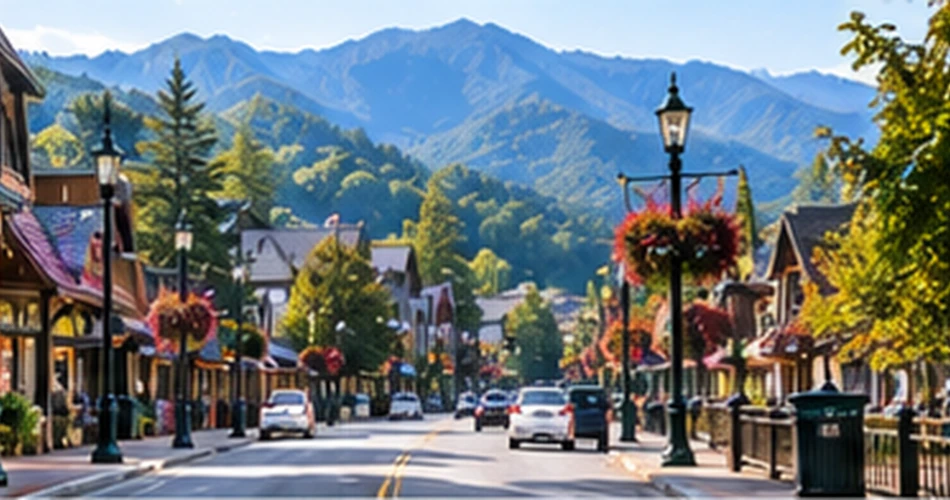
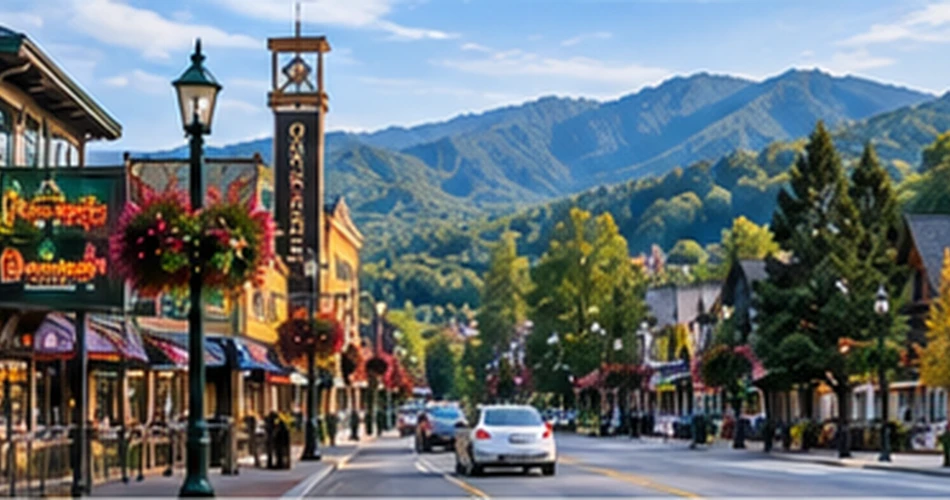
The Parkway Before Breakfast Feels Like Another Town
The first hour is better spent walking than searching for something to “do.” Downtown Gatlinburg is compact, and the Parkway runs through the center of the action, passing shops, restaurants, attractions, and connecting streets that become considerably busier later in the day. The city’s official visitor information specifically recommends downtown as a walkable area.
Early light also changes what gets noticed. The mountain ridges behind town are easier to see when attention is not being pulled toward queues, signs, and traffic. A visitor can cross the street without feeling rushed, stop for photographs without blocking a stream of pedestrians, and actually notice the way downtown sits tightly between wooded slopes.
Breakfast can wait a little while. A takeaway coffee or something small is enough if the goal is to keep moving during the quietest part of the day. Some downtown businesses begin serving very early, while many attractions and shops come alive later, so the opening hour naturally favors walking.
This is also when returning travelers may appreciate Gatlinburg most. Familiar blocks feel less commercial when the street is still waking up, and a route that seems ordinary at midday can feel almost local in the morning.
The mistake would be trying to cover the entire Parkway. Twenty or thirty unrushed minutes is enough before turning toward the river.
Turn Toward River Road Before Traffic Builds
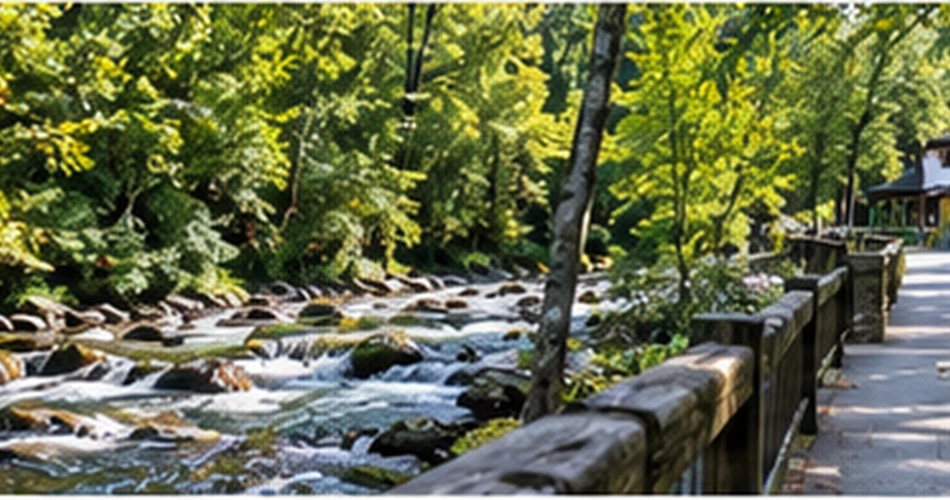
A block away from the Parkway, the mood changes quickly. River Road Gatlinburg puts the Little Pigeon River beside the walk, where water moving over rocks becomes louder than much of the traffic. Gatlinburg’s official walking guidance identifies the river walk as one of the town’s quieter free activities, with benches and gazebos along the route.
This is not a wilderness experience, and it should not be presented as one. Buildings remain nearby, roads cross the river, and downtown is never far away. The appeal is the contrast. A visitor can leave one of Tennessee’s busiest tourism streets and, within minutes, be walking beneath trees beside moving water.
Morning is especially well suited to the area. Fewer pedestrians make it easier to stop beside the river, and softer light works better for photographs than the harder midday sun reflecting from rocks and water. Birds, fishermen, and the sound of the current become more noticeable before the town reaches full volume.
There is no need to follow the river for a fixed distance. The route can simply serve as a bridge between downtown and the national park edge. For travelers who want more walking, River Road also leads naturally toward the next part of the morning: the Gatlinburg Trail.
Walk the Gatlinburg Trail While the Air Is Still Cool
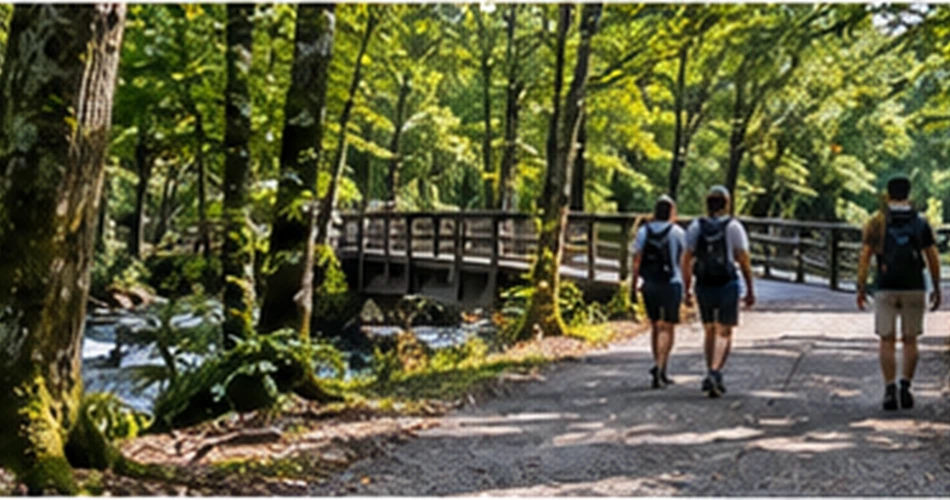
The Gatlinburg Trail is one of the easiest ways to let downtown fade gradually rather than disappear behind a windshield. The National Park Service describes it as roughly four miles roundtrip between Sugarlands Visitor Center and River Road, passing through cove hardwood forest beside the river. It includes a pedestrian bridge, historic stone chimneys, and a mostly broad, gently graded route, though there are a few steeper sections and uneven surfaces.
Nobody needs to walk all four miles. For a morning itinerary, an out-and-back section from the Gatlinburg side often makes more sense. Thirty minutes into the forest and thirty minutes back can provide the change of pace without turning breakfast into lunch.
The trail is also unusual within Great Smoky Mountains National Park. It is one of only two park trails where leashed pets are permitted, and bicycles are allowed as well. That makes it particularly useful for visitors whose options are more limited elsewhere in the park.
Walking early has practical benefits beyond quiet. Summer temperatures are generally more comfortable before the sun reaches its strongest point, and the trail feels more spacious before day-trip traffic builds around the park entrance.
Visitors should still treat it as a real trail. Comfortable shoes make sense, especially because roots, dirt, crushed stone, and uneven ground occur along the route.
Make Sugarlands the First Proper Park Stop
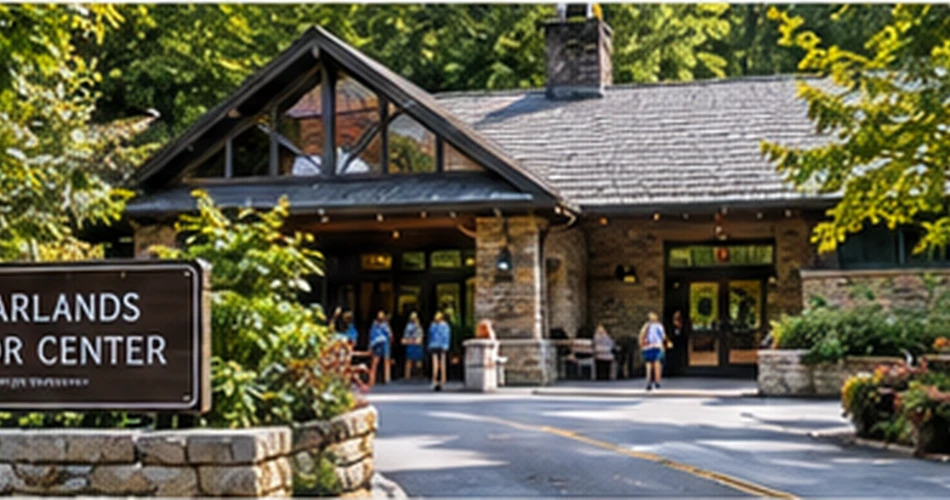
Sugarlands sits only about two miles south of Gatlinburg on Newfound Gap Road, making it one of the simplest transitions from town into the national park. The visitor center provides maps, exhibits, restrooms, staff assistance, and current park information, while several easy walks begin nearby.
That closeness makes Sugarlands Visitor Center particularly useful during a short Gatlinburg morning. A visitor does not have to commit to a major scenic drive or a half-day hike to spend meaningful time in the Smokies.
Great Smoky Mountains National Park itself does not charge an entrance fee. However, vehicles parked for longer than 15 minutes require a physical parking tag, and buying a tag does not guarantee a parking space. Anyone planning to stop for a walk should arrange that detail rather than treating the visitor-center parking area like a quick roadside pullout.
The smartest plan is to pick one short walk rather than stacking several. Sugarlands Valley Nature Trail works for an easy paved loop; Cataract Falls works for visitors who want a small waterfall at the end of a forest walk.
Both fit comfortably into a morning without making the national park feel like a box to tick.
Sugarlands Valley Nature Trail Keeps Things Easy
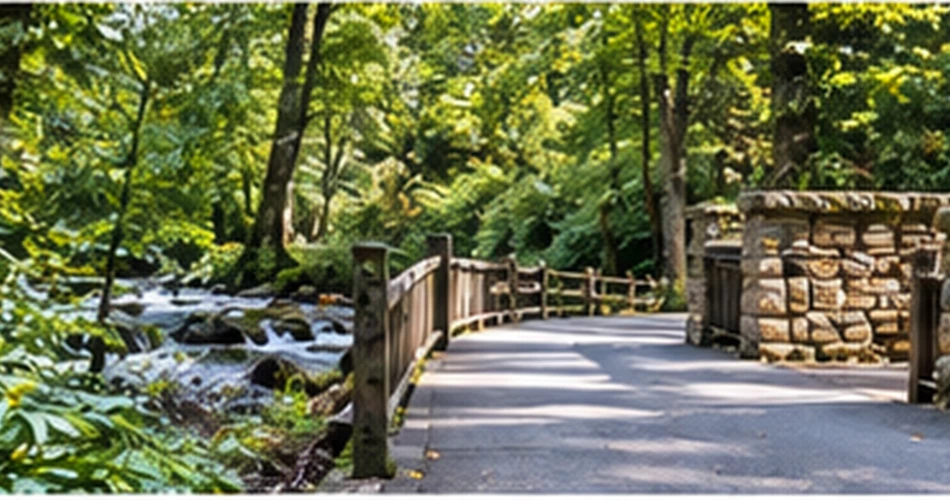
For visitors who want the Smokies without a strenuous trail, Sugarlands Valley Nature Trail is one of the most practical choices near Gatlinburg. The route is a paved half-mile loop through cove hardwood forest, with streamside views, old stone features, and historic chimney remains along the way. The National Park Service currently identifies it as the park’s ADA-accessible trail.
The short distance is part of its appeal. A family can take time with the surroundings instead of measuring progress, and travelers who spent the previous day climbing steep attractions or walking downtown can still get into the forest without committing their legs to another demanding outing.
Morning light filters unevenly through the canopy, which often makes this kind of trail more interesting photographically than a wide overlook. The details are close: moss, tree bark, stone walls, flowing water, and shifting patches of sunlight.
There is also value in keeping the experience simple. The trail does not need a dramatic destination to justify the walk. It functions as a quiet introduction to Great Smoky Mountains National Park, particularly for first-time visitors still learning how quickly the landscape changes once Gatlinburg is behind them.
A parking tag is required when the vehicle is parked in the park longer than 15 minutes.
Cataract Falls Fits a Morning Better Than a Major Hike
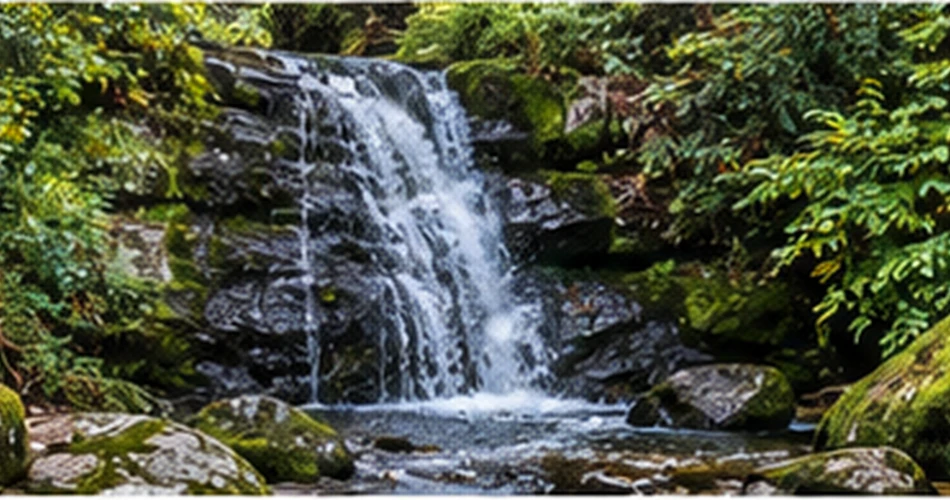
Cataract Falls is useful precisely because it is not an all-morning expedition. The walk from Sugarlands is about 0.7 mile roundtrip, following Fighting Creek through forest before reaching a narrow waterfall around 40 feet high. The National Park Service notes that the falls are most dramatic after substantial rain.
That description is worth taking literally. Cataract Falls is a small woodland waterfall rather than one of the Smokies’ huge cascades, and visitors who arrive expecting something theatrical may miss what makes the outing pleasant. The walk itself—creek, footbridge, rhododendron, forest shade—is as much a part of the morning as the waterfall.
It also makes sense to visit before heavier daytime foot traffic arrives. A small viewing area feels much better when visitors have space to stop for a photograph rather than waiting behind several groups.
Safety matters here. The National Park Service warns against climbing around the falls because visitors have been seriously injured on the rocks. The best view is from the established area below.
After Cataract Falls, there is little reason to add another hike unless the whole day is devoted to the park. Returning toward town while the morning is still young keeps the itinerary balanced.
Come Back Downtown When Breakfast Feels Earned
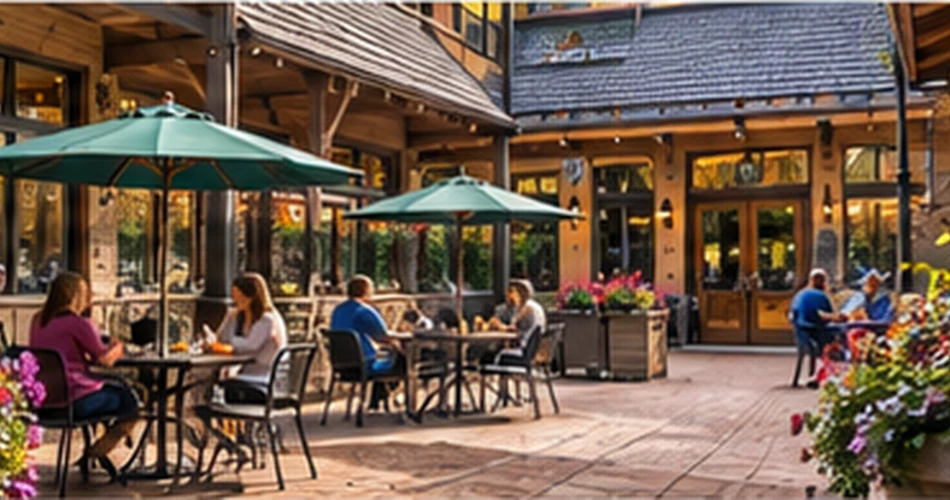
After an hour or two beside the river and in the forest, downtown breakfast feels different. The town is now awake, but visitors who started early have already had the best of the quiet period. They can sit down without feeling as though the entire morning is being spent waiting for Gatlinburg to begin.
A slower breakfast works especially well at this point because the next part of the day does not need to be scheduled immediately. Downtown has plenty of places to eat, and the blocks around the Parkway are easy to walk afterward. The goal is not to chase a particular restaurant but to choose somewhere convenient and give the meal enough time.
The contrast also makes the morning memorable. Twenty minutes earlier, there may have been creek water, wet forest, and a dirt trail; now there are coffee cups, shop windows, and pedestrians beginning their day. Few mountain towns place those two environments quite so close together.
After breakfast, a short browse is enough. There is no need to turn every open shop into another destination. Visitors who have already walked the Parkway once in the quiet hour can now watch it change around them instead of trying to conquer it.
That difference in pace is one of the most useful Gatlinburg travel tips: experience downtown twice—once while it is waking up and once after it has started moving.
Let the Trolley Take Over Once the Day Starts Moving
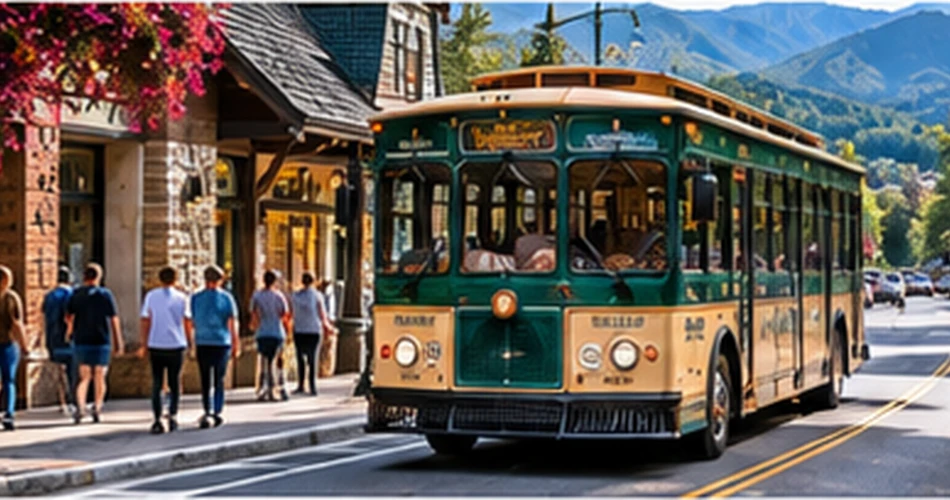
By the time sidewalks and traffic begin filling, walking every block becomes less appealing. That is when the free Gatlinburg trolley starts making more sense. The system operates year-round without fares, though operating hours vary by season and route. The current schedule lists regular May-through-October service beginning at 8:30 a.m.; winter service begins later, at 10:30 a.m.
That means an early Gatlinburg morning can be divided naturally: walk during the quietest hour, then use public transportation once downtown becomes busier.
A few simple choices make the transition easier:
- Park once whenever the day allows rather than moving the vehicle between nearby downtown stops.
- Check current trolley hours before relying on it for an early start.
- Check National Park Service road and trail alerts before heading into the Smokies.
- Carry water, comfortable walking shoes, and a light layer even when the planned walk is short.
All trolley routes connect through the Mass Transit Center, and the system can also help visitors enter downtown from the Park-n-Ride lot at the Gatlinburg Welcome Center.
The trolley is not necessary for every visitor, but it becomes useful once the calm morning gives way to ordinary daytime Gatlinburg. At that point, avoiding another search for parking may be more valuable than saving a few minutes.
By Late Morning, Leave Something Unplanned
By late morning, Gatlinburg has changed. The sidewalks are fuller, attraction entrances have more activity, and the quiet stretches of Parkway from a few hours earlier are harder to imagine. That is exactly why the early start works.
A good morning does not need to continue as an equally detailed afternoon. Visitors may feel like spending the rest of the day in Great Smoky Mountains National Park, returning to a paid attraction, browsing shops, or doing almost nothing for an hour. Leaving that decision open keeps the early start from becoming another tightly controlled schedule.
The sequence is what matters: quiet downtown streets, the river, a stretch of the Gatlinburg Trail, one easy Sugarlands outing, then breakfast when town begins waking up properly. It gives travelers both versions of Gatlinburg without asking them to choose between the town and the mountains.
First-time visitors gain an orientation that makes the rest of the trip easier. Returning travelers get something different from streets they may already know well.
Among all the things to do in Gatlinburg, an early walk may sound almost too simple to deserve a place on an itinerary. Yet it often produces exactly what a packed attraction schedule cannot: time to notice where the town ends, where the forest begins, and how little distance separates the two.
Next post The Parts of Gatlinburg That Are Easy to Overlook
Previous Post Where to Go in Gatlinburg When You Need a Change of Pace
About Author